
Tucked away in the shadow of an unassuming building whose doors have remained closed for over forty years, this architectural landmark in the heart of Brussels invites you on a true journey through time.The Aegidium—a former listed ballroom, parish center, and later a legendary movie theater—is undoubtedly the capital’s best-kept secret.
This masterpiece, dating back to 1905, holds within its walls morethan a century of history and unique moments of celebration. From its illustrious past as a hub of nightlife to its long-awaited rebirth, discover the behind-the-scenes story of this magical palace, where fiction and reality intertwine.
From the Hall of Mirrors to the winter garden, a sensory journey through the vastness of a one-of-a-kind palace
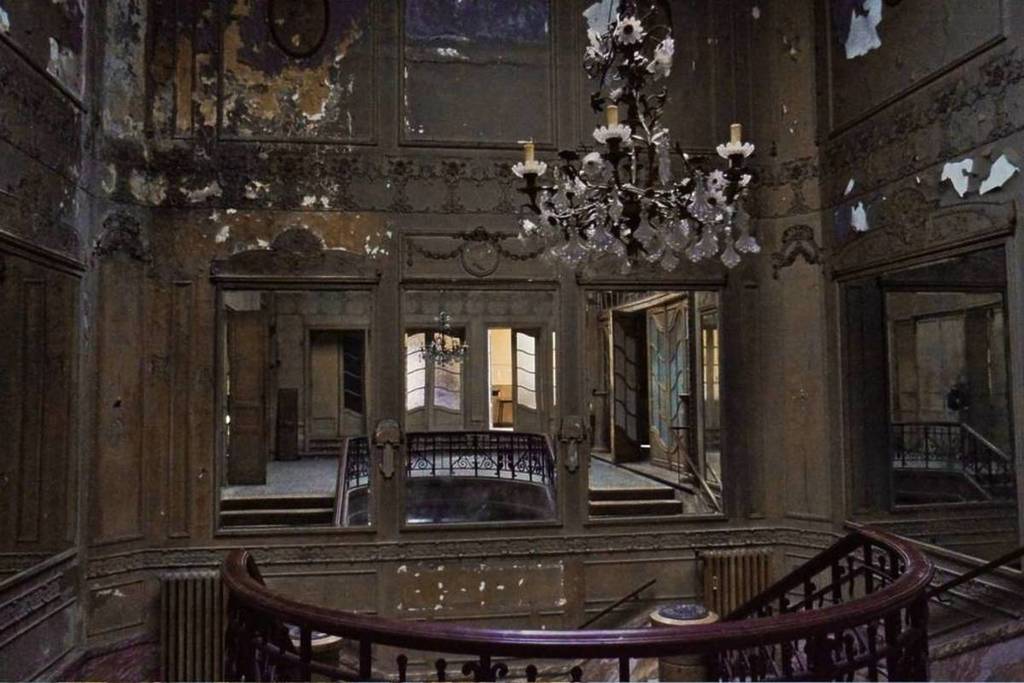
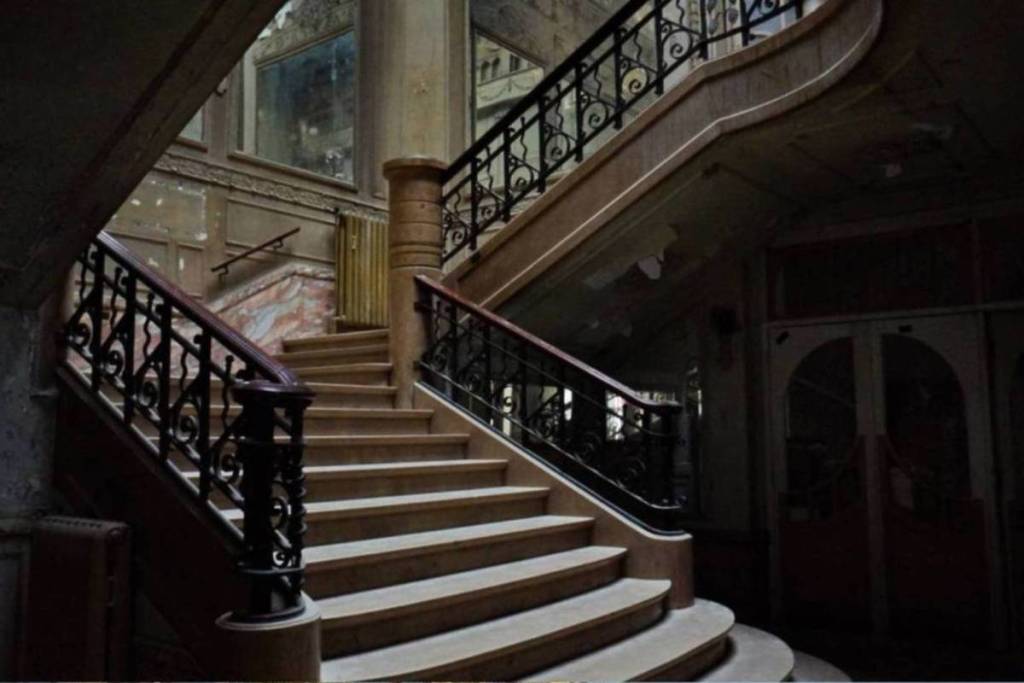
As soon as you step through the building’s doors, the extravagant interior ofthe Aegidium creates a surreal contrast with the simplicity and discretion of its façade on the Saint-Gilles square. The row of monumental mirrors in the entrance hall, reminiscentof the Hall of Mirrors at Versailles, then leads us to a winter garden with exotic tiling andthe palace’s former café, once known as the Panthéon-Palace. A sublime ground floor where light streams onto a vast white marble staircase, leading the way to a world of dreams and celebration.
It is at the top of the stairs that this temple—spanning over 3,260 square meters —transforms your visit into a timeless sensory experience. First, you’ll find a grand ballroom adorned with Louis XV furniture; then, on the other side of the floor, the grand finale. A gigantic Moorish hall with oriental accents, adorned with period colors and lighting, definitively transforms the space into a fairy-tale residence, almost unreal.
From the golden age of nightlife to its long-awaited rebirth, the gripping story of a Brussels legend
Behind its gilded facades,the Aegidium tells, above all, the story of constant evolution. Inaugurated in 1905 under the name Diamant Palace, this palace established itself as the epicenter of Brussels during the Belle Époque. It was then acquired by a canon in 1929, who renamed it Aegidium, the“protector of Saint-Gilles.” Starting in the 1930s, the venue became a hubfor parish activities and then a vibrant movie theater until the 1970s. Later converted into a day center, the palace closed its doors in 1985, leavingthe Aegidium abandoned for many decades.
Today, this colossal building— designated a historic landmark by the Brussels government in 2006 —is finally poised to emerge from its slumber. Recently reopened for a documentary chronicling the venue’s legend,the Aegidium has also hosted a few exclusive events and film shoots, briefly rekindling the flame of its historic grandeur. This rebirth is eagerly anticipated by all Brussels residents, who look forward to (re)experiencing new magical moments within this legendary city landmark.