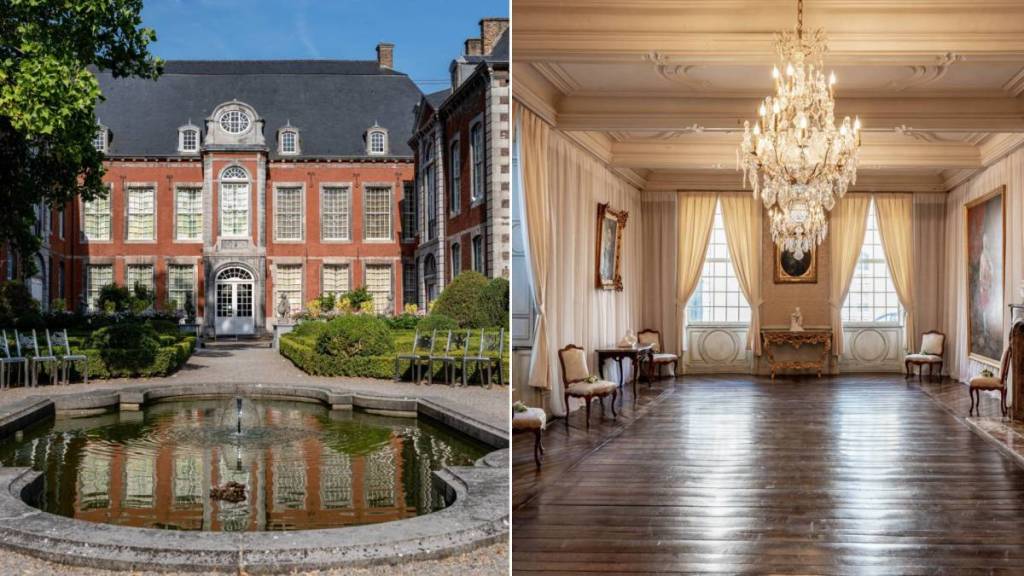

In the heart of Namur’s historic center, an exceptional heritage enclave conceals one of the most beautiful legacies of the Age of Enlightenment. A former 13th-century monastic refuge transformed into an elegant mansion, the building that houses the Museum of Decorative Arts immediately captivates visitors with its bold architecture. Behind this intriguing façade lies a poignant family history, the source of its incredible authenticity. But this site offers much more than a journey back in time: from its refined salons to its French-inspired garden and exhibitions at Les Bateliers, discover the secrets and treasures of this Walloon artistic gem.
Between optical illusions and a shattered destiny: the poignant story of a Namur gem
Before becoming home to the Museum of Decorative Arts, this exceptional site traces its roots back to the 13th century as a refuge forthe Abbey of Villers-en-Brabant. Acquired by the de Groesbeeck family, the building was transformed in 1751 by architect Jean-Baptiste Chermanne. He devised a brilliant trompe-l’œil: the façade suggests a closed main courtyard, while a vast vestibule leads directly to the street. Abundant light floods in from two small interior courtyards through ingenious bay windows, while plasterwork conceals the asymmetries of the old building.
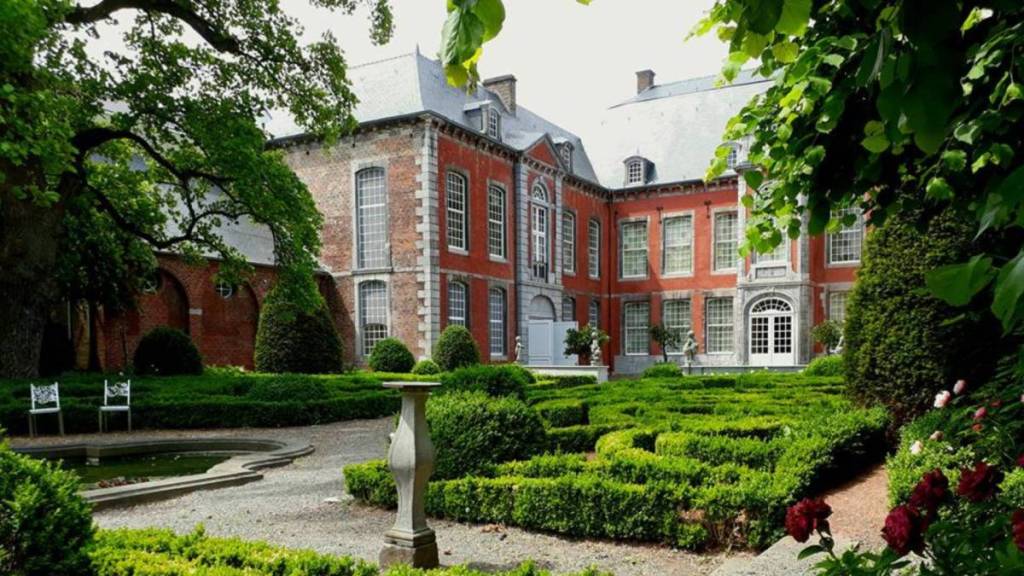
ButAlexandre-François de Groesbeeck’s project took a tragic turn. Stricken by the successive loss of all his children and loved ones, the Count died alone in 1789. This shattered fate froze the mansion’s interior in time. Later passed on to the Marquises de Croix, who occupied it only briefly, the site made it through the 19th century without undergoing any modern alterations. Remaining virtually intact, this exceptional residence preserved all its authenticity until its conversion into a museum in the 1930s.
From the museum wing to the secret garden: the preserved charm of the Hôtel de Groesbeeck
Stepping through the doors of the Museum of Decorative Arts is like immersing yourself inthe aristocratic elegance of the Age of Enlightenment. The countess’s sumptuous dining room and boudoir reveal an enchanting setting where period furniture, timepieces, crystal, and earthenware crafted by talented local artisans come together in harmony. Adjacent to the residence, a French-inspired garden offers a peaceful oasis of unspoiled greenery in the heart of the city.
Now part of the Les Bateliers Museum Complex, the site is surrounded by the Archaeological Museum, the Maison de la Poésie, and the Félicien Rops Museum. A true cultural hub in the heart of Namur, this space comes alive withtemporary exhibitions and an outdoor art trail. The museum welcomes visitors Tuesday through Sunday from 10 a.m. to 6 p.m. (admission ranges from €3 to €8; free for children under 6), with completely free access to the gardens.
📍3 Rue Joseph Saintraint, 5000 Namur