In Rotterdam (2 hours from Brussels), art no longer hides; it is reflected in the thousand and one mirrors that make up the structure of the Boijmans Van Beuningen storage facility, an egg-shaped architectural marvel that serves as a showcase for the museum’s collection. Originally built as an annex to house the 151,000 works stored in the museum’s basements and in five other storage facilities scattered throughout the city, and inaugurated by King Willem-Alexander, it is the world’s first publicly accessible art storage facility. A fascinating, almost surreal place that reveals what is not usually seen: the museum’s backstage areas, thereby upending everything we thought we knew about cultural institutions.
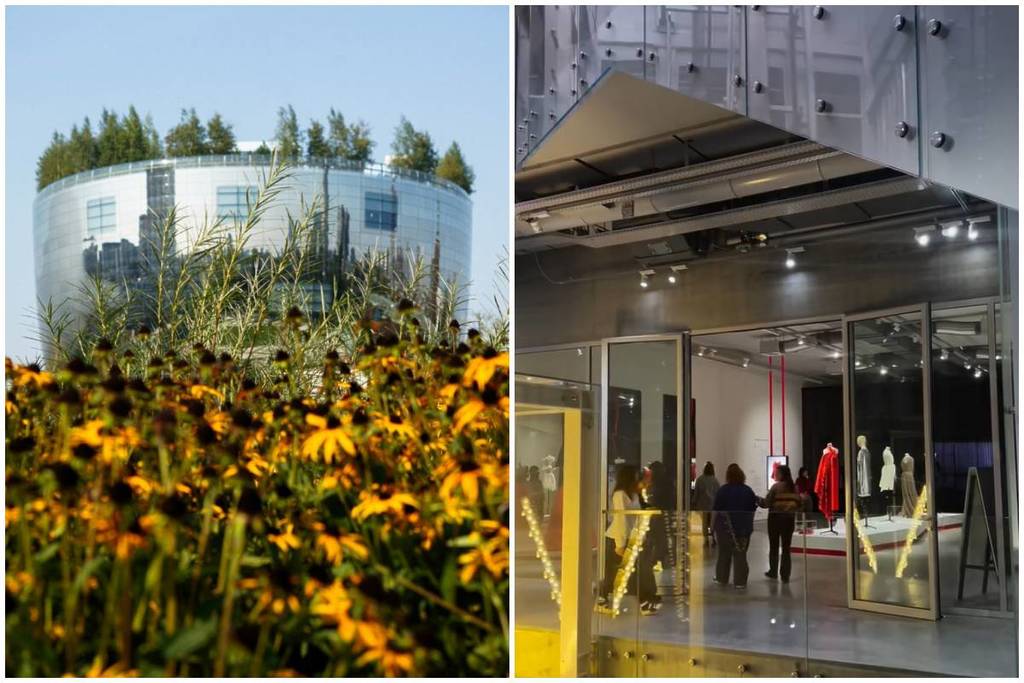
The museum’s architecture, a work of art in its own right
The building intrigues: a massive silver sphere, entirely covered in mirrors, rises in the heart of the city. The sky, the trees of Museumpark, passersby—everything is reflected there in a dizzying play of perspectives. It’s hard to tell where the architecture begins and the landscape ends. It is precisely this illusion that the project embraces, in constant dialogue with its surroundings.
The storage facility breaks with the traditional logic of the museum. Here, there is no set route; anything is possible. Visitors have direct access to the storage areas, usually hidden from the public. Paintings, sculptures, design objects: more than 150,000 works are housed in this building, and a large portion of them are on view. A bold transparency that completely transforms our relationship with art.
It is inside that the magic happens: the spaces stack one upon another, connected by a maze of staircases and walkways. Each floor reveals a different world. And then there is the rooftop: a hanging garden overlooking Rotterdam that offers a breathtaking view of the city, creating a striking contrast with the building’s futuristic appearance.
What is striking is the way the storage facility reinvents the very idea of a museum. More than just an exhibition space, it is a living environment. People come here as much to admire a work of art as to understand how it is preserved, moved, and restored. With its iconic architecture and revolutionary concept, the Boijmans Van Beuningen Depot stands out as one of Europe’s most innovative cultural projects. A destination in its own right, just two hours from the Belgian capital.
A program as unusual as its architecture
The storage facility isn’t just visually disruptive: it also transforms into an unexpected stage for extraordinary experiences. One of the most surprising: a concert by Armin van Buuren, the king of trance… at the piano on May 7, 8, and 10!
Far from the high-energy electronic sets that made his reputation, the Dutch DJ reveals a more intimate, introspective side. Set against this shimmering backdrop, perfectly in tune with his multifaceted talent, he reimagines his own tracks in a stripped-down interpretation. The energy of the clubs gives way to a hushed atmosphere, creating a moment suspended in time—one to be rediscovered over three unique evenings.
In this extraordinary setting, amid works of art and spectacular architecture, music takes on a new dimension. A hybrid immersive experience, just like the venue itself. More info and tickets here!
The Pixel Pioneers Exhibition
And as if that experience weren’t enough, starting April 25, 2026, the storage facility will host an exhibition that perfectly aligns with its futuristic DNA: Pixel Pioneers. Through September 13, 2026, the 4th and 5th floors will transform into a playground for digital art, offering an immersive exploration of how technology has reshaped our visual culture.
The first major exhibition at the Museum Boijmans Van Beuningenentirely dedicated to digital art, it offers a vibrant journey through interactive installations and pioneering works. The highlight: Horizons (2008) by Geert Mul, a fascinating installation where visitors wander through a projected landscape composed of more than 200 horizons drawn from the collection. Every movement generates a new composition, bringing the work to life and keeping it in a state of constant flux.
In a second room, the spotlight is on contemporary experiments. Suzanne Treister explores the behind-the-scenes workings of technological power with her series Hexen, while Claudia Hart presents an immersive installation centered on fallen cryptocurrencies. Finally, Feng Mengbo invites visitors to play Long March: Restart, a retro video game that revisits Chinese revolutionary history.
Between pixelated nostalgia and reflections on the future, Pixel Pioneers transforms the storage facility into an artistic laboratory, where we experiment, interact… and above all, rethink our relationship with the digital world.