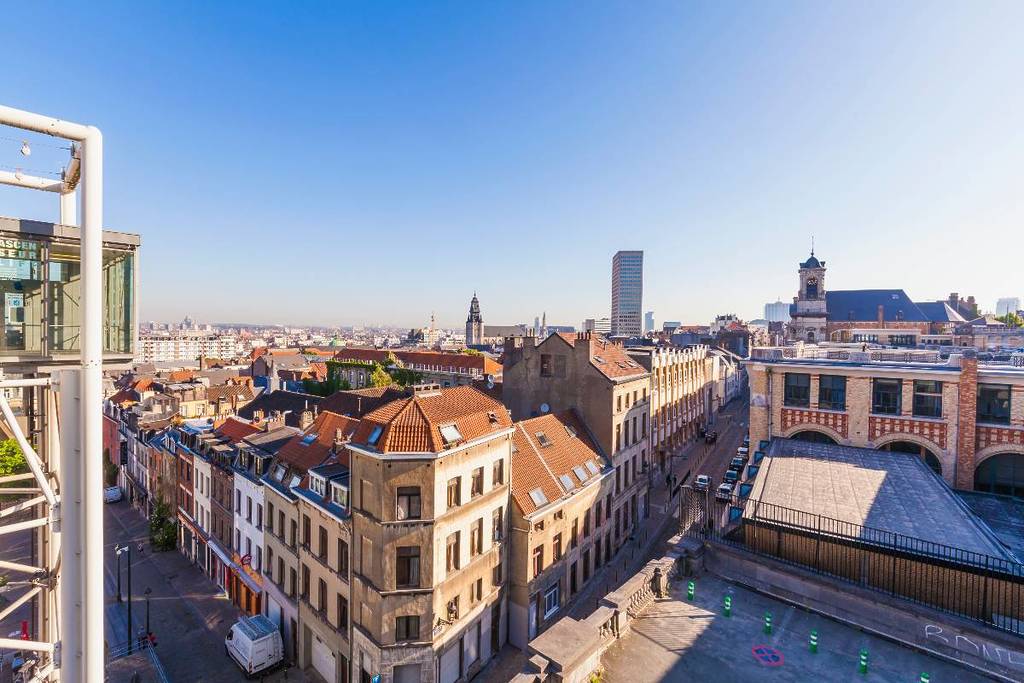
For beneath the polished cobblestones of the city center, the capital hides a rough and deeply human story. And to tell it, there are images that speak louder than words. The picture of mattresses spread out in the rue de la Samaritaine, in the heart of the Marolles district , is one of them. Not an improvised camping site. No: a living barricade, a symbol of resistance, of attachment to a neighborhood, of opposition to urban arbitrariness. Brussels has never been smooth. It’s about time we told you why with “Operation Mattress.”
Flashback. It’s July 25, 1989. In this popular, village-like corner of Brussels, a group of residents decide to sleep in the street.Not for pleasure, nor by choice, but to prevent eviction and protest against a housing policy that ignores them.
The Samaritaine as a battleground
In the 1980s, the district was no longer just a place for flea markets and typical cafés. It was also facing structural threats: demolitions, urban projects imposed from above, and a slow gentrification (formerly known as “sablonification” ) that was pushing prices up, displacing the most modest.
In July 1989, the City of Brussels announced theeviction of 78 people without providing them with adequate alternative housing, on the pretext of insalubrity and fire hazards. The news hit like a thunderbolt: some had only a small room, and relocation in the neighborhood was not even guaranteed for all. The residents reacted: they didn’t want to be evicted or dispersed. This is the origin of “Operation Mattress“.
Operation Mattress:mattresses as barricades
For days on end, the rue de la Samaritaine was covered with mattresses, armchairs and blankets – not just a protest, but an occupation. People sleep outside, chat with passers-by, organize themselves collectively, not in a closed circle, but as in a modern agora where everyone can come, listen, understand or participate. Neither more nor less, the demonstrators are reshuffling the cards and redefining the contours.
This occupation symbolizes the desire to stay in one’s neighborhood rather than be forced to rehouse elsewhere, neighborhood solidarity in a difficult context, and a clear message to the authorities: “this is not a game of Monopoly, Brussels is not for sale, and the residents are not pawns.”
Assemblies get involved
Neighborhood assemblieswere quickly organized, messages circulated and associations joined in, from the Comité de la Samaritaine to Inter-Environnement Bruxelles, via the Rassemblement Bruxellois pour le Droit à l’Habitat. They debated, negotiated and questioned politicians.
On July 31, 1989, the cancellation of the evictions scheduled for August 2 was announced. A victory? Yes, but not a total victory. The battle continued for the rehousing of families, decent housing in the neighborhood, and recognition of the right to housing as a fundamental right.
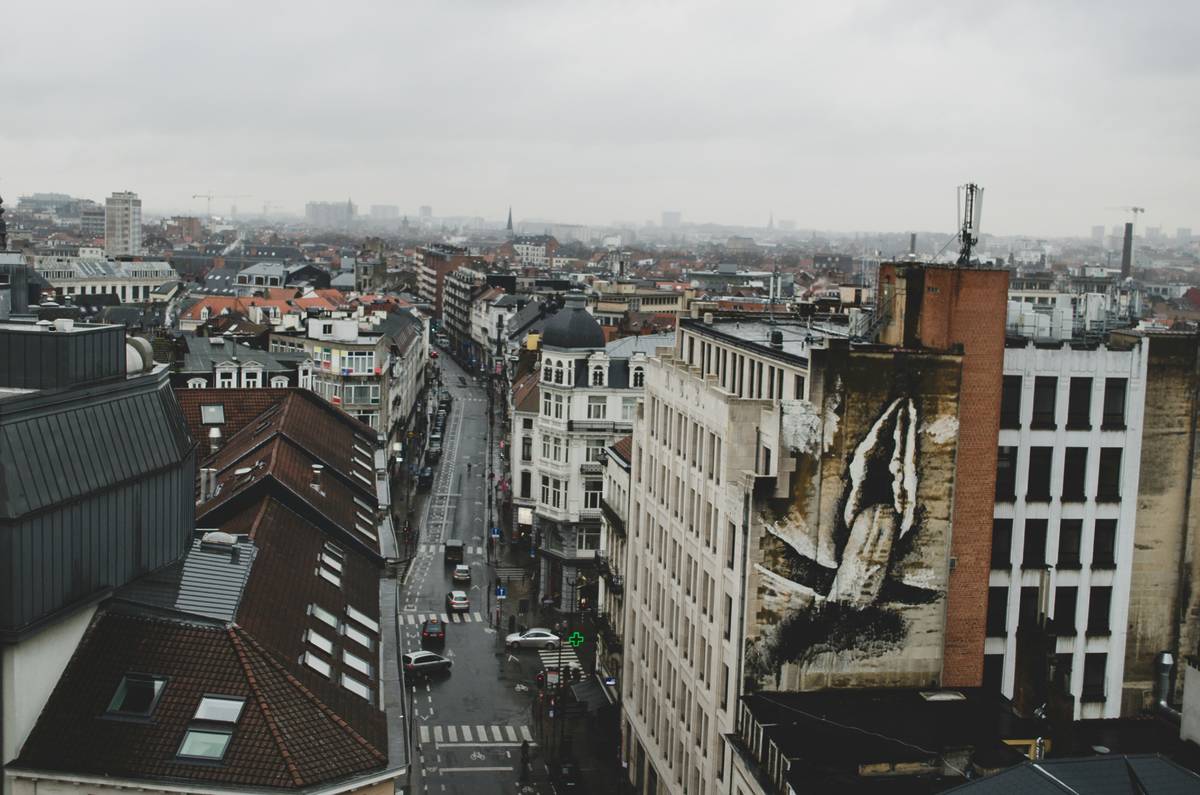
Les Marolles today: memory and challenges
What this little-known page of history reveals is that Les Marolles has always been a neighborhood of struggles against major projects that forget the residents, against the denial of their rights, against social erasure. This story of mattress-barricades has become a local legend, a symbol of resistance in a neighborhood where popular authenticity rhymes with urban struggle.
Even today, between renovations, urban projects and rising rents, the debate surrounding the working-class character of Les Marolles remains lively. The memory of these struggles fuels discussions about gentrification, real estate speculation and the need to preserve this lively, unique area of the capital.
This is no mere anecdote: it’s a lesson from Brussels, a city that’s changing too fast, and where the voice of the inhabitants continues to be heard. The mattresses in the street are no longer just objects: they have become a barricade against oblivion, against exclusion and against a city that is becoming more beautiful at the cost of those who have always lived there.
Find out more about “L’Opération Matelas” on the Brussels, 1000 years of revolt tour .
It’s a story that’s not always told in museums, but one that a fascinating and engaging guided tour invites you to discover, step by step. It’s called “Brussels, 1000 Years of Struggles“, and it’s an urban tour that takes you through a thousand years of social struggles, in the heart of an emblematic district.
Over the course of nearly 2 hours, this essential tour, conducted from the perspective of the locals (not tourists), recounts forgotten episodes of social struggle, juicy anecdotes about the city and its inhabitants, and places you may have passed through without ever knowing their true past. Every street becomes a witness, every facade tells the story of a battle. And suddenly, Brussels ceases to be a postcard and becomes rebellious and political once again.
There’s no fixed academic discourse here. The tour is lively, accessible and embodied, told as a collective story, that of the city and those who shaped it through strikes and demonstrations, motivated by a quest for equality. If you want to understand why Brussels has always been a city of resistance, if you like fun walks, “Brussels, 1000 Years of Struggles” is THE tour to add to your cultural agenda.
Practical information
📍Location: Starting point Place de la Chapelle, in front of the church, the beating heart of Marolles.
📅 Date: every Saturday
🎟️Prix : free participation (€3 online + contribution on site)