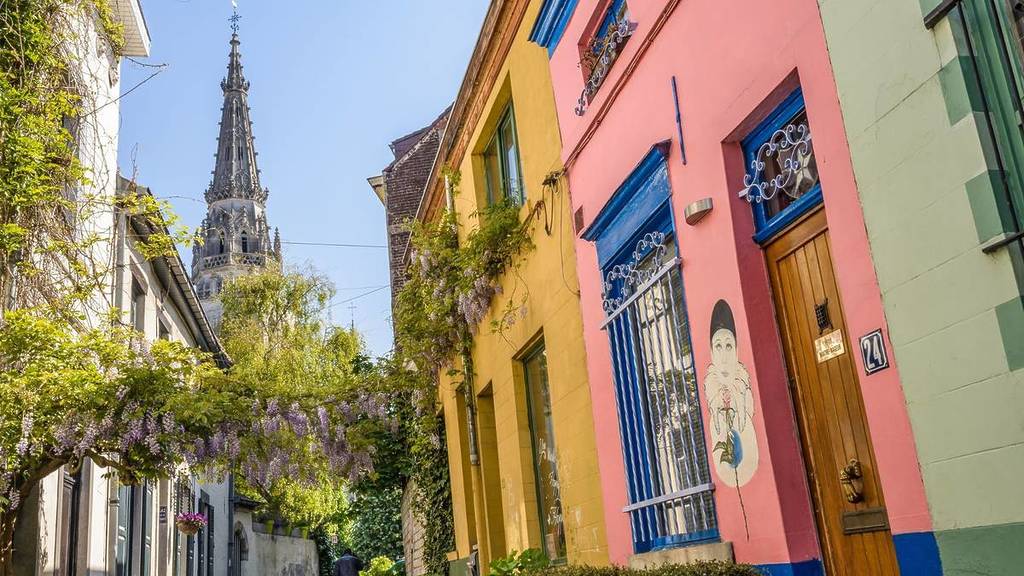

Located in the heart of Anderlecht’s historic center, Rue Porselein is a picturesque cobblestone alley that seems to have frozen time. Behind its colorful facades and old-world atmosphere lies an unusual linguistic history: from an anonymous alley in the 11th century to a “Porcelain Street” born of a translation error, its name has endured through the ages. Now listed as a heritage site, this pedestrian street does more than simply recount the town’s artisanal past. Between the poems displayed on its walls and its proximity to heritage gems, it invites you on a unique chromatic and cultural stroll through the heart of the capital.
Rue Porselein: a linguistic error that became history
Although the history of this small cobblestone alley dates back to the 11th century, it bore no official name for centuries. It was not until 1850 that the name “Porseleynstraat” appeared, reportedly resulting from a surprising linguistic mix-up. In reality, the most widely accepted theory links this name to purslane (postelein), an edible plant that once grew abundantly in this area. However, in 1850, the bilingual street signs translated the term as “rue de la Porcelaine,” an incongruous name that eventually stuck despite its lack of connection tothe art of ceramics.
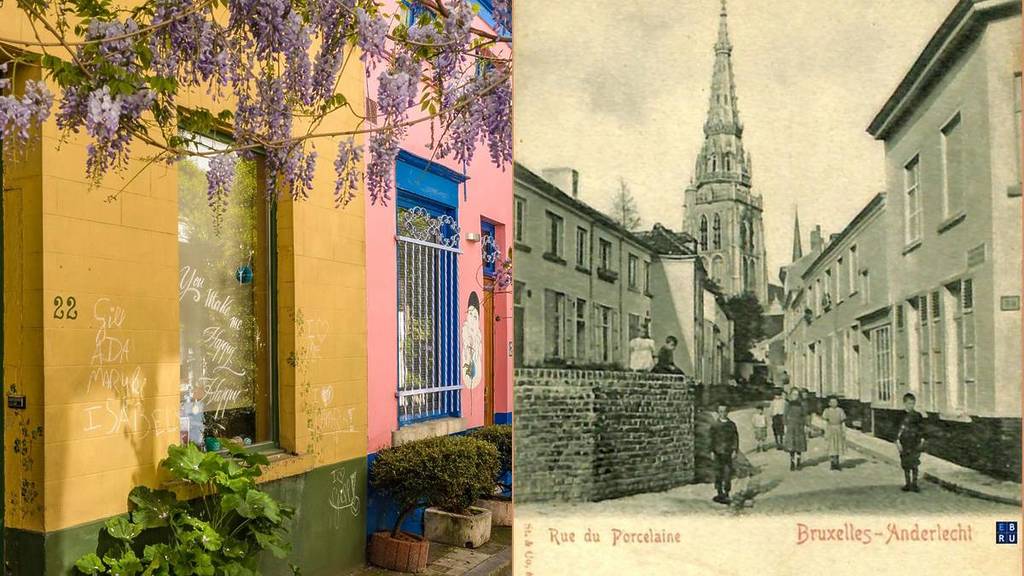
Architecturally, Rue Porselein forms a unique urban setting, listed on the local heritage preservation list, composed of brick buildings and traditional Belgian facades that reflect Anderlecht’s artisanal past. Although the demolition of two properties at the corner of the square in 1930 made way for a parking lot, the street retains its human scale and historic atmosphere, inviting passersby to walk in the footsteps of the canons and humanism.
Colors and cobblestones: an open-air museum
Today, Rue Porselein has been transformed into a permanent exhibition space thanks to the “Poésie-Cité” initiative produced by “Hypothésarts.” The traditional brick facades now serve as a canvas for free expression where painters and poets come together, transforming this pedestrian street into a true artistic journey. This creative dimension harmonizes with the car-free environment, where small local shops and residential buildings create a human-scale atmosphere, typical of Anderlecht’s artisanal traditions.
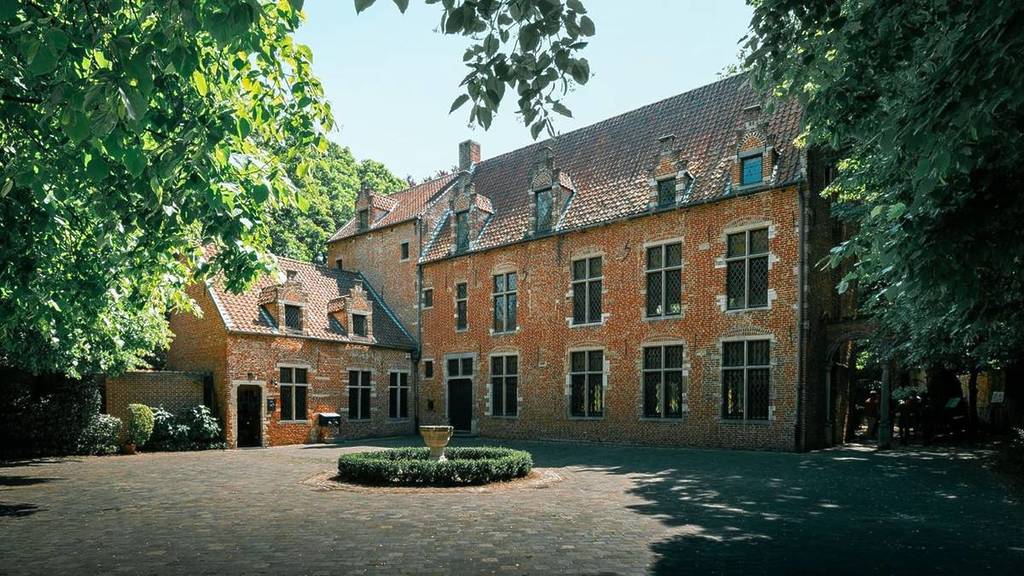
This sensory immersion naturally extends to the treasures of the surrounding historic center. Just a few steps away, visitors discover Belgium’s smallest beguinage, a picturesque 13th-century site, as well as the famous House of Erasmus, a superb Gothic residence that welcomed the humanist in 1521. Between the shifting hues of the stones of Saint-Guidon Collegiate Church and the murals in the alleyway, the neighborhood offers a unique experience wheremodern urban art engages with the local medieval past.