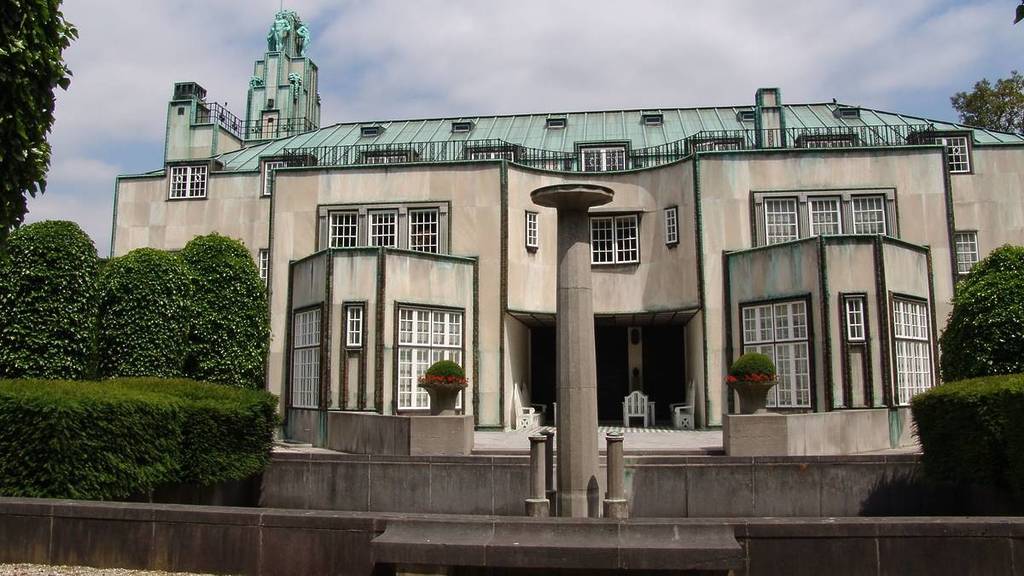

On the prestigious Avenue de Tervueren stands an exceptional monument, a true milestone ofmodern architecture: the Stoclet Palace. Designed in 1905 by the Austrian architect Josef Hoffmann, this masterpiece of white marble stands as the most accomplished achievement of the Vienna Secession. Listed as a UNESCO World Heritage Site, this revolutionary geometric structure can only be fully appreciated from the public space. A detailed exploration reveals the secrets of its facades, its gilded moldings—unique in Brussels —and its spectacular tower crowned with bronze sculptures. Featuring Franz Metzner’s avant-garde sculptures, the site invites visitors to immerse themselves in the history and exterior details of a fully preserved architectural sanctuary.
The Stoclet Palace: the birth of an artisticicon
The story of this major work began in 1905, driven by the vision of collector Adolphe Stoclet. He entrusted the design of his home to Austrian architect Josef Hoffmann, a leading figure of the Vienna Secession. The designer was granted total aesthetic freedom and an unlimited budget, allowing the creator and artisans to envision a true Gesamtkunstwerk—a total work of art where the exterior, the furnishings, and the gardens merge. Completed in 1911, the complex broke radically withVictor Horta’s floral Art Nouveau to anticipate the rise ofArt Deco and Modernism.
FromAvenue de Tervueren, the white marble-clad structure is impressive. Each edge of the facade is framed by a thin gilded molding, an ornamental detail unique to Brussels. Hoffmann breaks up the horizontal lines with dynamic vertical elements, notably a majestic tower. This is where Franz Metzner’s sculptural masterpieces are concentrated, including four powerful bronze figures at the top, lending this closed facade a solemn and monumental character.
The treasures of a UNESCO sanctuary frozen in time
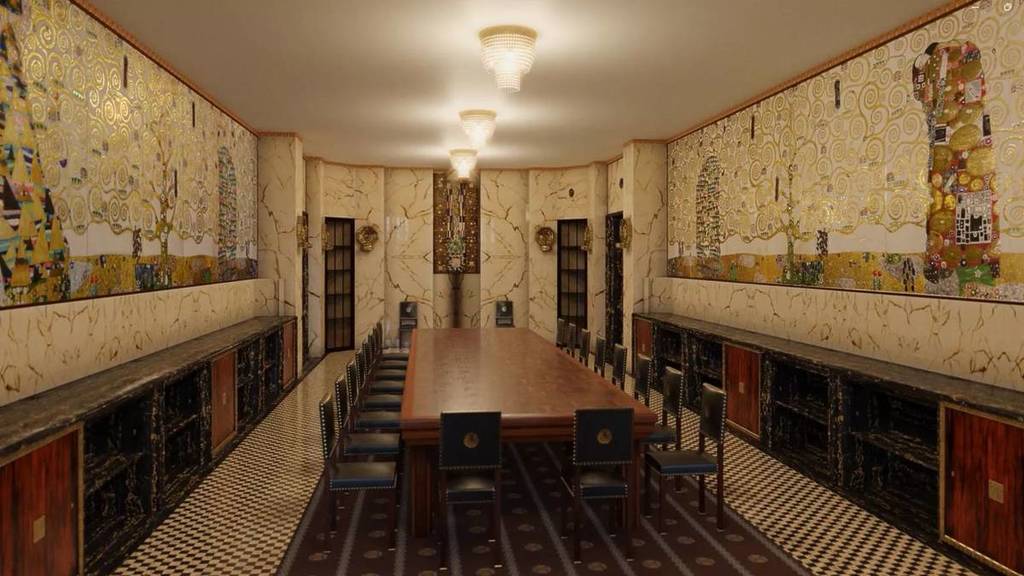
Behind this marble façade lies a setting that has remained unchanged for over a century. Designed to offer an ideal living environment for its occupants, the palace’s interior features original furnishings and exquisite décor. In the dining room, Gustav Klimt displayed his genius through two majestic friezes of colorful mosaics, while the music room is adorned with decorative paintings by the Belgian master Fernand Khnopff. This intimate setting opens onto a unique garden, whose flowerbeds and geometric lines perfectly extend the building’s rigorous composition.
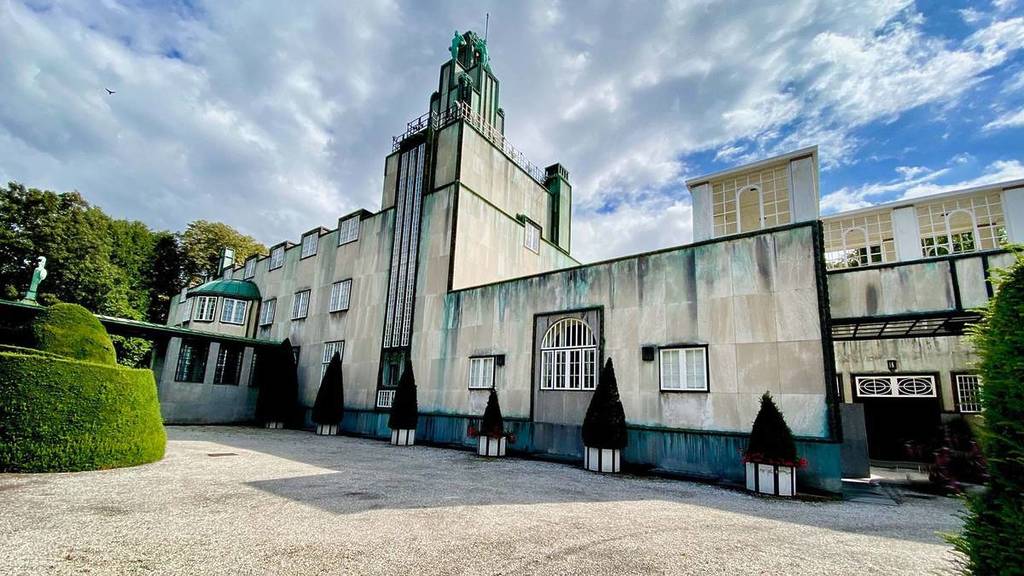
Listed as a UNESCO World Heritage Site since 2009, the Stoclet Palace enjoys full protection. Having undergone no major alterations, this gem has remained intact to this day thanks to the constant care of its heirs. While the monument and its interior treasures remain closed to the public, the complex continues to fascinate passersby. An icon of the birth of modernism, its timeless silhouette invites solemn contemplation, bearing witness to the eternal artistic influence of the Vienna Secession in the heart of Brussels.
📍Av. de Tervueren, 1150 Woluwe-Saint-Pierre