
Long presumed lost after vanishing in 1932, René Magritte’s mysterious painting *La Pose enchantée* has finally revealed all its secrets thanks to a painstaking, long-term effort. By combining cutting-edge scientific analyses, researchers have successfully virtually reconstructed this masterpiece by the Belgian master of Surrealism, fragments of which were hidden beneath other paintings. From the reconstruction of this pictorial puzzle to a behind-the-scenes look at the painter’s life in the heart of Brussels: discover the fascinating story of this artistic rediscovery and the indelible mark Magritte left on the capital’s cultural scene.
The enigma of *La Pose enchantée*: an 80-year-old pictorial puzzle
Painted in 1927, René Magritte’s canvas *La Pose enchantée* appeared in the artist’s catalog before vanishing without a trace in 1932. It wasn’t until 2013 that the work began to reveal its secrets. It was during an X-ray examination at MoMA in New York of the painting *Le Portrait* that scientists discovered, beneath the visible paint, the first quarter of the missing composition. The master of Surrealism had, in fact, cut his own canvas into four pieces to paint new compositions.
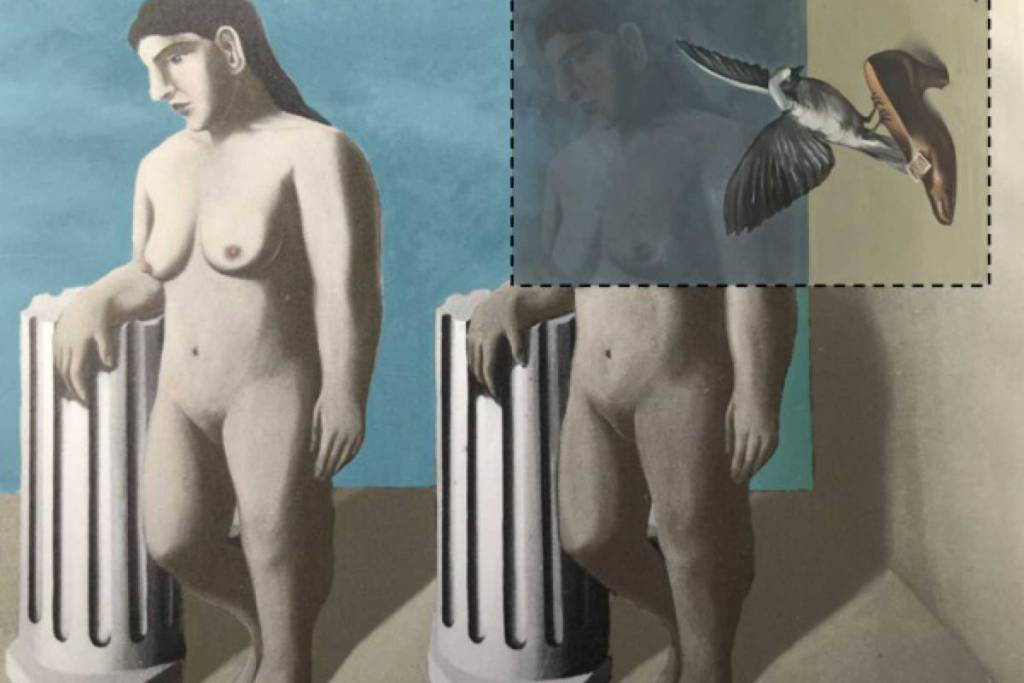
Shortly thereafter, the second fragment appeared in Stockholm beneath *The Red Model*, followed by the third in Norwich beneath *The Human Condition*. The mystery was finally solved thanks to the Magritte on Practice research project in Belgium. By analyzing the painting *God Is Not a Saint*, on display at the Magritte Museum in Brussels, researchers identified the final missing piece. A stroke of scientific genius that made possible the virtual reconstruction of a lost masterpiece.
From Rue Esseghem to the Magritte Museum: the eternal mark of surrealism in Brussels
Beyond this solved scientific mystery, Brussels remains inextricably linked to the life and work of René Magritte. It was at 135 Rue Esseghem in Jette that the painter settled in 1930 to work there for nearly a quarter of a century. In this legendary house, where the dining room served as his studio, Magritte created nearly half of his paintings while turning the place into a veritable headquarters for the Belgian Surrealists.
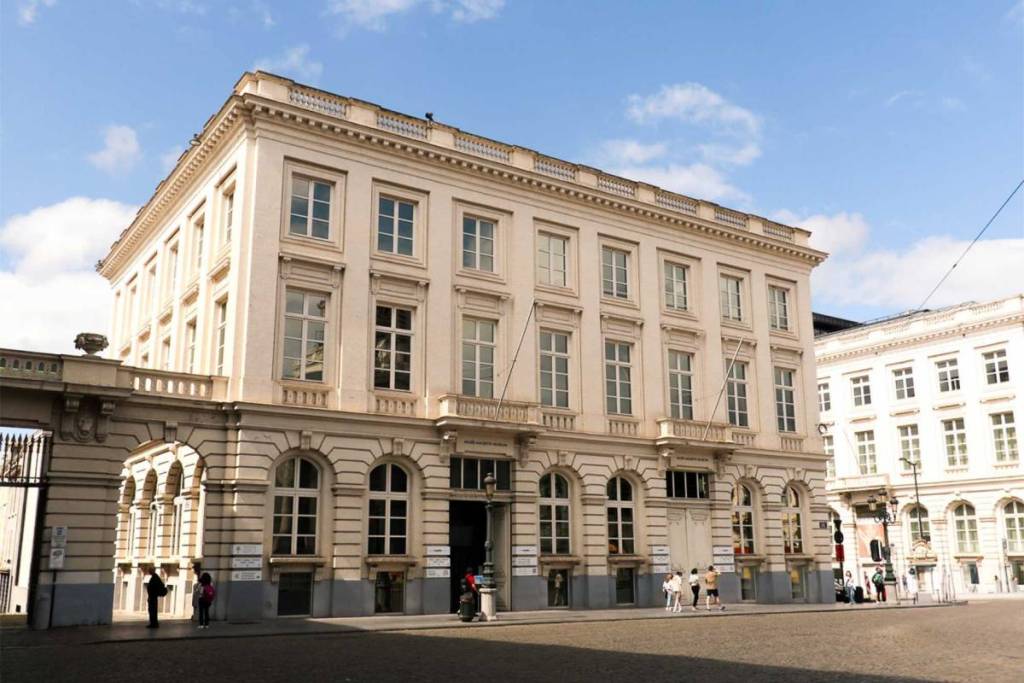
Today, the master’s legacy thrives in the heart of the capital at the Magritte Museum. With more than 230 works and archival materials on display across 2,500 m², the institution houses the world’s largest collection dedicated to the artist. From iconic paintings to gouaches and his personal films, this dynamic space attracts more than 300,000 visitors each year. An unmissable cultural destination that brings the spirit of surrealism to life in the heart of Brussels.