
Perched on Publémont Hill, the former Saint-Laurent Abbey in Liège is a little-known treasure with a fascinating past. Founded in the 11th century, this powerful Benedictine institution flourished for centuries as a major spiritual and intellectual center, before the French Revolution transformed it into an important military complex. While its 18th-century monastic buildings still bear the mark of this golden age, the site continues to reveal its mysteries. Recent large-scale archaeological excavations have just unearthed the remains of forgotten buildings and an exceptional burial site! A journey to the heart of this Liège gem, where centuries-old architecture meets captivating discoveries.
Nine Centuries of History: The Turbulent Fate of Saint-Laurent Abbey
Founded in 1026 on the heights of Publémont,Saint-Laurent Abbey quickly established itself as the intellectual and artistic heart of the Liège region. For nearly eight centuries, this Benedictine monastery was renowned throughoutEurope for its scholarship. Architecturally, the site retains a majestic charm: its U-shaped buildings and 18th-century cloister stand alongside a 15th-century portal, a rare survivor of past destruction. In the center of the main courtyard stand the original columns of the first courtyard of the princes-bishops’ palace, bearing witness to the splendor of the era.
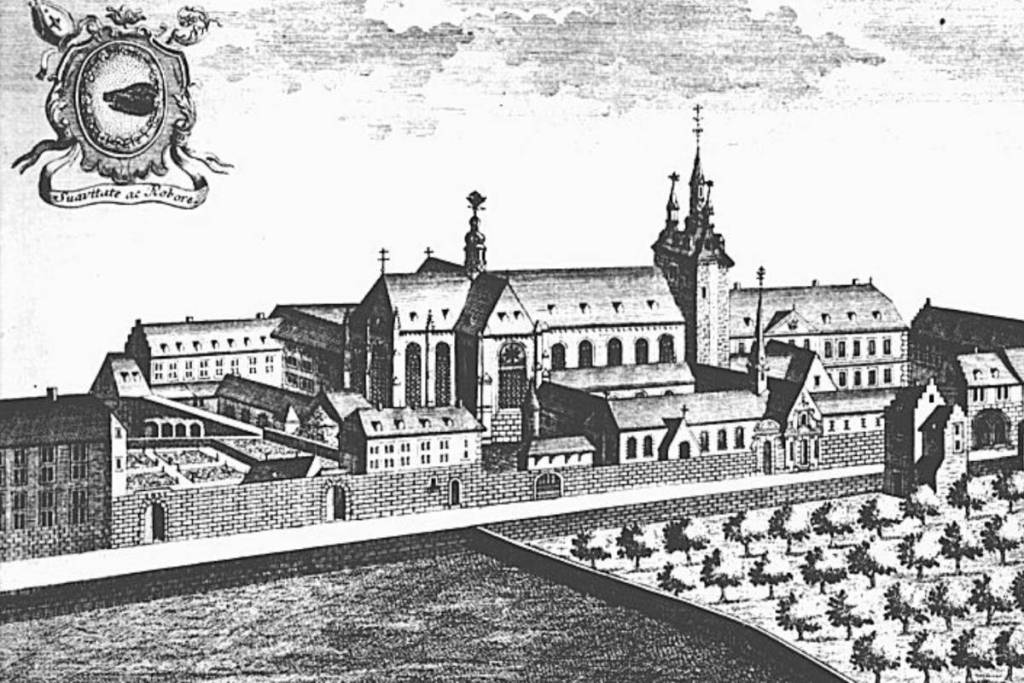
The French Revolution changed the site’s fate. Occupied first by Prussian and then by Republican troops, the abbey sheltered distinguished refugees before being converted into a military hospital in 1793. The secularization of 1809 led to the demolition of its Ottonian abbey church. Converted into a barracks under Dutch rule, the structure retained its function as a military hospital until 1970. Purchased in 2021 by the Province of Liège, this unique estate is now embarking on a new chapter in its history.
Local treasures: a fabulous archaeological discovery!
As the excavation project led bythe Walloon Heritage Agency (AWaP) on the heights of Liège draws to a close, the site ofthe former Saint-Laurent Abbey has just revealed a major secret. Research undertaken in 2021 had already uncovered the remains of a religious building dating back to before the 11th century, the ancient staircases leading to the crypt, and a furnace once used for casting bells. But the highlight of the discovery was found in the south arm of the transept of the great Ottonian abbey church.
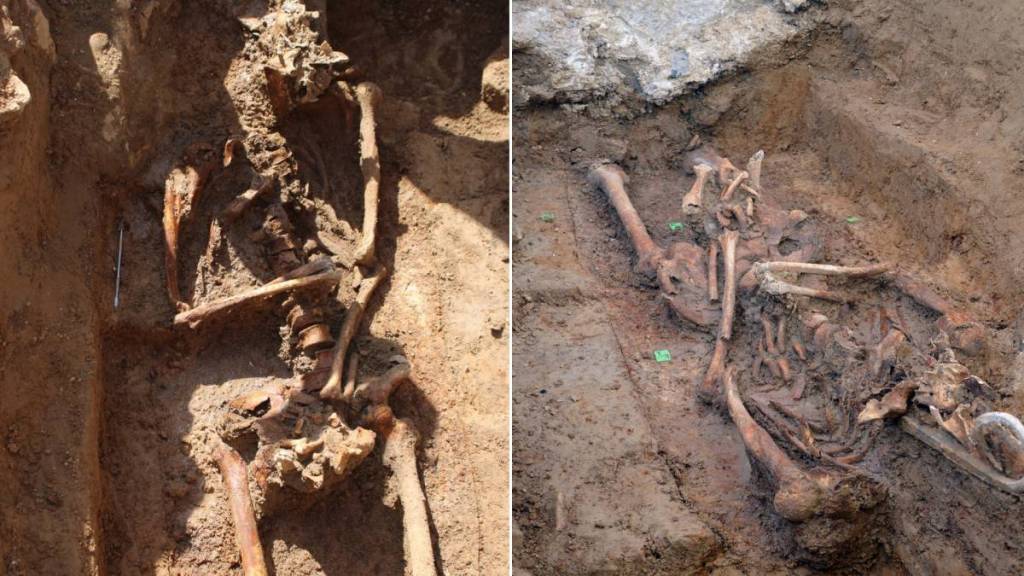
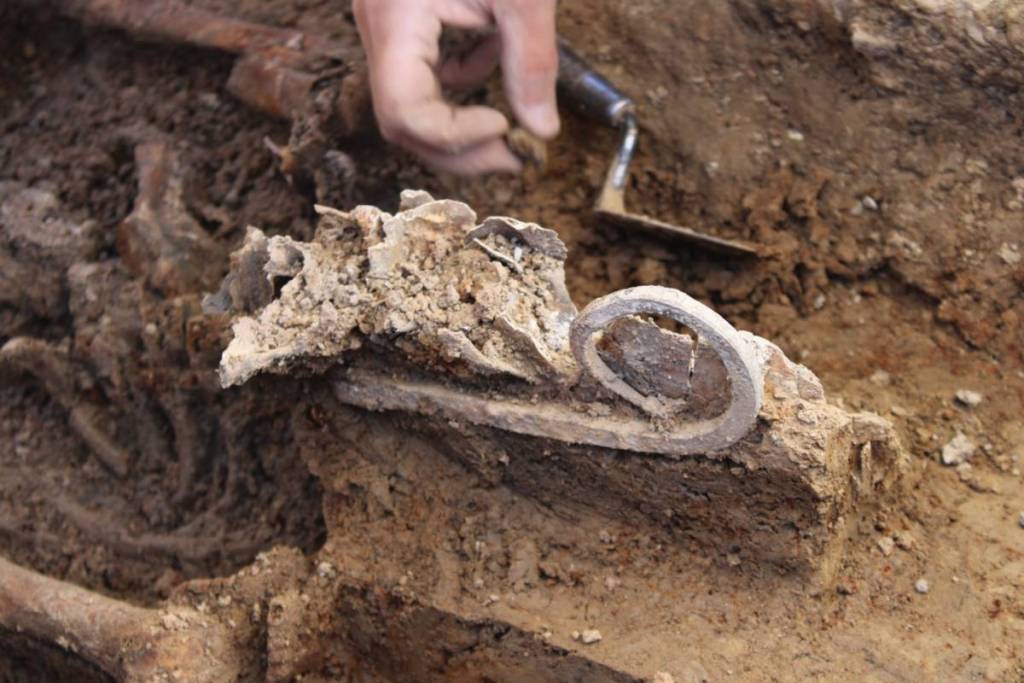
Archaeologists have unearthed an exceptional burial site there dating from the turn of the year 1000. The body reveals valuable clues: delicate gold filaments on the torso, evidence of a shroud or a garment embroidered with funerary fabric, as well as a crozier made of a lead alloy held in the right arm. Now in the care ofthe Royal Belgian Institute of Natural Sciences for in-depth analysis, these remains shed new light onthe history of Liège’s origins.