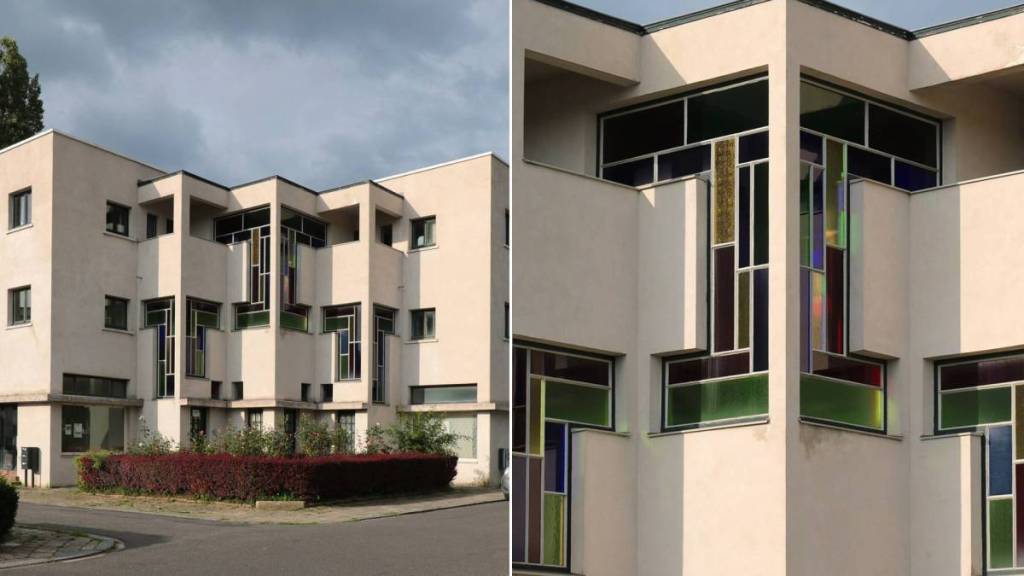

Instantly recognizable, the Cité Moderne in Berchem-Sainte-Agathe is a modernist masterpiece. Designed between 1922 and 1925 by Victor Bourgeois and Louis van der Swaelmen, this garden city was one of Europe’s very first social housing experiments. With its cubist reinforced concrete structures and gleaming white lines, the neighborhood embodied a utopia turned reality: providing light, comfort, and a sense of community to the working classes. From its Grand Prix at the 1925 Paris Exposition to the stories behind its tree-lined squares, immerse yourself in the fascinating history of this historic site and discover what life is like in the neighborhood today.
From White Cubism to the Paris Grand Prix: The Secrets of a Revolutionary Neighborhood
The Cité Moderne was one of Europe’s very first experimental projects in avant-garde social housing. Designed between 1922 and 1925, this neighborhood of 274 housing units marked a radical break from traditional garden cities. Here, there are no exposed bricks: Bourgeois made the bold and experimental choice to use cost-effective reinforced concrete. The bright white stucco covers purely Cubist forms, creating a unique geometric landscape reminiscent of the Kappelleveld housing estate, nestled between the municipalities of Woluwe-Saint-Lambert and Woluwe-Saint-Pierre.
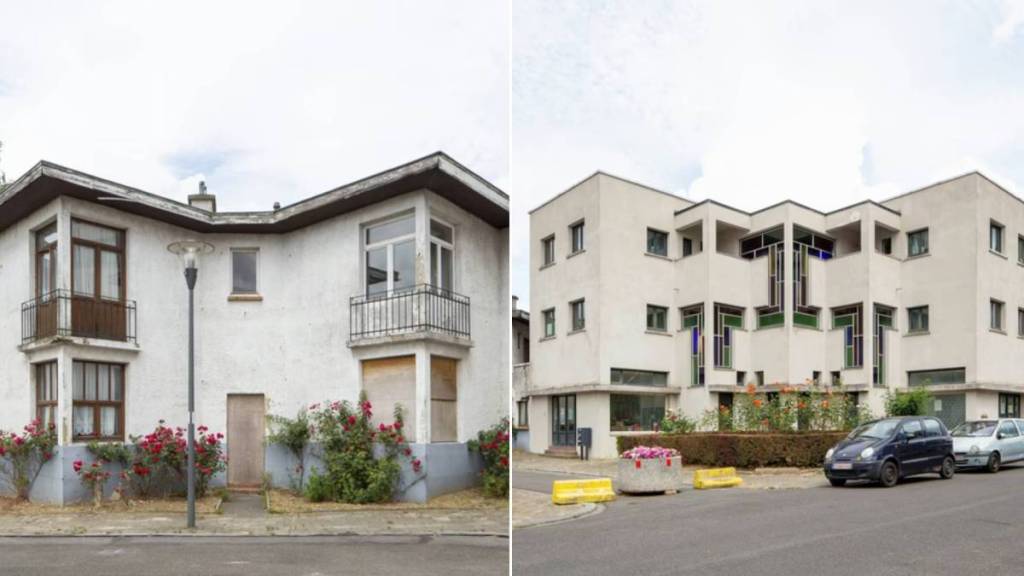
Behind this aesthetic of flat roofs and right angles lies a true humanist utopia. Each home is oriented toward the sun for maximum sunlight and features a private garden suitable for gardening. To soften the minimalist design, artist Pierre-Louis Flouquet incorporated subtle touches of color and stained-glass windows into the facades. A true architectural manifesto, the site astonishedEurope and won the Grand Prix at the 1925 Paris Exposition of Decorative Arts, before being designated a historic site in 2000.
Strolling and the good life: the Cité Moderne today
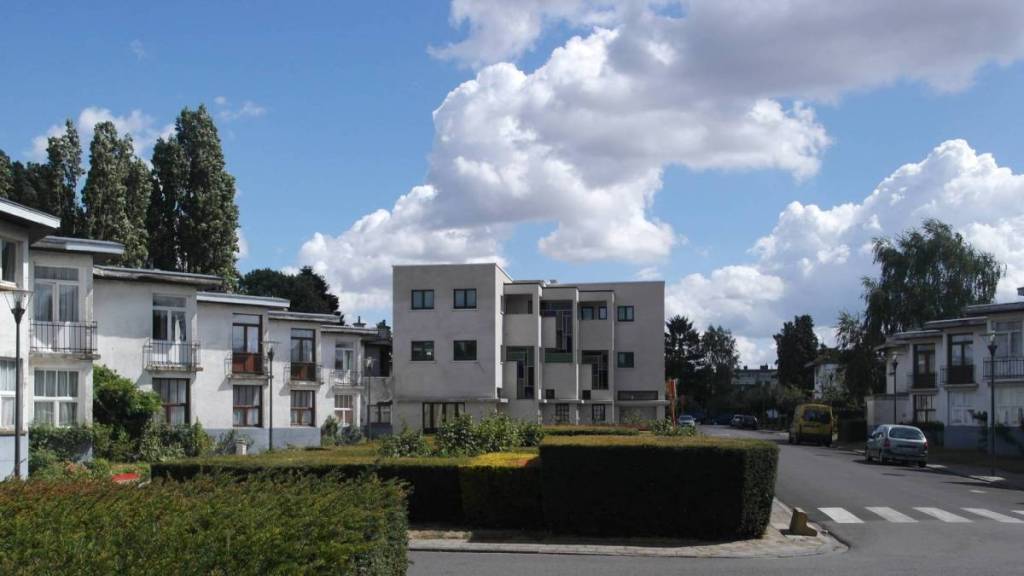
Today, a stroll through the heart of the Cité Moderne offers a pedestrian retreat of incredible serenity. Easy to navigate and well-organized, the neighborhood invites quiet exploration, far fromthe hustle and bustle of the city. The sense of community envisioned by Victor Bourgeois remains intact here: along the tree-lined avenues, residents gather, children enjoy the outdoor spaces, and everyone tends to their own private garden. The highlight is undoubtedly the Place des Coopérateurs, a welcoming public square where the names of the adjacent streets celebrate cooperation,evolution, and social progress.
Extending your stroll beyond the white facades allows you to discover the many facets of Berchem-Sainte-Agathe. Just a short walk away, the Koekelberg neighborhood reveals its urban vistas, while history buffs can escape to the Château du Karreveld. This striking contrast between the geometric precision of the garden city and the red bricks of the castle makes this part of the capital a well-kept secret. It’s a must-see for city dwellers seeking a haven of peace just outside Brussels.