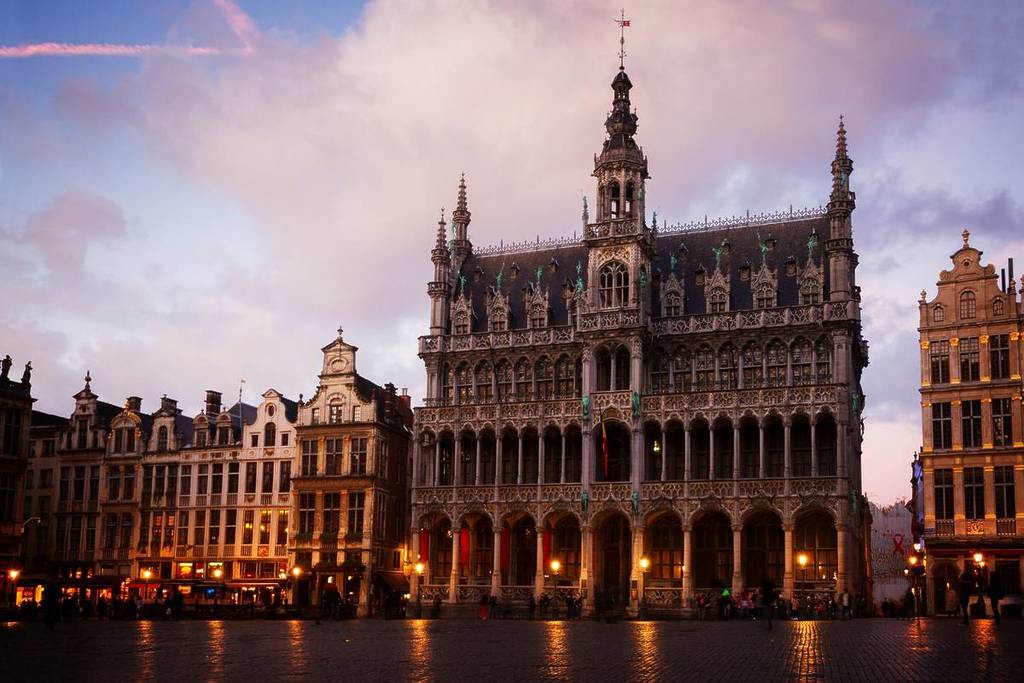
On the cobblestones of the Grand-Place, opposite the Town Hall, the King’s House majestically dominates the heart of Brussels. This iconic neo-Gothic monument hides a turbulent past over the centuries, which few suspect. A true survivor of Belgian history, this giant, nearly 40 meters high, has survived the ages, from its medieval origins to the tragic bombings of 1695 and multiple restorations.
But the legend of the King’s House goes beyond its Gobertange stone facades and regal appearance. Behind its memory-laden walls, this mythical place, now the Museum of the City of Brussels, offers visitors a fascinating journey and a unique experience.
An ancestral epic between medieval foundations and a miraculous destiny
The history of the Maison du Roi began in the 13th century, when the building was used as a bread hall on the capital’s central market square. Over the centuries, the building was clad in stone by the Dukes of Brabant and became a true symbol of royal power. The prestige of the monument continued to grow until it became the residence of Charles V, the “King-Emperor,” hence its name, Maison du Roi.
 © L. Chiarenza 20
However, this rise to prominence suffered its first setback during the bombings of 1695, under the orders of Louis XIV. Only the structure of the building remained standing, already demonstrating its unique resilience. It was finally in the 19th century that the monument took on its current appearance. The building was restored with bricks, blue stone (small Soignies granite) and the famous Gobertange stone. An architectural gem in the neo-Gothic style, it pays homage to its past glory while asserting a solidity capable of defying the centuries to come.
The metamorphosis of a historic setting into the guardian of Brussels’ memory
Crossing the threshold of the King’s House (or Broodhuis in Dutch) is like entering a new dimension. Today, this historic monument has been transformed into the Museum of the City of Brussels. Inaugurated in 1887, the building houses the city’s artistic culture through art, crafts, and urban planning. The interior architecture, with its intricate woodwork and illustrious memorabilia, provides the ideal setting for this journey through time.
The museum’s centerpiece is an entire room dedicated to the history of the iconic Manneken-Pis. Here you can see the original 17th-century sculpture and a large selection of the famous statue’s symbolic costumes. As you explore these rooms filled with historical secrets, you quickly realize that the King’s House is not just a museum but a testament to Brussels’ identity, a place where the country’s heritage resonates with the rhythm of the city.
📍Grote Markt van, 1000 Brussels, Belgium