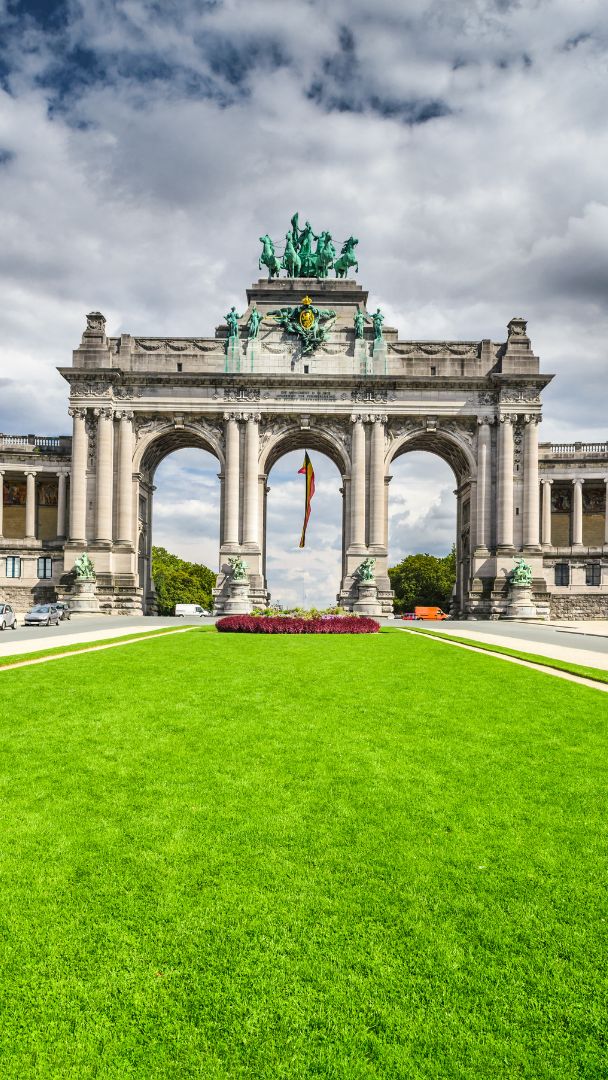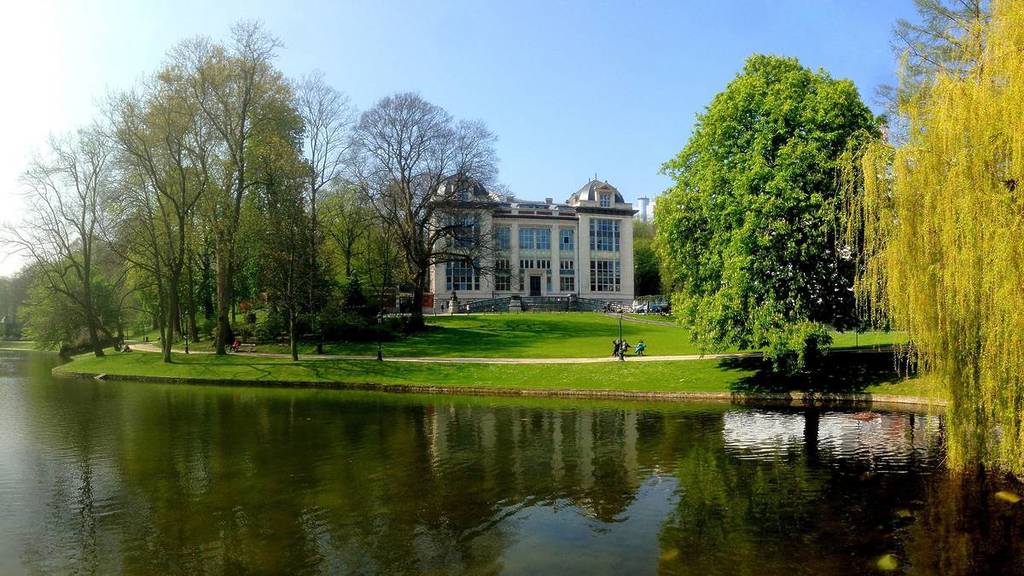

At the foot of the glass giants of the European Quarter lies one of Brussels’ best-kept secrets: Leopold Park. A true green lung nestled in the former Maelbeek Valley, this English-style garden offers a bucolic retreat among remarkable trees and aquatic wildlife. Once a fashionable 19th-century zoo, it was later transformed into a prestigious “City of Science” under the leadershipof Ernest Solvay, proof that this listed site is a vibrant testament tolocal history. From its medieval ruins to its exceptional museums, set out to discover this natural sanctuary, right in the heart of the bustling city.
Leopold Park: the green lung of the European Quarter
Listed since 1976, Leopold Park is a veritable open-air history book spanning its ten hectares, which once served as the medieval estate of Eggevoort, whose 15th-century tower still watches over the pond. A few years later, it became a fashionable zoo where one could encounter exotic animals, of which the “sea lion pool ” is the last remaining trace. The zoo then closed its doors in 1877, making way forErnest Solvay’s ambitious “City of Sciences , ” transforming the valley into a global center of knowledge.
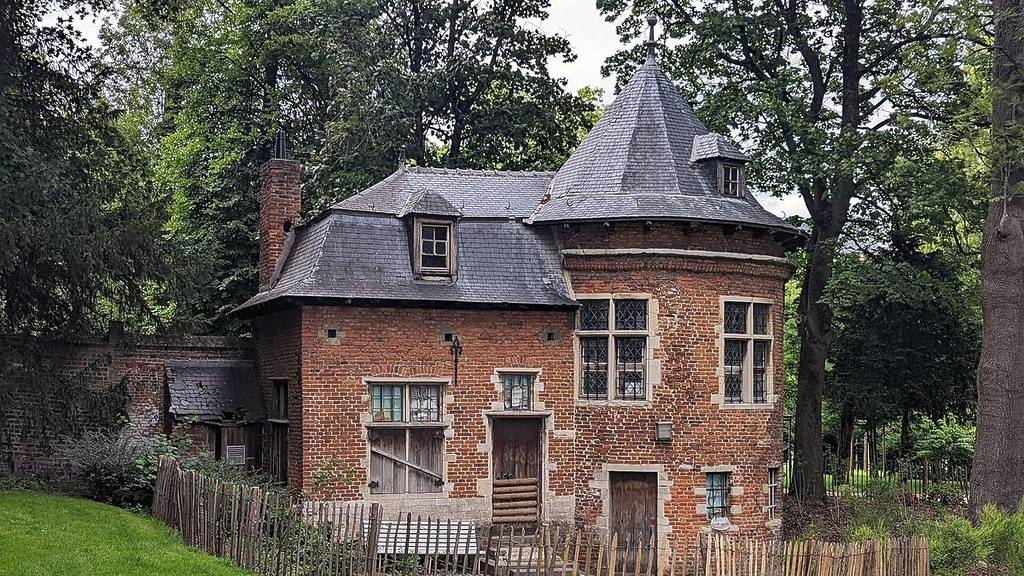
Today, the park offers surprising biodiversity along its paths winding through remarkable trees, including a 200-year-old Oriental plane tree. Walkers can observe a variety of wildlife, from gray herons toEgyptian geese, not to mention the famous ring-necked parakeets. Between its rolling lawns and its stream flowing down to the pond, Leopold Park remains a place where nature reclaims its place amidstthe surrounding urban landscape.
A natural immersion at the heart of knowledge
Today, Leopold Park is a true cultural campus surrounded by the glass giants of the European Quarter. Many architectural gems have found a new lease on life, from the “City of Science” to the Solvay Library, which now serves as a venue for prestigious events. Just a few steps away,the Eastman Institute now houses offices of the European Parliament, underscoring the unbreakable link between Brussels’ heritage and international institutions.
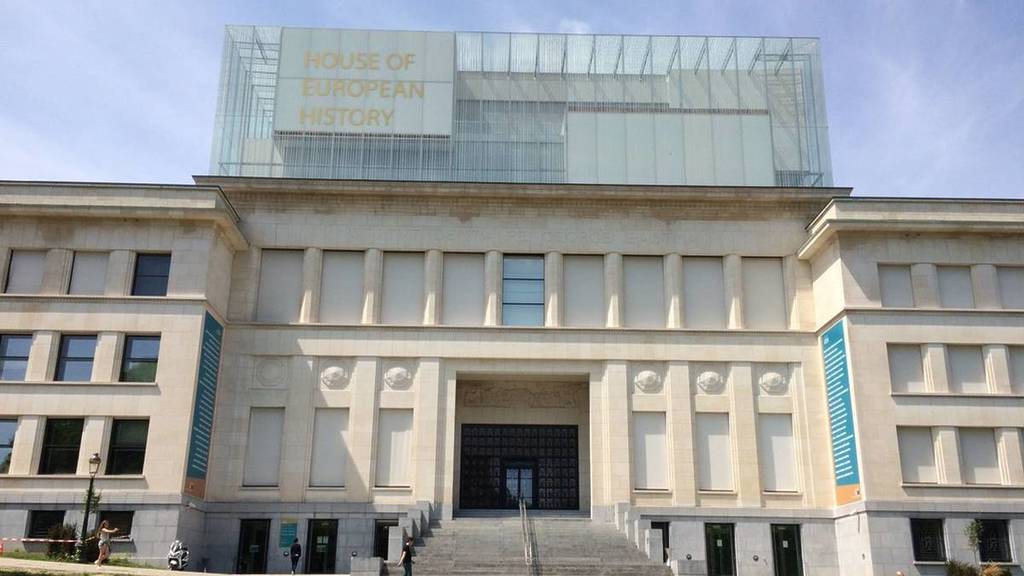
For culture lovers, the park is a must-see. In its upper section, the Museum of Natural Sciences impresses with its galleries, while the House of European History offers a modern exploration of the continent’s destiny. Whether to admire the frescoes ofthe former Institute of Anatomy or for a rejuvenating lunch at the foot of the Parliament, Leopold Park stands as the beating heart of this perpetually bustling Brussels neighborhood.