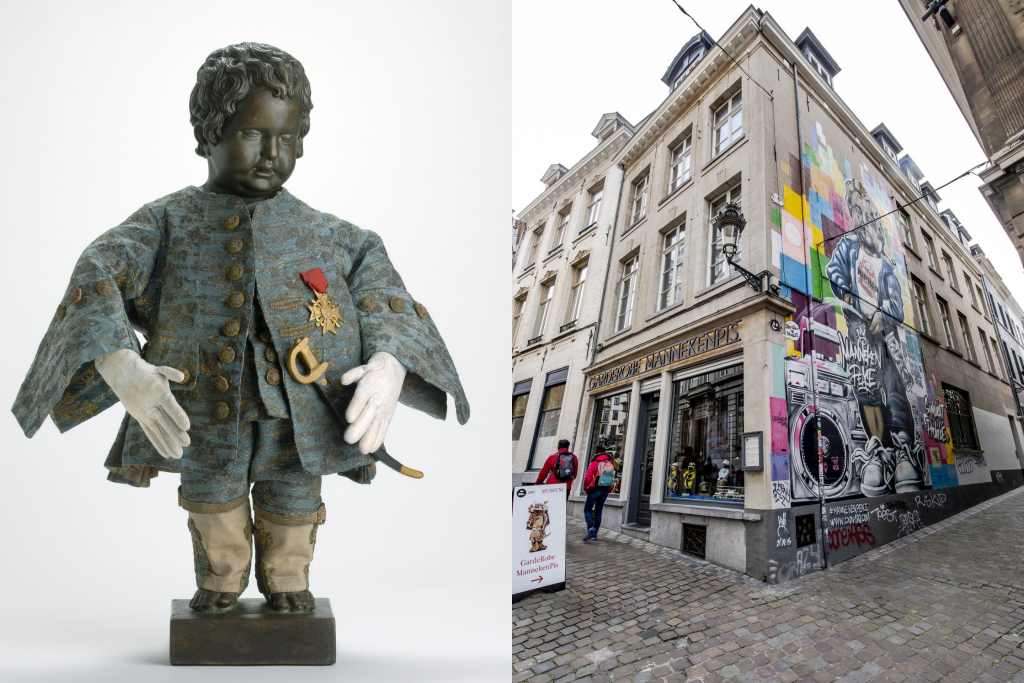

In 1747, in the midst of the War of the Austrian Succession, French soldiers committed the unthinkable: they stole the legendary Manneken-Pis, sparking the fury of the people of Brussels. To defuse the diplomatic incident and make amends for this affront, King Louis XV decided to present the unusual bronze statuette with a sumptuous gentleman’s outfit, while elevating it to the rank of knight. This legendary gesture established a centuries-old tradition that is now unique in the world. From behind the scenes of this historic event to the incredible “GardeRobe” museum—whose collection includes more than 1,000 costumes from all corners of the globe—discover the astonishing saga of a national treasure unlike any other.
How a military affront gave rise to a legend
In 1747, as the War of the Austrian Succession raged, Brussels was under French occupation. It was in this tense climate that soldiers committed the irreparable: they stole the Manneken-Pis, an irreplaceable symbol of Brussels folklore. Aware of the danger, the thieves abandoned the bronze statuette near a cabaret. But the population, enraged by this umpteenth affront, was on the verge of a riot.

To defuse the diplomatic incident and calm tensions, King Louis XV personally took matters into his own hands. He presented the iconic ketje with a gentleman’s outfit of inestimable rarity, crafted from blue silk embellished with gold and silver threads. Even more remarkably, the monarch knighted him, thereby requiring French troops to render him a military salute. Through this unprecedented act of royal diplomacy, Louis XV transformed an offense into a centuries-old tradition: he had just presented the Manneken-Pis with the very first official outfit in its history.
Behind the Scenes of Manneken-Pis’s Incredible Wardrobe
Today, Manneken-Pis enjoys a unique privilege: it is the only statue in the world to have its own wardrobe. Located just a stone’s throw from the fountain, the Manneken-Pis GardeRobe Museum houses a spectacular collection of over 1,000 outfits, treated and preserved as true works of art. Fun fact: the historic costume gifted by Louis XV in 1747—which has become too fragile to be displayed—is displayed alongside an exact replica made of silk lampas.
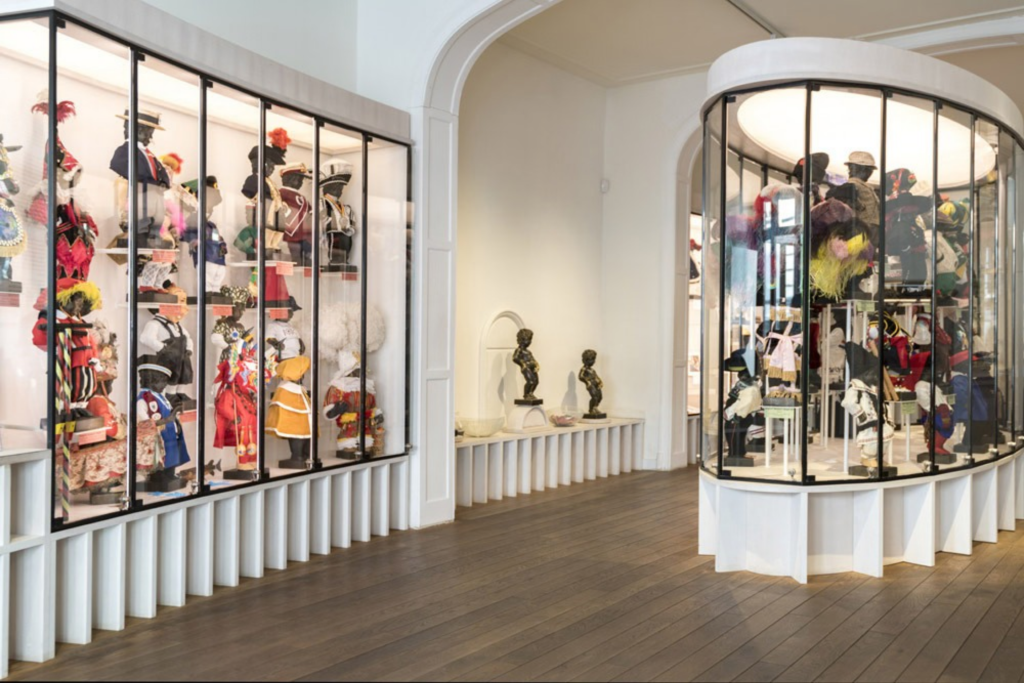
Far from being frozen in the past, this tradition remains particularly vibrant. Each year, the collection grows by 20 to 30 new costumes from around the world. Whether they are tributes to great fashion designers, trades, sporting events, or social causes, each new garment is the subject of an official dressing ceremony before taking its place in the display cases. To preserve the pieces, the museum regularly rotates its selection of approximately 140 costumes on display, ensuring that visitors always have something new to discover.