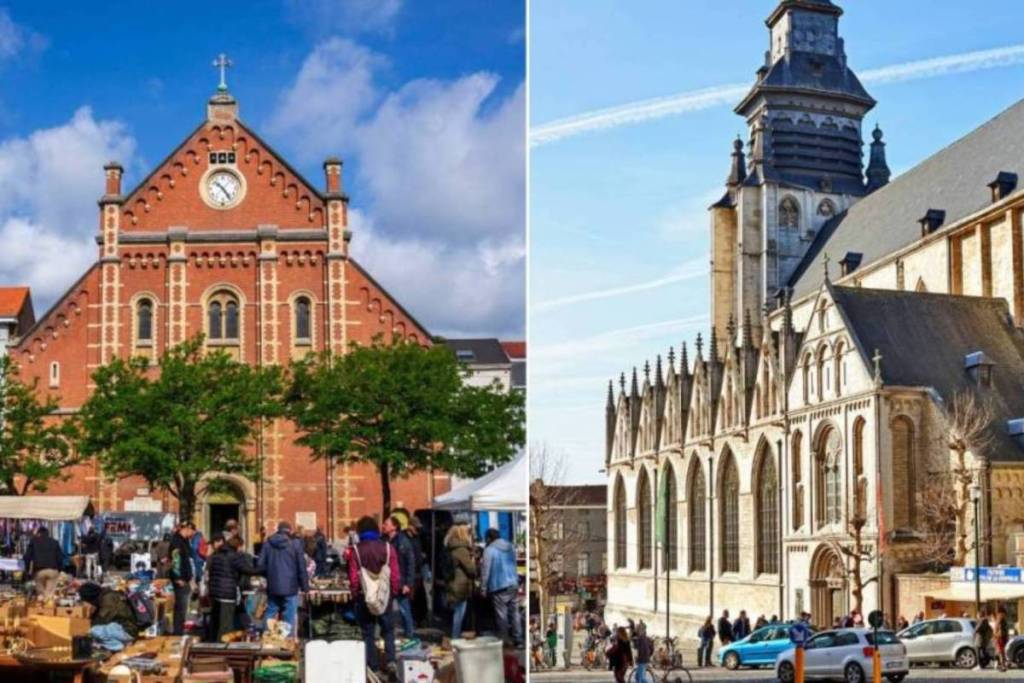

Nestled in the heart of the working-class Marolles neighborhood, Place du Jeu de Balle is home to one of Brussels’ most vibrant institutions: the Vieux Marché. Every morning, this legendary spot draws avid bargain hunters and casual strollers in search of unique items, vintage souvenirs, or hidden treasures. But behindthe warm atmosphere of its stalls lies a fascinating centuries-old history. Driven out of the central boulevards, this market found its permanent home on a square with a rich and eventful past. From industrial heritage to iconic architecture and unusual anecdotes, discover the secrets of this iconic square and its legendary market.
A bargain hunter’s paradise and vintage charm: the secret to the Vieux Marché’s success
Building on Brussels’ tradition of secondhand trade dating back to the Middle Ages,the Oude Merct settled in the 17th century on what is now Place Anneessens. But in the 19th century, the covering of the Senne River transformed the neighborhood. Eager to attract a more affluent population, the City of Brussels decided to relocate this flea market. On March 15, 1873, the merchants took possession of their new location on Place du Jeu de Balle, in the Marolles neighborhood.
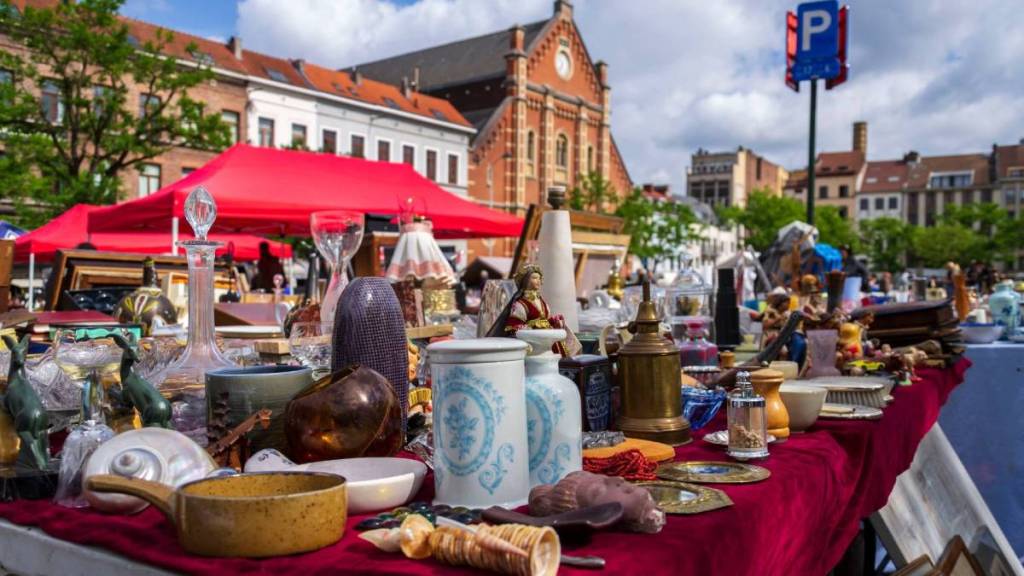
Since then, the famous flea market has never stopped operating. Today, it is one of the few markets in the world to be held daily, 365 days a year. Even during World War II, the site remained a hub of trade, becoming the heart of the local black market. Today, more than 300 professional vendors set up shop there every morning, bringing together savvy bargain hunters, tourists, and locals in a warm and lively atmosphere.
History, Secrets, and Hidden Treasures of Place du Jeu de Balle
Long before it hosted the stalls of the Vieux Marché, the square was home to the Renard locomotive factory in the 19th century. Its demolition made way for a vast space dedicated to “balle pelote,” a very popular game that gave the square its French name. Its Dutch equivalent, Vossenplein, recalls the memory of the former factory. Surrounded by historic houses and bordered bythe former fire station —now converted into a cultural center—the square was enhanced in 1949 by the addition of the Brussels Baths, a remarkable Art Deco building.
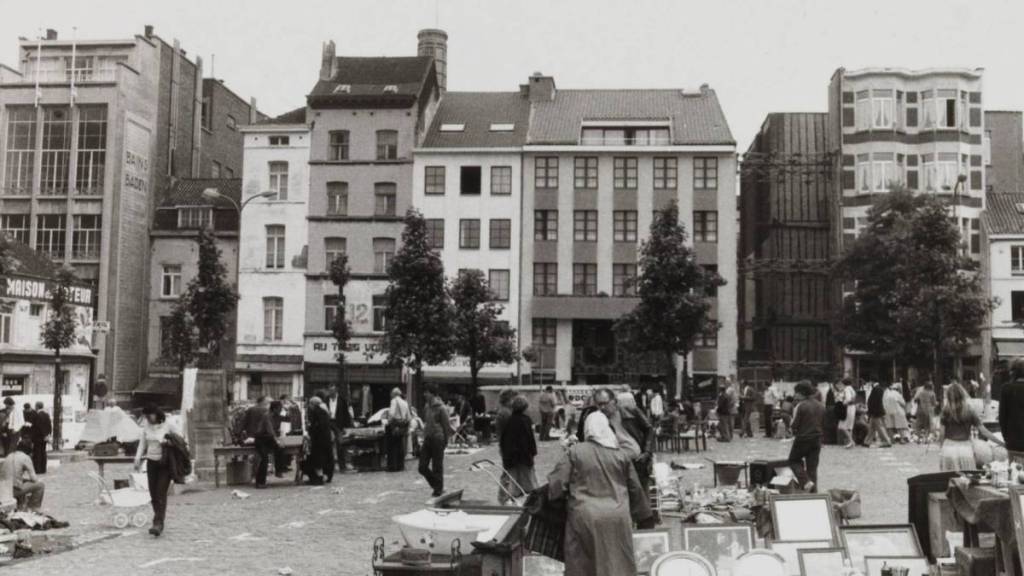
The place is also brimming withfascinating stories that have shaped its legend. It was right here that Hergé had Tintin go bargain-hunting in *The Secret of the Unicorn*, where he bought the famous model of the ship. But the best-kept secret lies beneath the cobblestones: an air-raid bunker covering nearly 200 m², built in 1942 to protect the residents of the Marolles. Saved from demolition in 2018, this now-listed shelter stands as a testamentto the people of Brussels’ attachment to the history of their square.