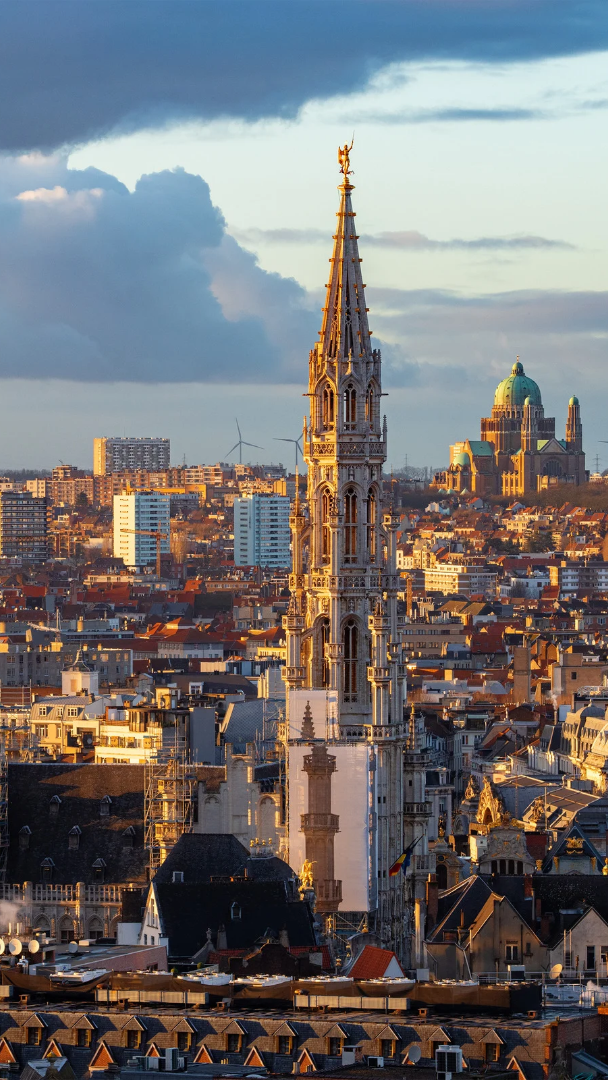

Today we know them as places for walking, culture, or entertainment, but some have a very different history. In Brussels, several former train stations and railway infrastructures have gradually changed their purpose, leaving behind buildings, tracks, or routes that still tell the story of the importance of rail in the capital.
In Laeken, a former train station has become a cultural venue
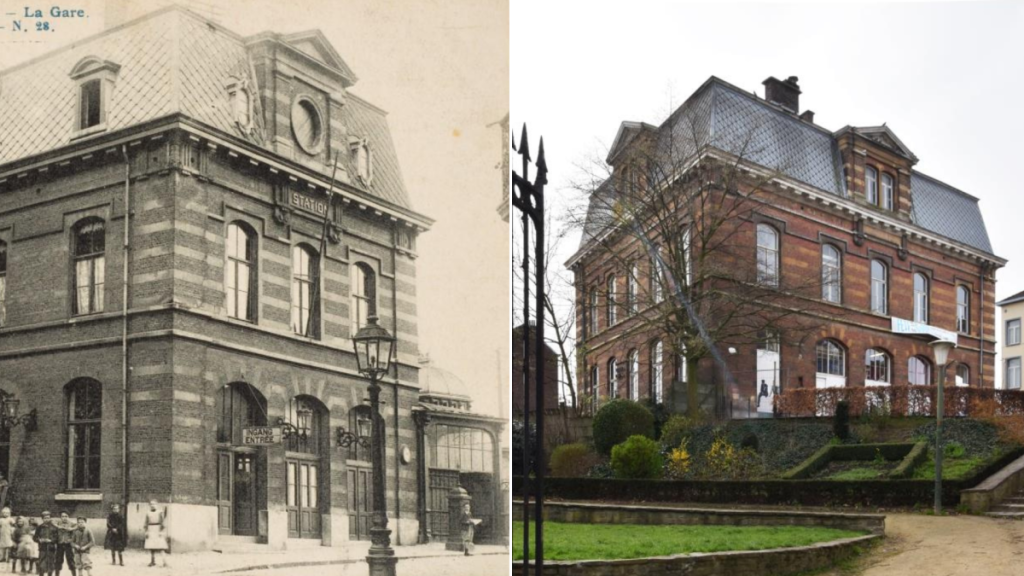
On the Notre-Dame square, it’s hard to imagine that this elegant brick building was once a train station. Opened in 1880, it closed in 1982 following the opening of the Bockstael metro station. Listed as a historic landmark since 1996, it was subsequently restored and repurposed as a sociocultural facility. It now features, among other things, a café and spaces for neighborhood organizations. A rather successful way to breathe new life into a building that might otherwise have disappeared from the cityscape.
From Freight to Culture at Tour & Taxis
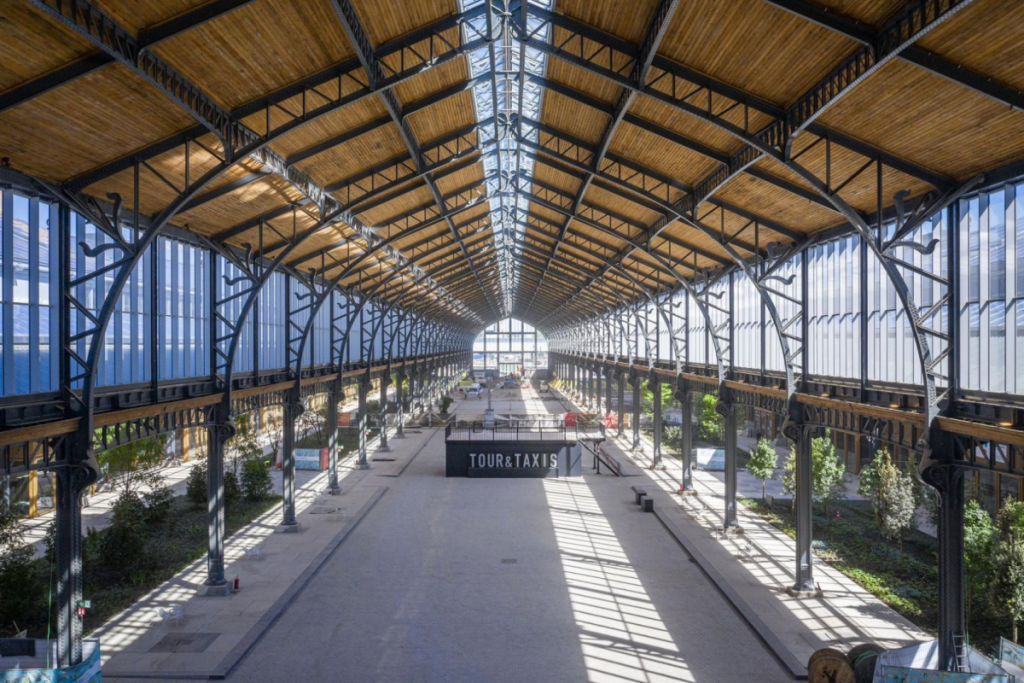
The case of Tour & Taxis is even more spectacular. For decades, the vast site was crisscrossed by a network of railroad tracks and served as a hub for Brussels’s freight transit. The famous Gare Maritime was part of this immense customs clearance and warehousing complex. The tracks gradually disappeared in the 1990s and 2000s, while the buildings were restored to house offices, shops, events, and public spaces.
A former railroad line transformed into a park
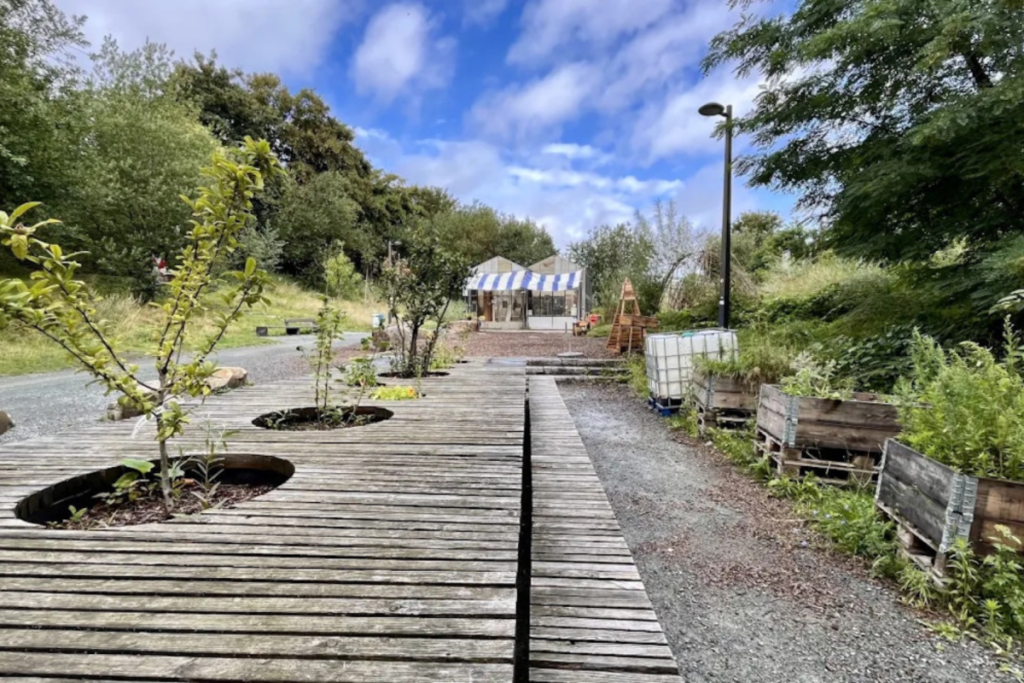
Further on, Park L28 also follows in the footsteps of this railway history. The former Line 28A, which connected the Tour & Taxis site to the Brussels network, has given way to a green space running through a densely built-up neighborhood. Until the 1980s, the area was still part of the railway landscape before becoming a brownfield site and then a park. Today, you can literally take a walk in the footsteps of the old railroad.