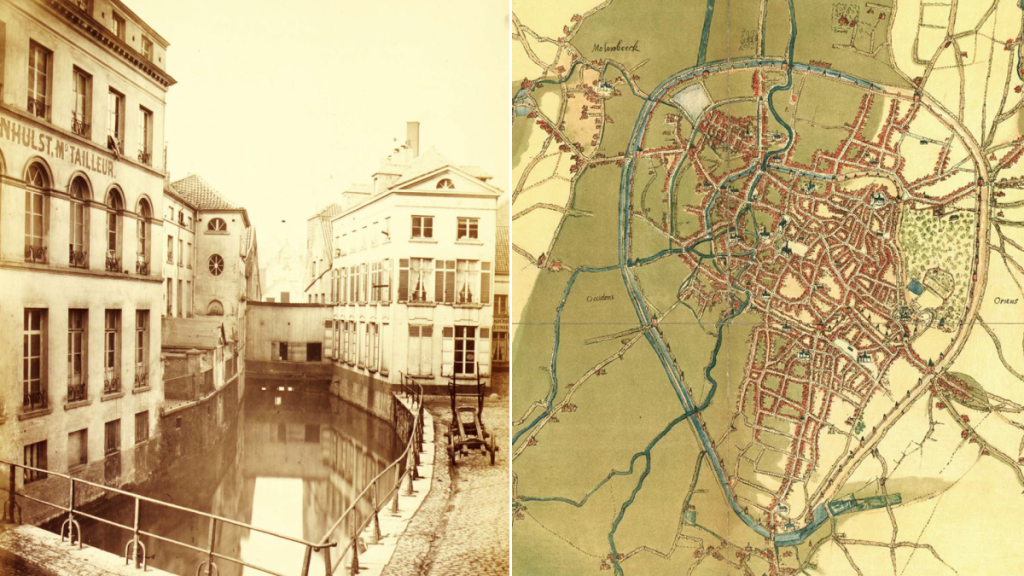

It is the very foundation of Brussels, but sometimes you have to know where to look to find its trace. Long at the heart of city life, the Senne was covered over in the 19th century before being partially diverted. Today, it has become almost invisible in the city center, even though it continues to flow through the capital.
A river hidden beneath the boulevards
For centuries, the Senne flowed through Brussels in the open, but its repeated flooding and the accompanying sanitation issues eventually turned the river into a major urban problem. Between 1866 and 1871, its course was therefore covered over in the city center. Then, between 1930 and 1955, a second construction project diverted the river around the Pentagon. This is one of the main reasons why Brussels’ major boulevards now follow the former course of the Senne.
Where can it still be seen?
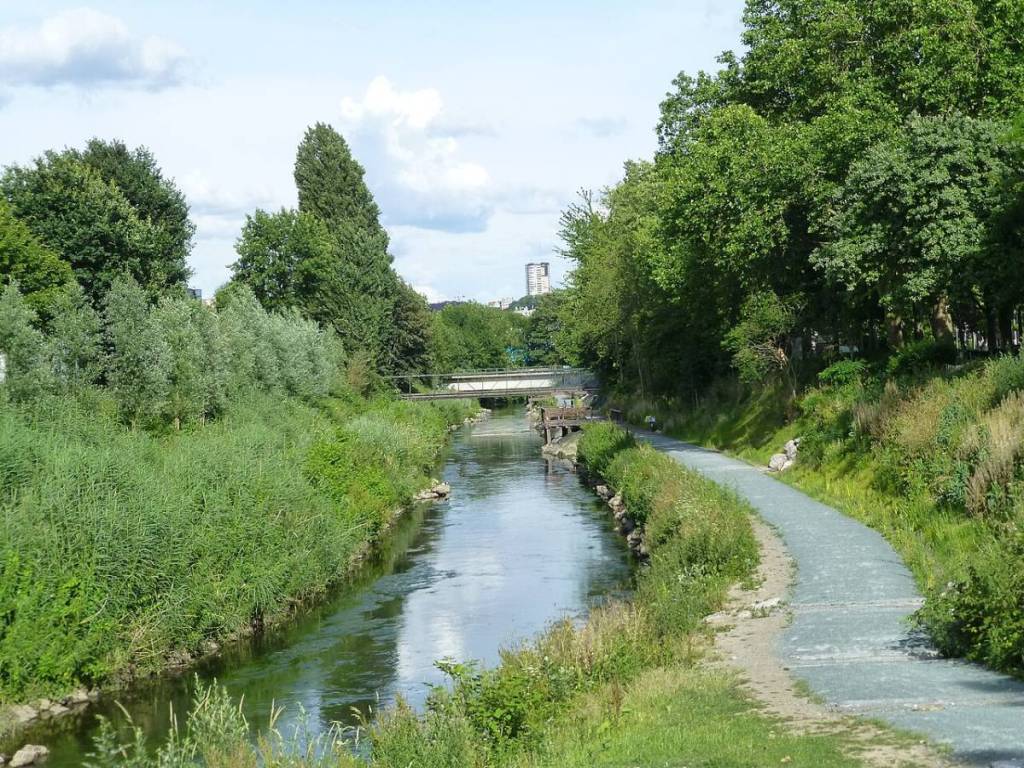
You have to head south in Brussels to find the Senne flowing in the open again. Anderlecht is one of the best places to see it: the river remains visible there in several sections, particularly near the Chaussée de Mons and the Petite-Île. The Grande Écluse on Boulevard Poincaré is also a particularly telling remnant of this history: built between 1868 and 1871, it bears witness to the era when the Senne still flowed through the city.
Traces all the way to the city center
Even when it is no longer visible, the river continues to leave clues. The City Archives note, in particular, that it can still be glimpsed near the Anderlecht lock and close to the Brussels-North wastewater treatment plant. At the Porte de Ninove, its former course also serves as a reminder that a branch of the Senne once flowed into Brussels via the Petite Écluse. And for those who want to go even further back in time, a reconstruction of the river can be seen at 23 Place Saint-Géry.