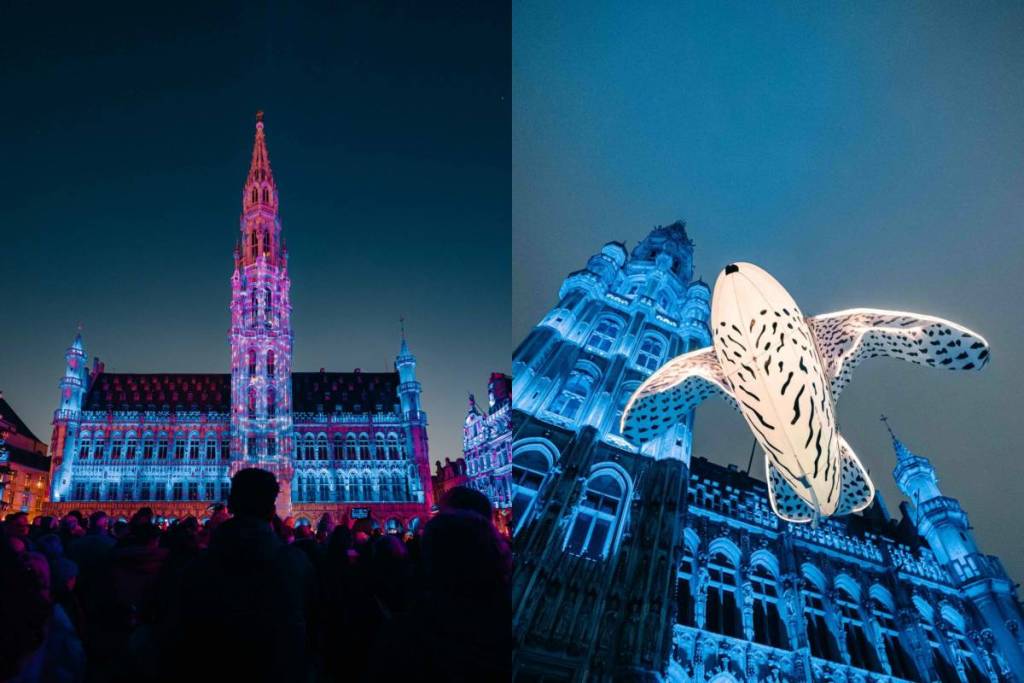

As the holiday season approaches, Brussels’ Grand-Place is set to unveil its brand-new nativity scene for the 2026 edition of Plaisirs d’Hiver. This year, the capital is honoring the Béarn-Basque Country region with a monumental two-meter-tall wooden installation, designed and carved by young French artisan apprentices. This unique handcrafted creation follows the controversial 2025 version and its faceless fabric figures. From the secrets behind the making of this wooden work to a look back at last winter’s debates: discover everything you need to know about the flagship attraction of the Brussels Christmas market.
Craftsmanship and tradition: the 2026 nativity scene carved by young artisans from Béarn
This year, the magic of Christmas on the Grand-Place takes on a unique Pyrenean flair. Designed by students at the Lycée des Métiers d’Art in Coarraze, the monumental nativity scene for Plaisirs d’Hiver 2026 impresses with its authenticity. Carved and then chiseled from old wooden railroad ties, the imposing figures—nearly two meters tall—combine Gothic aesthetics with the simplicity of medieval chess pieces. To dress them, the tapestry program crafted elegant, custom-made capes.
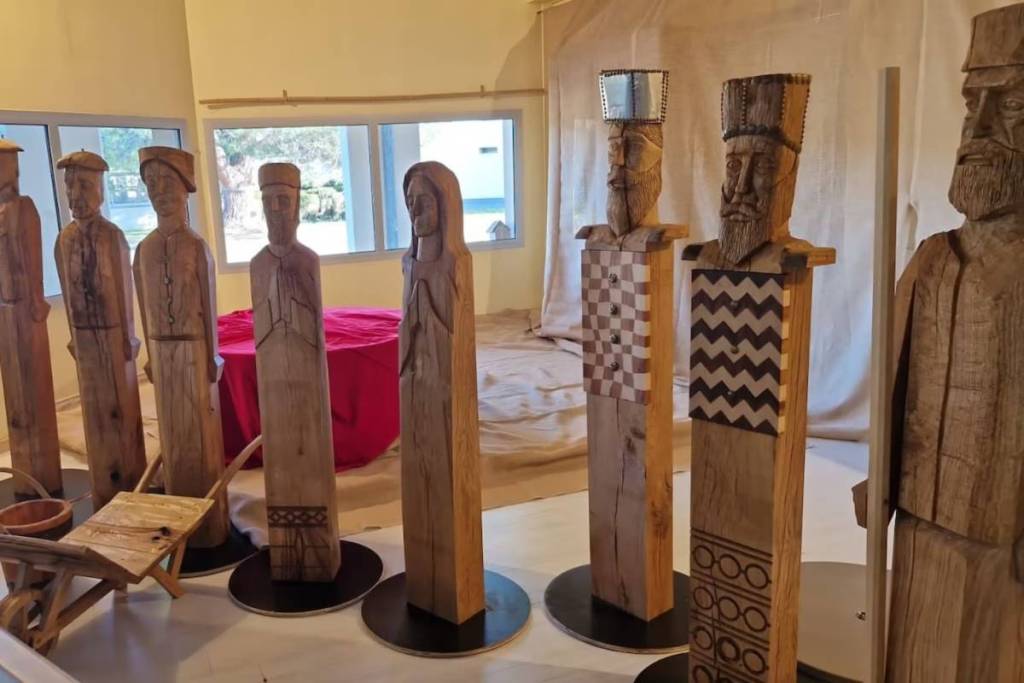
Beyond the Holy Family, the work incorporates delightful cultural references. Two major regional figures make an appearance: the Béarn ragpicker and the Basque coalman Olentzero, both wearing the traditional beret. But the most unusual detail will delight Brussels residents: the Baby Jesus rests in a turtle shell, while a Renaissance-era greaser and his wheelbarrow pay homage to the famous guild house located right on the square itself.
Following last year’s debates, a monumental nativity scene will be on display through 2028
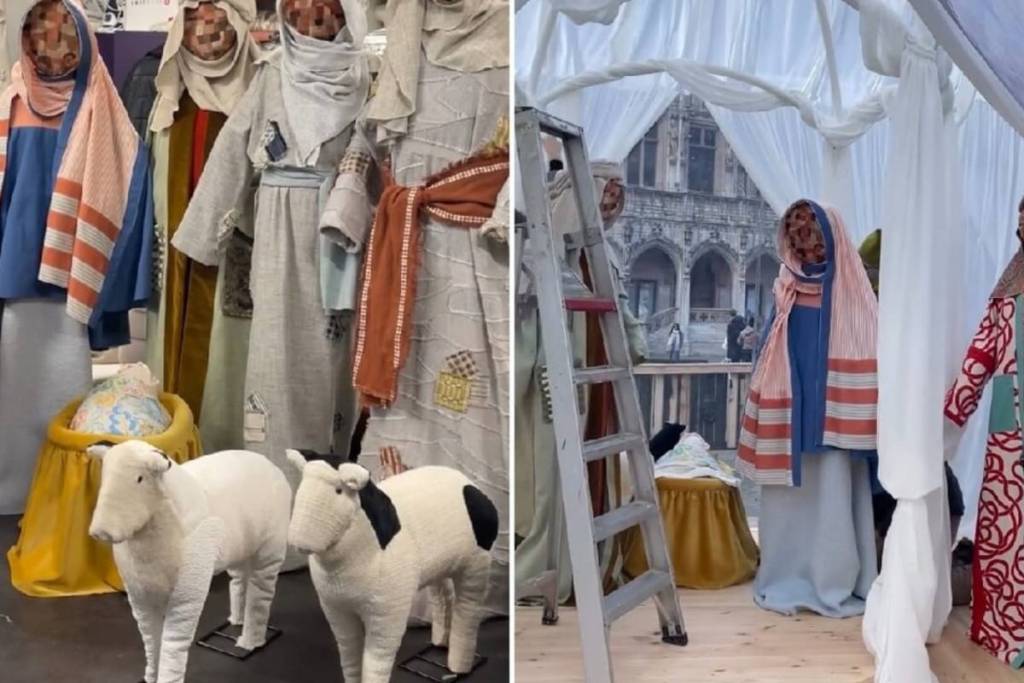
Last year, the installation on the Grand-Place sparked heated discussions among visitors and tradition enthusiasts. Composed of large, faceless fabric figures, the 2025 edition offered an artistic interpretation that left no one indifferent. For this winter of 2026, the organizers of Plaisirs d’Hiver have opted for a striking return to wood and traditional woodcarving, presenting a work that is both warm and firmly rooted in artisanal craftsmanship.
This new creation from Béarn was designed to become a permanent fixture in the heart of the capital: it will take pride of place on the Grand-Place for three consecutive winters, through 2028. For the students at the Lycée des Métiers d’Art in Coarraze and their teachers, this means their meticulous work will be admired by millions of visitors from around the world over the next three years.