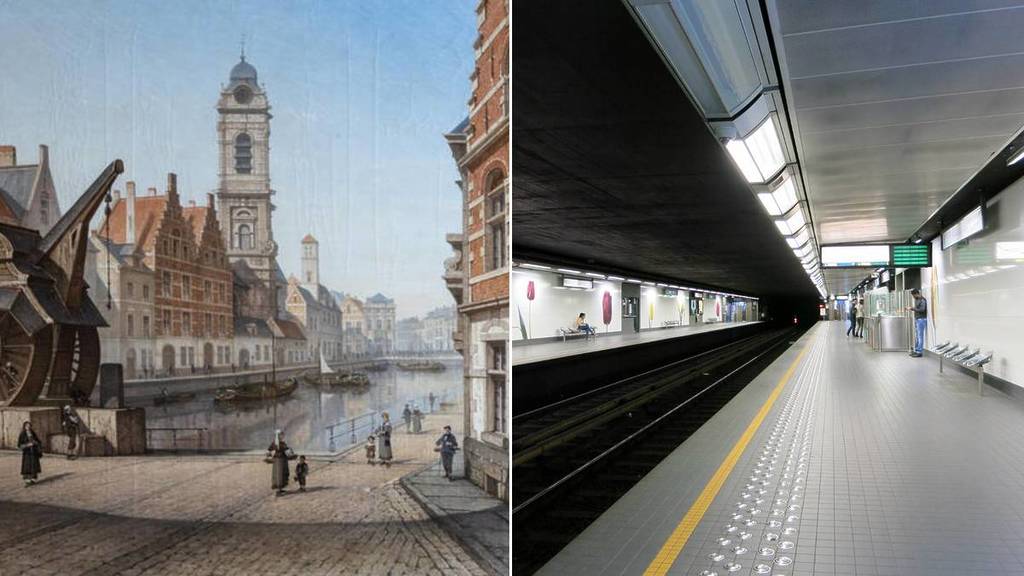

Right in the heart of Brussels, Place Sainte-Catherine hides an unexpected secret: a former harbor basin, now covered… by a metro station. An urban curiosity buried deep within the neighborhood, where a merchant past and a modern transit network intersect silently (or perhaps not—there’s the sound of the rails!). Discover the forgotten history surrounding a station well known to Brussels residents: the Sainte-Catherine metro station.
When Brussels Was a Port
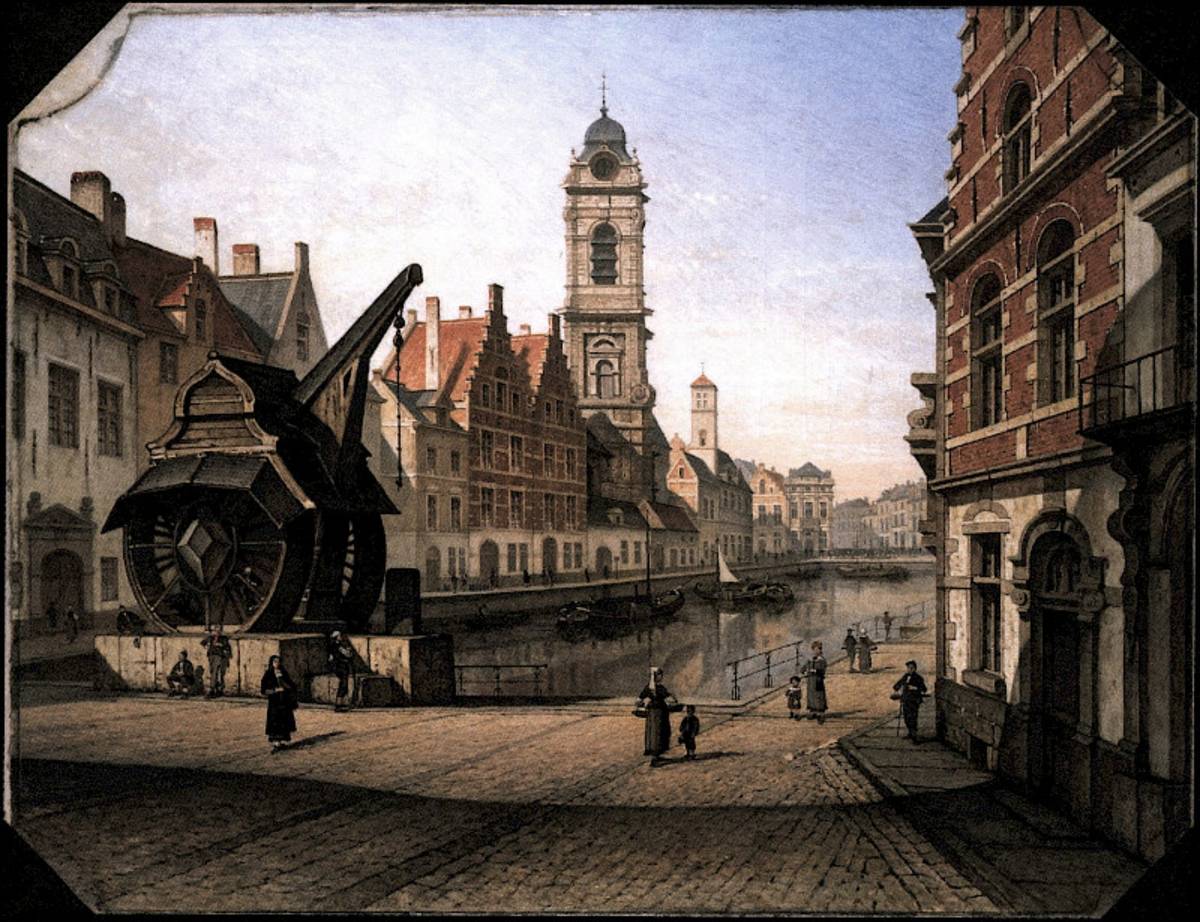
Imagine Brussels crisscrossed by docks and quays, from which barges loaded with foodstuffs, textiles, or wood would set sail. As early as the 16th century, the Sainte-Catherine neighborhood was indeed one of the beating hearts of the city’s river trade. Connected to the Willebroek Canal as early as 1561, the Sainte-Catherine basin became a true economic lifeline, where the constant flow of goods set the pace of urban life. The port was so essential to the city that warehouses, market halls, and taverns were built there . It was the busiest place of its time. But over the centuries, the water receded: competition from the railroad, followed by urbanization, eventually led to the basin’s demise, and it was permanently filled in in 1853.
A square set on the water
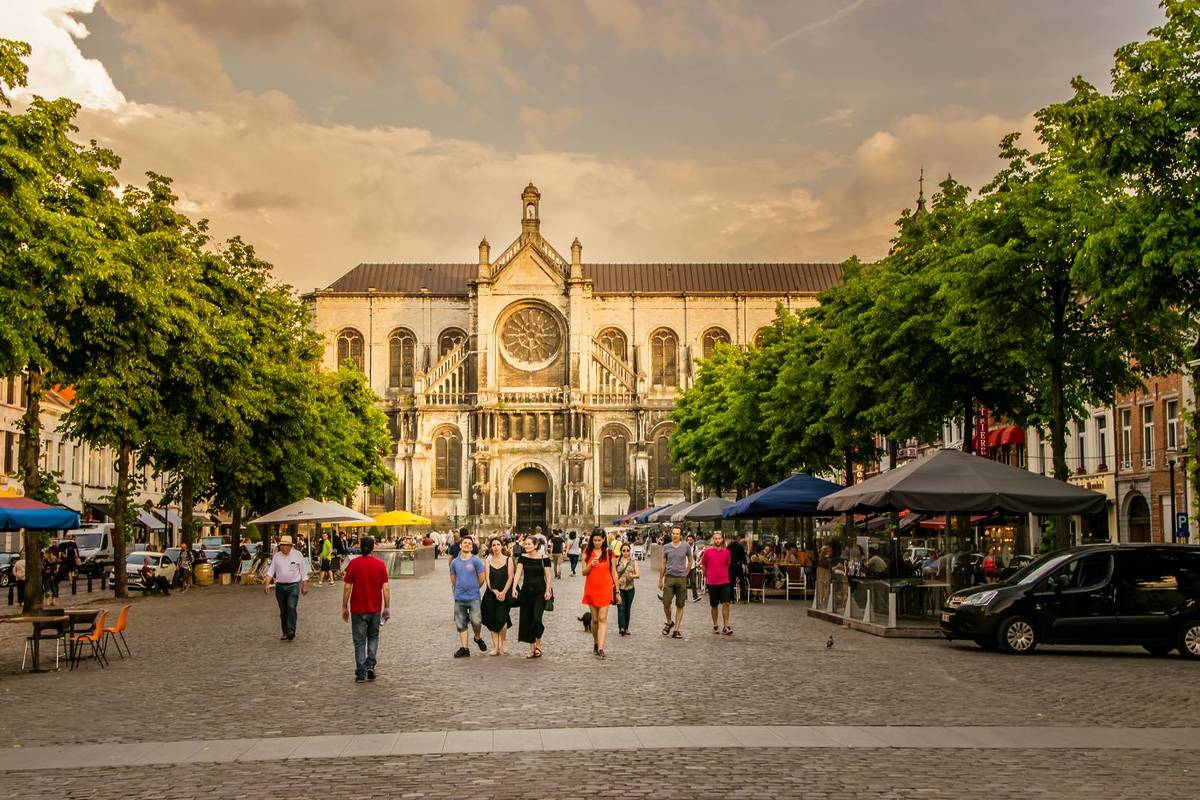
On this now-dry land, Brussels is turning a new page in its history. In 1884, a fish market was established on the former body of water, and the Sainte-Catherine Church, built between 1854 and 1874, stands with its imposing Neo-Baroque silhouette right where the boats once docked. The square became a popular, food-loving, lively landmark —a place of passage and gathering that nevertheless retains, beneath its cobblestones, the faint echoes of a forgotten port past. For even today, the square is famous for its many fish and seafood restaurants!
A Metro Station Following in the Footsteps of a Vanished Basin
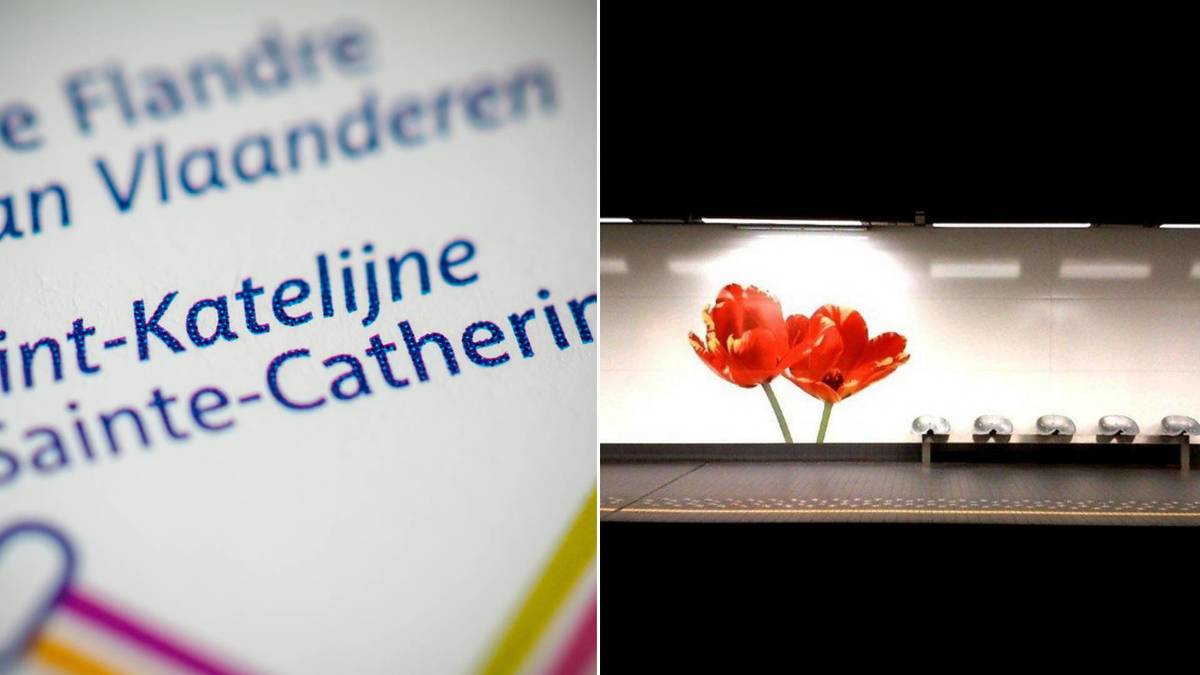
When the STIB expanded its metro network in the late 1970s, it chose to build a station directly on the site of the former basin. The Sainte-Catherine station was thus discreetly integrated into the cityscape, following the straight line of the vanished basin. A detail invisible to commuters but obvious to the curious: the tunnel is narrower here, and the curve is sharper, constrained by the neighborhood’s historic foundations. Thus, every train that passes through literally travels through a place that was once filled with water, sails, and the shouts of dockworkers. A simple stop that has become a time capsule. Can you picture it?