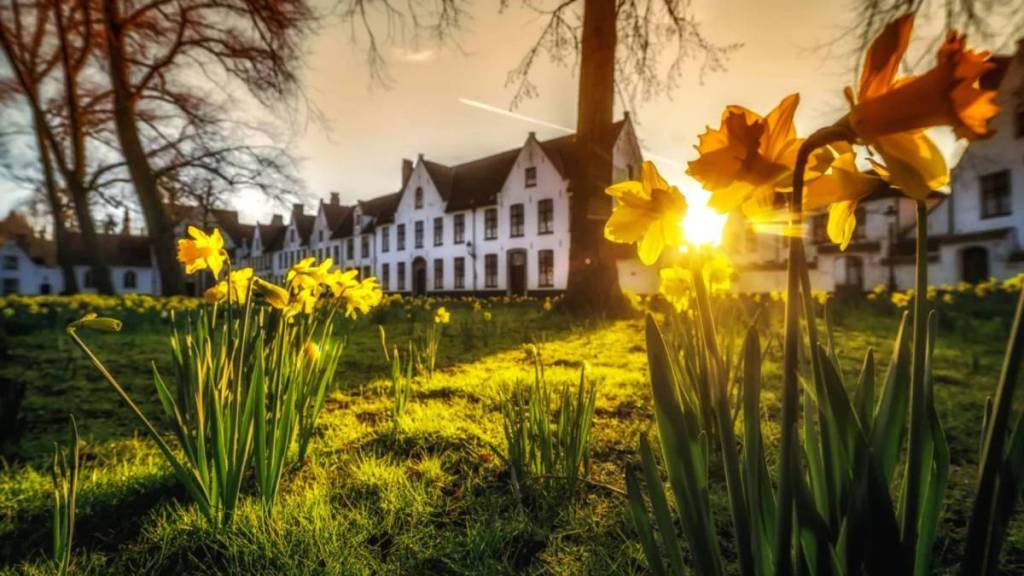

In the heart of the romantic city of Bruges, the “Princely Beguinage Ten Wijngaarde ” stands as a timeless oasis. In the year 2026, this haven of peace, a UNESCO World Heritage Site, continues to fascinate with its unique atmosphere. Founded in the 13th century, this site served as a refuge for the Beguines, who pioneered an innovative way of life there. From glimpses into their rebellious past to the secrets of Flemish architecture, explore an intact masterpiece —from picturesque white facades to the large inner garden carpeted with spring daffodils. Discover the enchanting setting of this well-preserved site, less than 1 hour and 30 minutes from the capital.
The Free Women of Ten Wijngaarde: The Fascinating History of the Beguines of Bruges
Born in the Middle Ages to meet the spiritual and material needs of women, the Beguine movement quickly shook upEurope. In Bruges, these women came together as early as 1242 to lead an autonomous life, far from strict monastic rules. Unlike traditional nuns, they retained their property and individual rights, free to leave the community as they pleased. This unprecedented independence deeply unsettled the male clerical hierarchy, to the point that they were declared heretics by the pope in 1311.
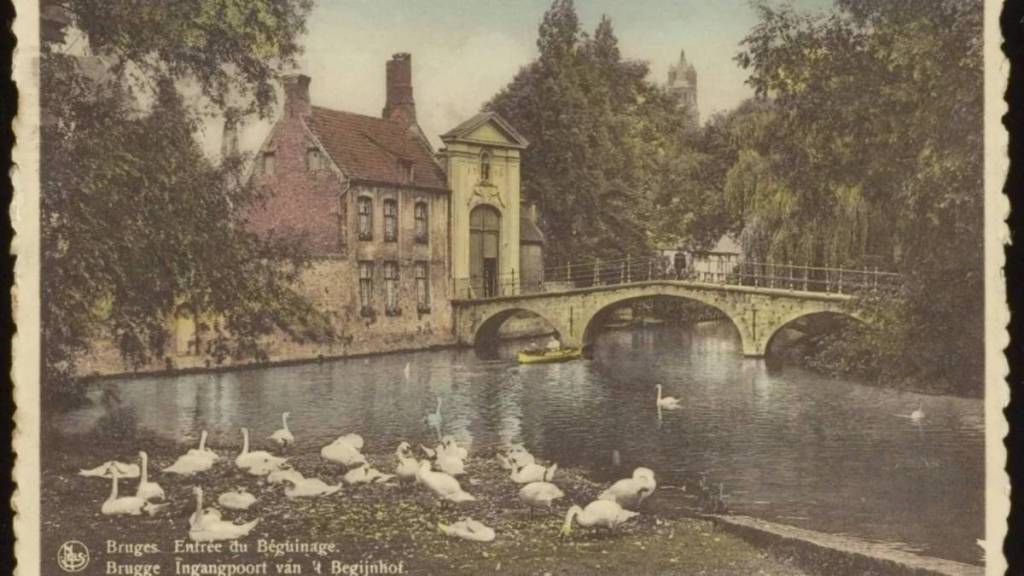
Despite the pressures, the community survived thanks to the protection of Countess Jeanne of Constantinople, who allowed the Beguines to settle in the 13th century on a meadow called “De Wijngaard.” At its peak in the 15th century, the “princely beguinage” had 152 residents, who carried on their way of life uninterrupted. Although the last Beguines passed the torch to Benedictine nuns in 1927, the site remains today a haven inhabited exclusively by women.
A timeless escape: explore the hidden treasures of the Beguinage
Stepping through the 18th-century main gate, guarded by the statue of Saint Elizabeth, is like stepping back in time. This quintessentially Flemish architectural complex is arranged around a vast garden shaded by poplars and linden trees. In the spring, the scene becomes magical when daffodils, wild hyacinths, and rare orchids bloom there, contrasting with the dazzling white of the houses. Among them, the “Grande Dame’s” house at number 30 stands out for its Baroque façade, a remnant of its administrative past.
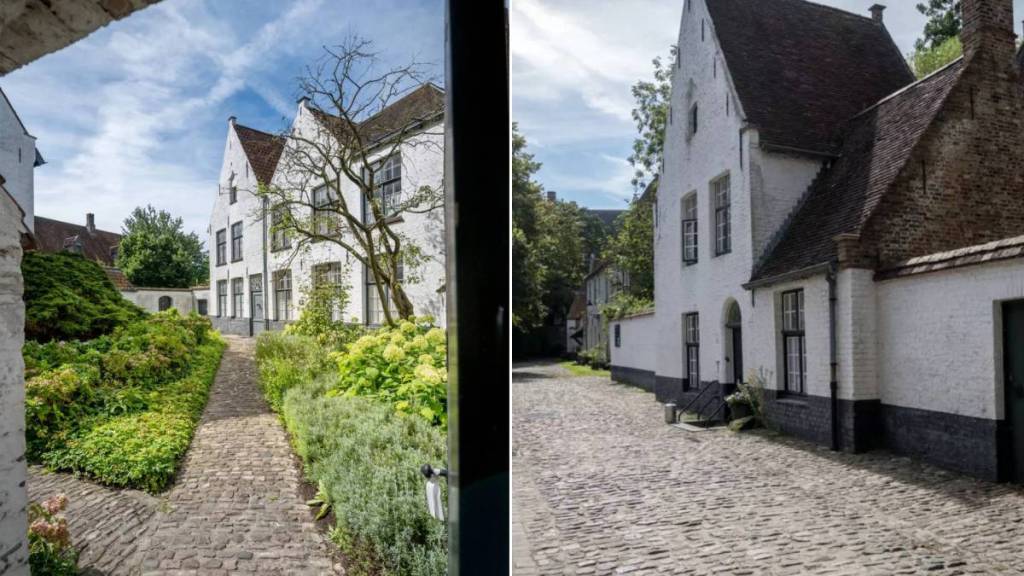
Further on,the church—rebuilt in the 17th century —houses the oldest statue of the Virgin Mary in Bruges, carved in 1247. Before heading back via the Lock Keeper’s House, stop by number 4 to pick up a souvenir of this oasis. Listed asa UNESCO World Heritage Site, the beguinage remains an inhabited place where silence—recognized as an intangible cultural heritage—is carefully protected. It is a poetic sanctuary whose gates close irrevocably at nightfall.