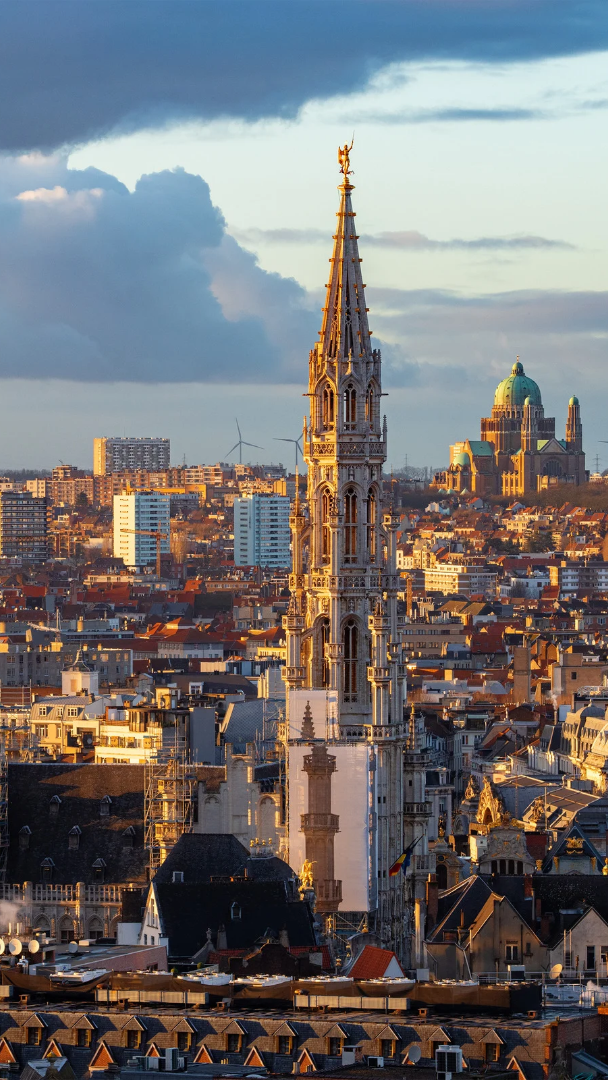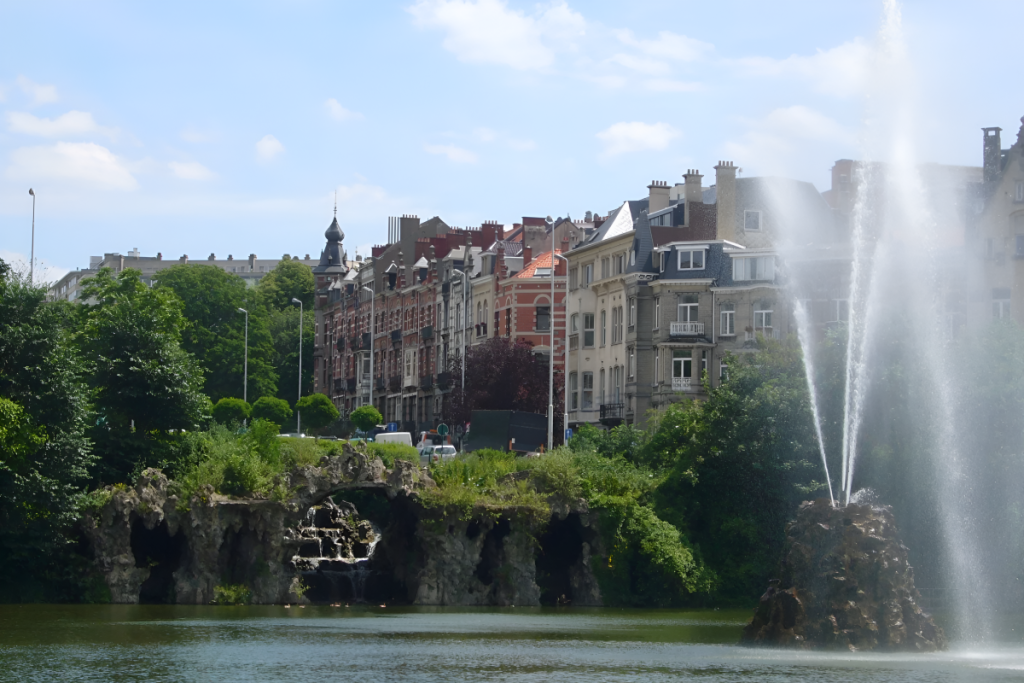

A true haven of greenery nestled in the heart of northeast Brussels, Marie-Louise Square conceals a fascinating transformation. Where the Maelbeek River and the large Saint-Josse pond once meandered, this romantic gem now flourishes around a picturesque body of water, bordered byremarkable trees, a rock garden grotto, and surprising wildlife. A testament to the major urban development projects of the 19th century, the square is surrounded by exceptional architectural heritage, making it a true open-air museum. From Art Nouveau facades to the marble figures lining its paths, set out to discover this listed site with a captivating history—ideal for a timeless stroll.
A natural oasis in the heart of the city: the natural treasures of Marie-Louise Square
Before becoming this popular romantic park, Marie-Louise Square was part of an entirely different landscape. Underthe Ancien Régime, eastern Brussels was a verdant countryside where the Maelbeek River meandered among hills, mills, and summer retreats, feeding a chain of ponds, including the one at Saint-Josse. When the northeastern district was expanded in the late 19th century, construction work led to the filling in of a large portion of this body of water. The square’s current pond isthe last and most precious remnant of it.
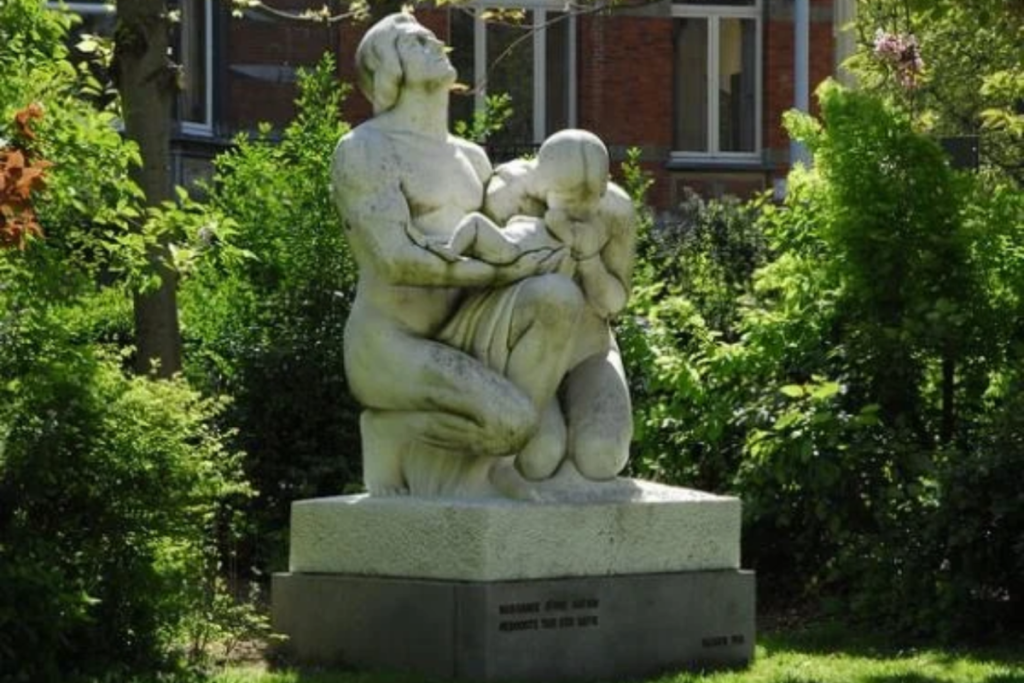
Today, the site charms visitors with its picturesque atmosphere. Its central pond is enhanced by a water jet gushing from a rock, a faux rock-work grotto overgrown with vegetation, and charming waterfalls. A true haven of biodiversity, it is home to curious wildlife, notably Florida turtles that have colonized the pond. The park also stands out for its remarkable botanical heritage and its rare specimens designated as protected by the Region: an American white ash, a honey locust, a white mulberry, and a magnificent silver maple.
Art Nouveau facades and marble sculptures: the open-air museum of the Squares neighborhood
Beyond its lush setting, Marie-Louise Square stands as the beating heart of the Northeast district. Forming a majestic axis withPalmerston Avenue and Ambiorix and Marguerite Squares, the site has been fully designated as a historic landmark since 1994. As you stroll around the pond, your gaze is immediately drawn tothe architectural surroundings: a blendof eclectic styles and Flemish Neo-Renaissance, crowned by Art Nouveau masterpieces.
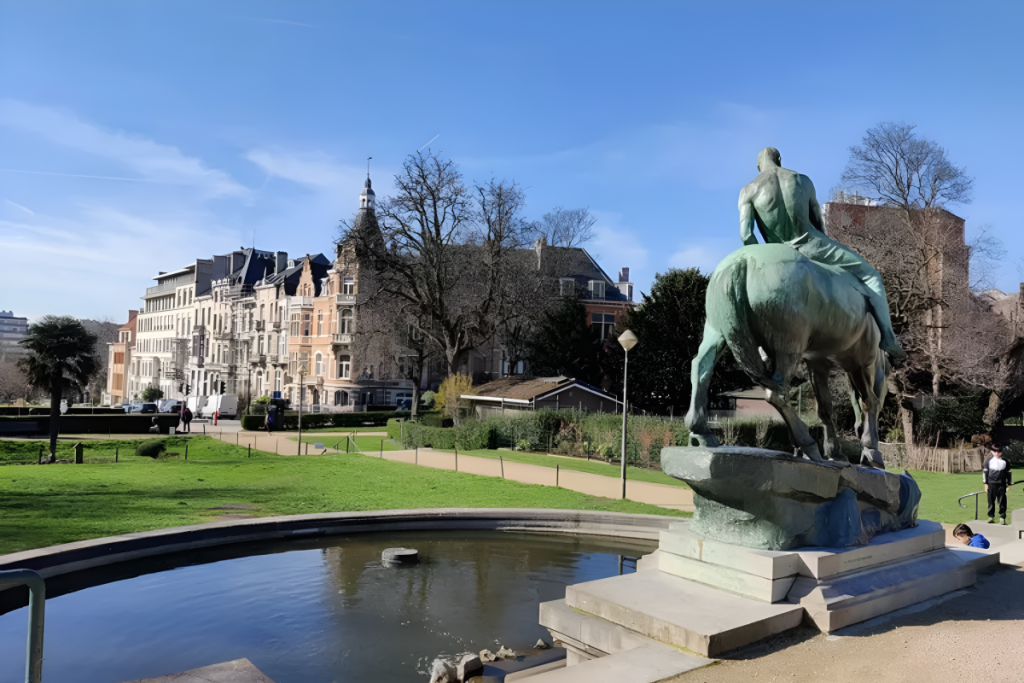
The park itself can be explored like an open-air art gallery. Among the remarkable works dotting its paths are the statue *La Cigale*, the memorial to General Bernheim, and the imposing Carrara marble group *Naissance d’une nation*, which won an award atthe 1937 Paris International Exposition. Today, this exceptional site can be explored through themed guided tours, taking architecture enthusiasts on a journey to discover the fascinating details and hidden treasures of this iconic neighborhood.