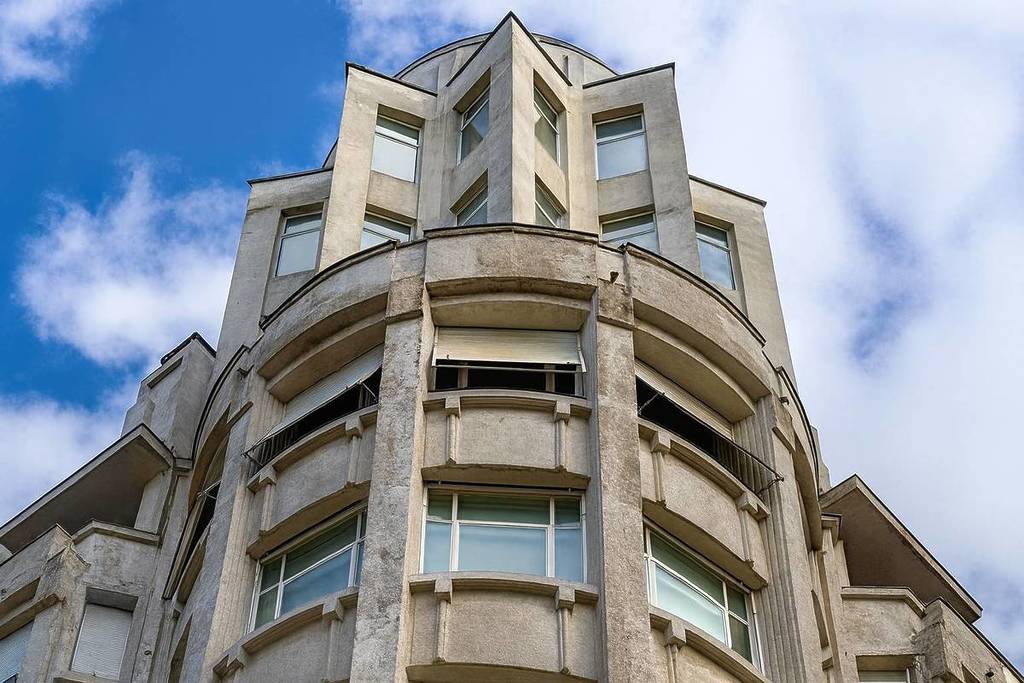
With its rotunda and star-spangled campanile dominating the traffic circle, the Palais de la Folle Chanson is a pure gem of Brussels Art Deco. Built in reinforced concrete, adorned with granito, almost a century old and designed by a former pupil of Victor Horta, it has everything to fascinate passers-by.
A poetic name, refined architecture
Impossible to miss: in Ixelles, at the Rond-Point de l’Étoile, seven avenues converge, and at number 2 sits an elegant behemoth. This corner building attracts the eye as much for its imposing architecture as for its name… a poetic one at that. La Folle Chanson, sounds like a surreal ritornello, doesn’t it? In reality, there’s nothing mysterious about it: the building has simply inherited the name of the avenue that runs alongside its facade. But the name also refers to a sculpture by Belgian artist Jef Lambeau. From the outset, the slightly surrealist spirit is apparent.
Palais de la Folle Chanson: built by Antoine Courtens, a pupil of Horta
Built between 1928 and 1931 by Antoine Courtens, a former pupil of Victor Horta, the building bears the imprint of this prestigious heritage. His taste for flowing volumes, circulating light and refined detailing can be seen again… but with a different energy. Gone are the floral arabesques of Art Nouveau, replaced by the geometric, dynamic modernity of Art Deco.
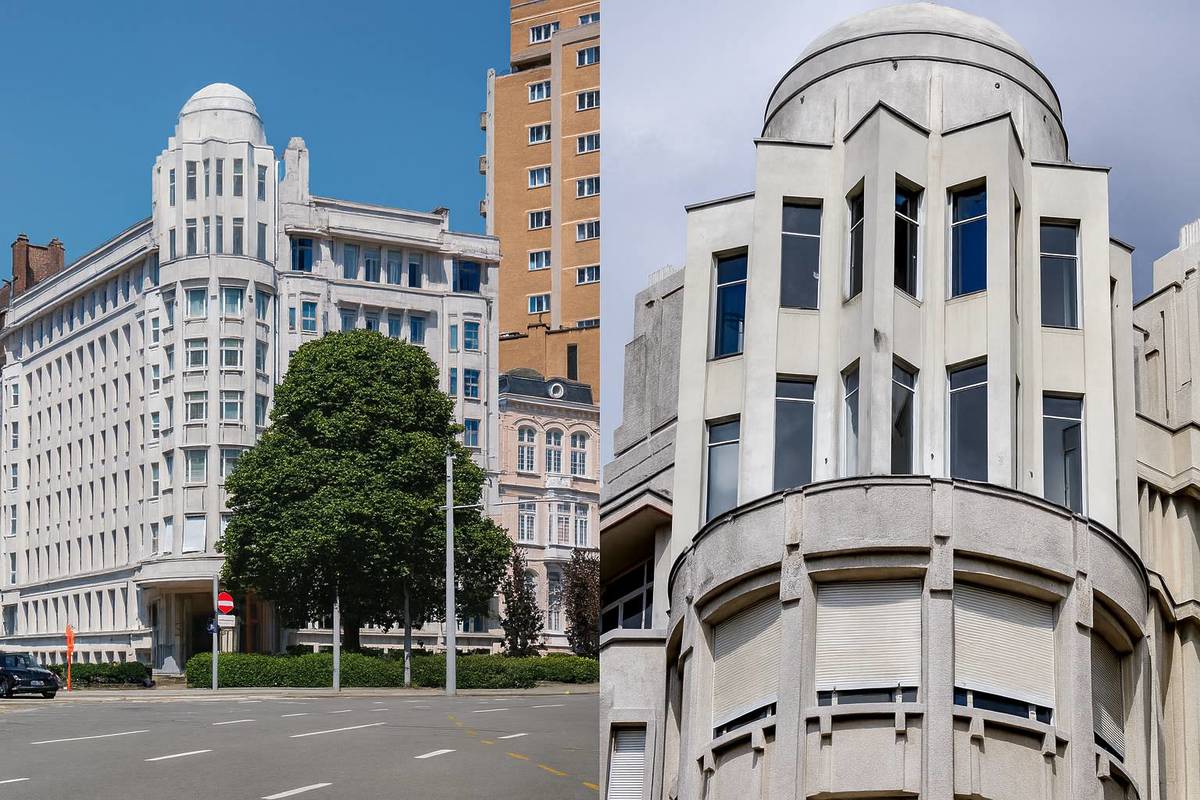
One look at the façade is enough to fill your eyes. It features a massive bluestone entrance, eight storeys punctuated by trapezoidal bays, oriels and balconies, and strong vertical lines. And then at the top, like a cherry on top of a cake, you can admire its famous dome topped by a magnificent starry campanile. The star is not just a decorative detail: it also symbolizes the seven avenues of the traffic circle. A brilliant nod to the urban context!
As refined on the outside as it is on the inside
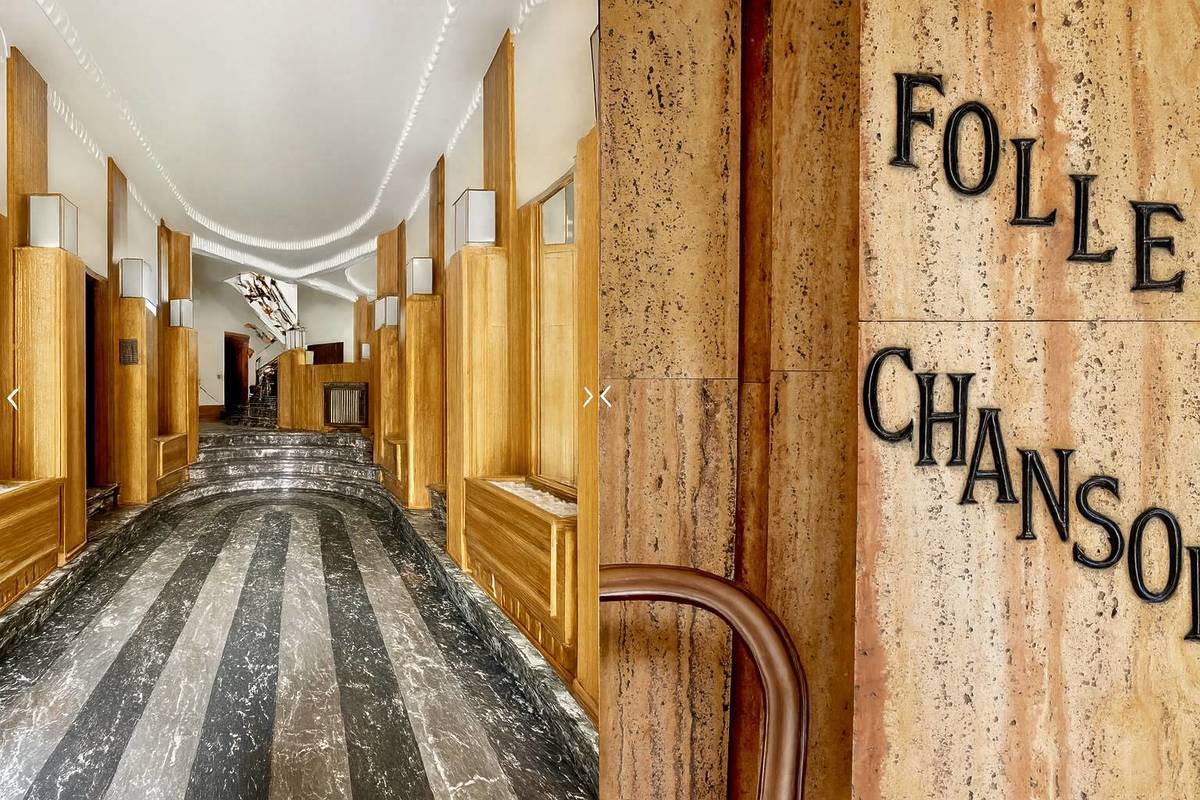
The charm continues inside. The entrance hall is worthy of a movie set. The floor is composed of polychrome marble. Luminous pillars in copper and frosted glass. A monumental wrought-iron staircase floats beneath a glass roof. And to complete the scene: vintage Schindler elevators, veritable mechanical gems.
Spacious apartments embody the spirit of the bourgeoisie: grand salons, dining rooms, boudoirs and dressing rooms. All in elegance. Under the cupola, there was even a smoking room and a reading room reserved for co-owners. It’s easy to imagine the special atmosphere of this privileged place in the Roaring Twenties. But the Depression of 1929 turned everything upside down.
Palais de la Folle Chanson: an Art Deco jewel, inhabited and listed
Since 1988, the Palais de la Folle Chanson has been listed as a heritage site by the Brussels Region (protection completed in 2001). It is still inhabited today, but sometimes opens its doors to the public. This is particularly the case during the BANAD Festival, a major event for Art Nouveau and Art Deco enthusiasts. In short, it’s a place that combines poetry, history and architecture, and reminds us that in Brussels, raising your eyes often holds some wonderful surprises.