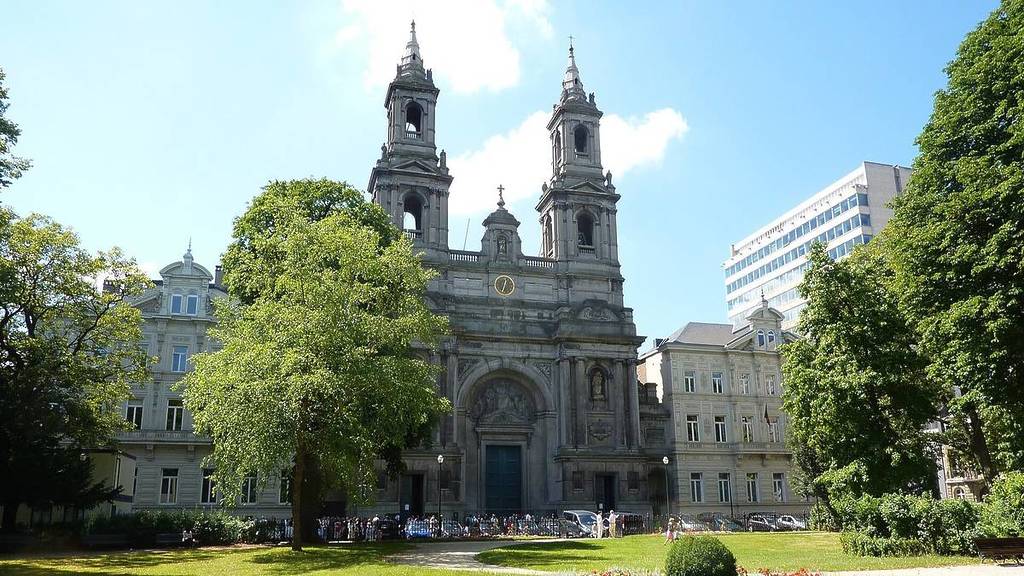

In the heart of Brussels’ European Quarter, where official institutions dominate the skyline, an imperial silhouette has just regained its full splendor.Saint-Joseph Church, a Neo-Renaissance gem inspired by the Trinità dei Monti in Rome, has been reborn after a long period of meticulous restoration led by the Brussels Region. Built in the 19th century under the impetus of Leopold I, this national landmark was the first pillar of a neighborhood that was then a barren wasteland. From its prestigious past linked to the royal family to its modern transformation, discover the history of an iconic monument that has become the guardian of the capital’s memory.
Saint-Joseph: a gem inspired by the Italian Renaissance in the heart of the capital
The history ofSaint-Joseph Church is inextricably linked to the birth of the Léopold Quarter. In the mid-19th century, the plain stretchingfrom Ixelles to Saint-Josse was still nothing more than a “wasteland” that the Société civile aimed to transform into a new city. To attract future residents,the King’s architect proposed a bold strategy: “Start by building a church; the houses will follow.” It was thus under the impetus of Leopold I that the cornerstone was laid in 1842, marking the birth of a neighborhood that would become a European epicenter.
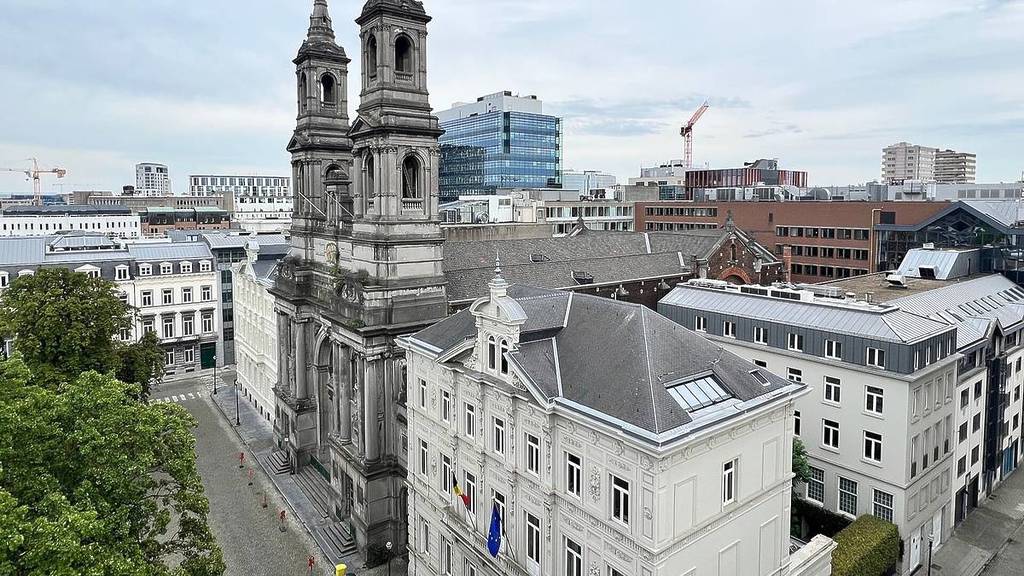
Inspired by the famous Trinità dei Monti church in Rome, Saint-Joseph stands out as a temple of Italian Neo-Renaissance style unique to Brussels. Dedicated to Saint Joseph, patron saint of the country since 1679, the church stands as a true national monument. Its prestige was such that it attracted the royal family between 1901 and 1909. Listed since 1981, this façade of blue stone from Écaussinnes remains an enduring testament tothe architectural elegance of the era.
A heritage preserved amidst European glass and steel
Sometimes overlooked in the shadow of the European Quarter’s buildings,Saint-Joseph Church has just undergone a spectacular transformation. After two years of work and a regional investment of nearly 4 million euros, the building has regained its former splendor. The restoration focused on the monumental façade made of Écaussinnes blue stone, whose deteriorated structures posed a safety hazard to the public. From the upper towers to the ironwork details, every element was treated with absolute precision to restore the building to its 1849 charm.
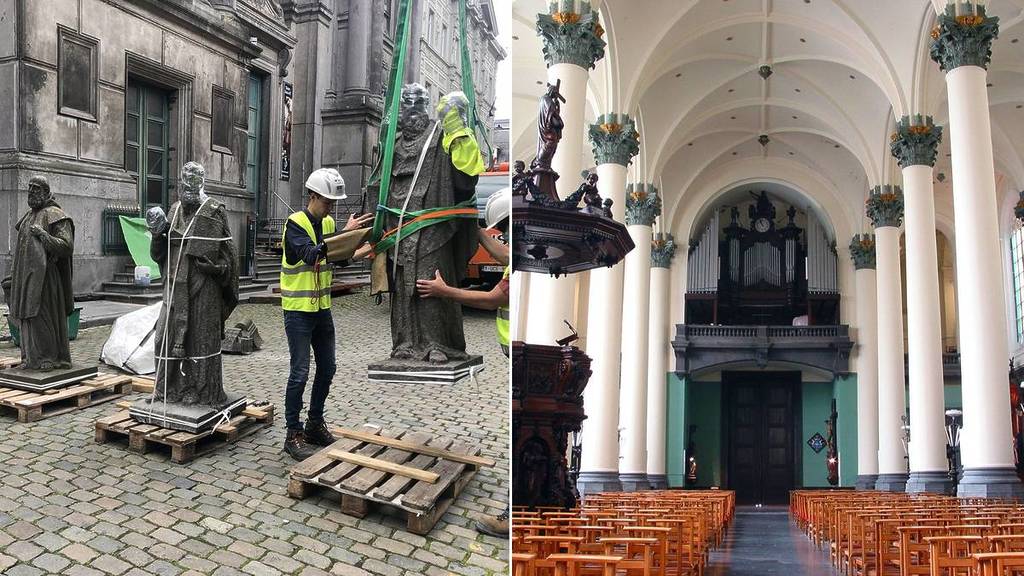
The restoration project drew on exceptional craftsmanship: a sculptor meticulously restored seventeen statues and the cross at the summit, while the clock on the façade was gilded with gold leaf, once again catching the light on Place Frère-Orban. Beyond the stonework, the wooden doors and wrought-iron elements have also been repaired. This rebirth now makes Saint-Joseph an essential “urban landmark,” a true cultural and architectural beacon, evokingthe elegance of the 19th century and the history of the capital.
📍Sq. Frère-Orban 3, 1040 Brussels