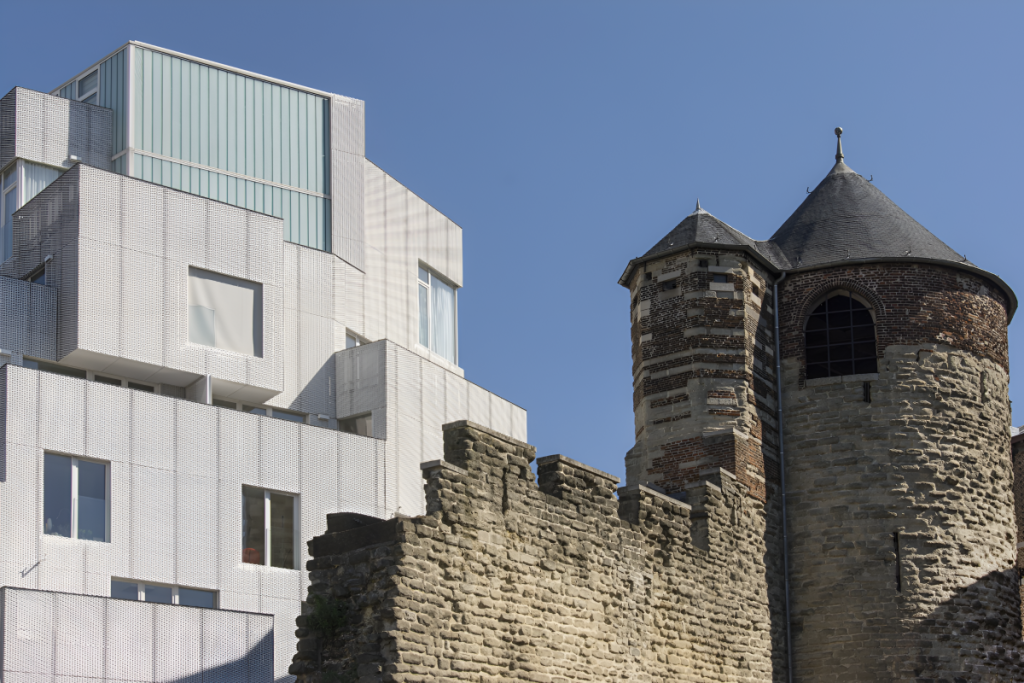

Nestled between numbers 34 and 36 on Boulevard de l’Empereur, the Anneessens Tower stands as a rare and precious testament to Brussels’ medieval past. A remarkably well-preserved remnant of the first 13th-century fortified wall, this building alone tells the story of the city’s transformations and upheavals. From its strategic military role to the tragic mystery that surrounds it, the tower has weathered the centuries and urban redevelopment projects. Amid medieval masonry, a 16th-century stair turret, and architectural details revealed by the setting sun, set out to discover this little-known gem—from its poignant legends to the secrets hidden within its stone.
From defensive structure to Brussels martyr: the turbulent history of the Anneessens Tower
Built in the early 13th century, the Anneessens Tower was a key link in Brussels’ very first fortified wall—a 4-kilometer rampart punctuated by seven gates and fifty defensive towers. Designed to protect the city from external threats, this military structure has withstood the test of time and the gradual disappearance of the medieval walls, surviving even as the river port expanded and major urban development projects took place.
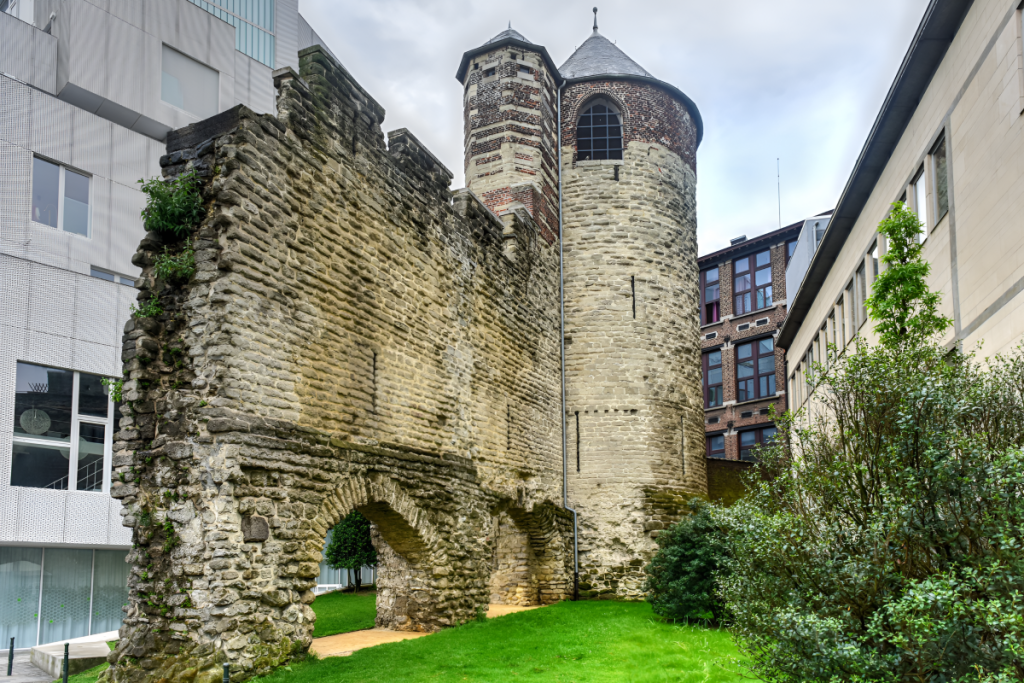
But beyond its strategic function, the tower is inextricably linked to a defining event in Brussels’ collective memory. It was the site of the imprisonment of François Anneessens, dean of the Guild of the Four Crowned Martyrs. A figurehead of the popular resistance against Austrian rule, he awaited his execution there before being beheaded in 1719. This tragic episode forever cemented the monument’s place inlocal history. After falling into disrepair in 1957, the site was finally designated a historic landmark in 1965 and then carefully restored in 1967 bythe city architect, serving today as a rare testament tothe capital’s medieval identity.
Sandstone, vaults, and evening light: the sublime architecture of a medieval gem
Set at an angle to Boulevard de l’Empereur, the Anneessens Tower impresses with the grandeur of its medieval masonry. Constructed of sandstone and finished with brick, this defensive structure features a distinctive horseshoe-shaped layout. Rising today over three levels supported by imposing arches, it retains two large pointed-arch openings facing the city, as well as five arrowslits, once connected to the crenellated parapet walk supported by slender corbels.
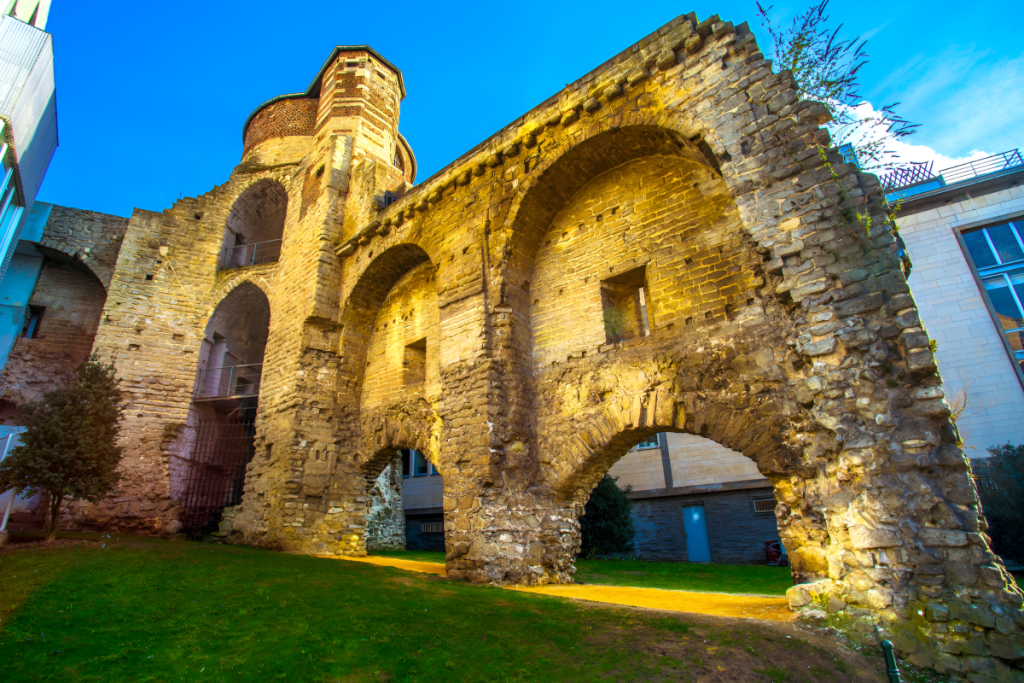
Over time, the building has been enhanced by remarkable modifications, such as its upper platform, which was raised in the 16th century by a brick story topped with a slate roof. Adjacent to the tower, an elegant stair turret tastefully combines brick and white stone. To fully appreciate the richness of this historic site and its adjoining wall stumps, plan your visit for late afternoon: the light of the setting sun enhances the hues of the sandstone and reveals every subtle detail carved by the centuries.