
Between local legends, artistic tributes, and little-known gems, Brussels’ fountains tell the city’s story in a different way. We pass them by without always noticing them, and yet they’re well worth a dedicated stroll. Here are 15 fountains that blend urban poetry, collective memory, and delightful visual surprises.
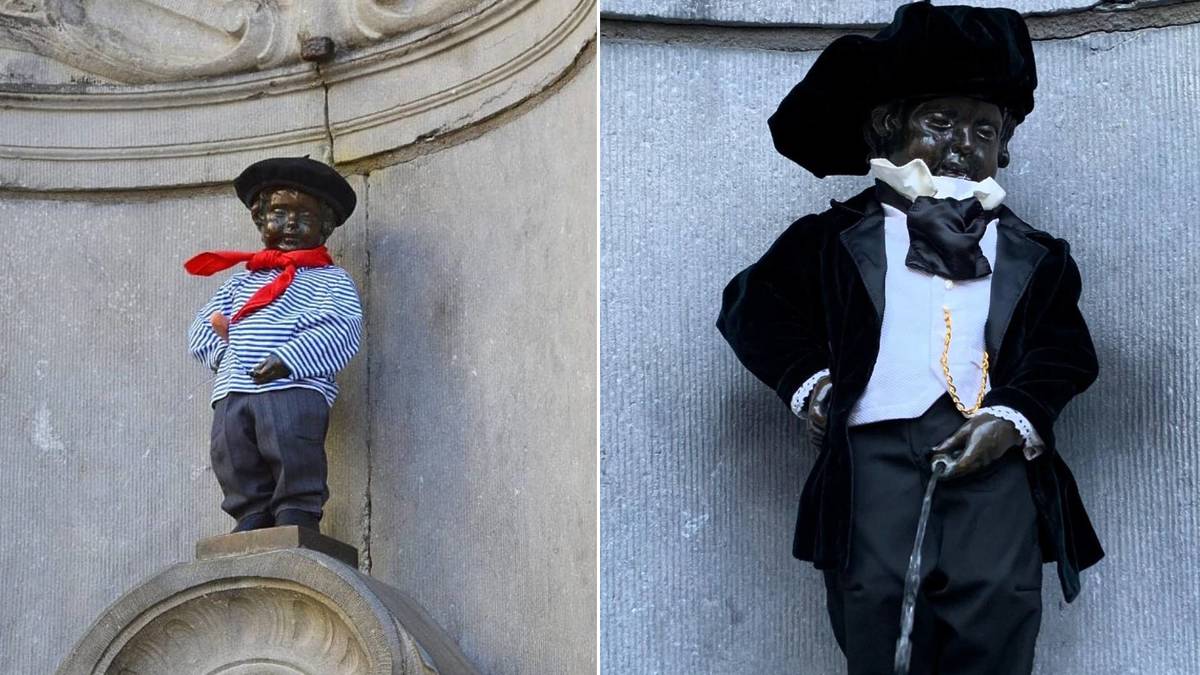
It’s impossible to talk about Brussels’ fountains without starting with its most famous little rascal. This 61-centimeter bronze statuette, depicting a little boy urinating, has stood in its current location since 1619, although the legend is said to date back to the Middle Ages. Manneken-Pis embodies the spirit of Brussels: rebellious, funny, and irreverent. His incredible wardrobe (more than 1,000 outfits!) also makes him a living icon, regularly dressed up for international events.
Jeanneke-Pis
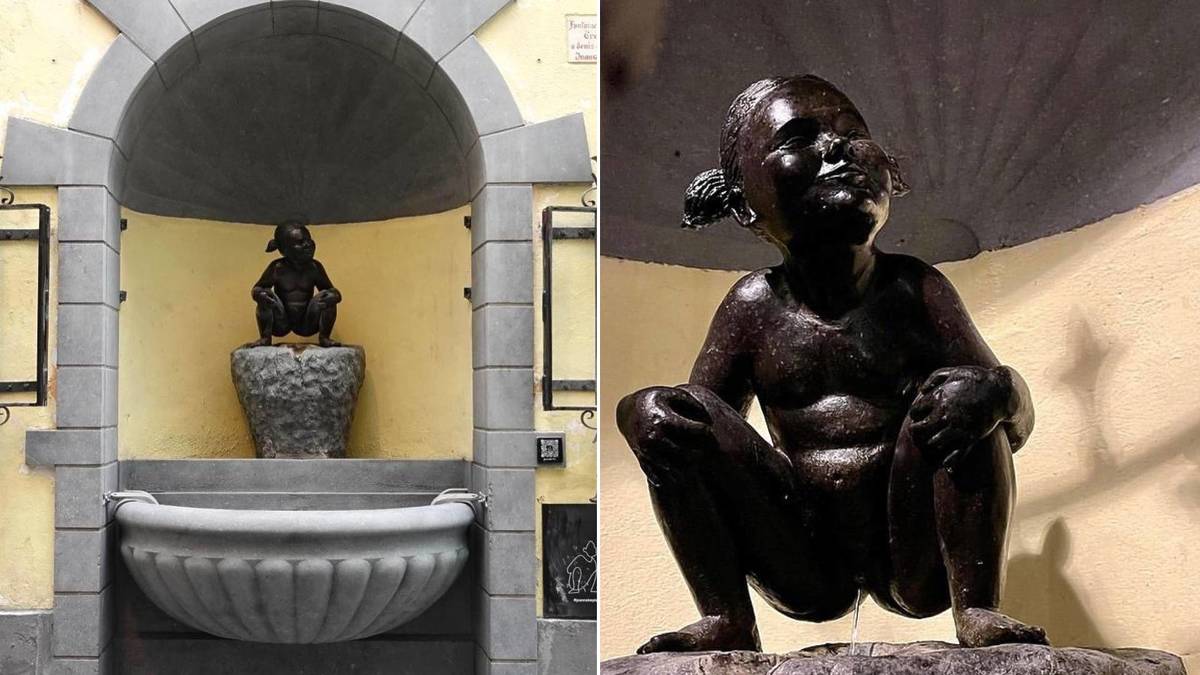
Less well-known but just as symbolic, Jeanneke-Pis is a belated female counterpart to the famous Manneken. Created in 1987 by Denis-Adrien Debouvrie, she stands in a cul-de-sac near Rue des Bouchers, in a squatting position, having just relieved herself. She symbolizes gender equality—admittedly with a touch of provocation, but also with humor. The fountain also serves a charitable purpose: passersby can toss a coin into it to support cancer research.
Charles Buls Fountain
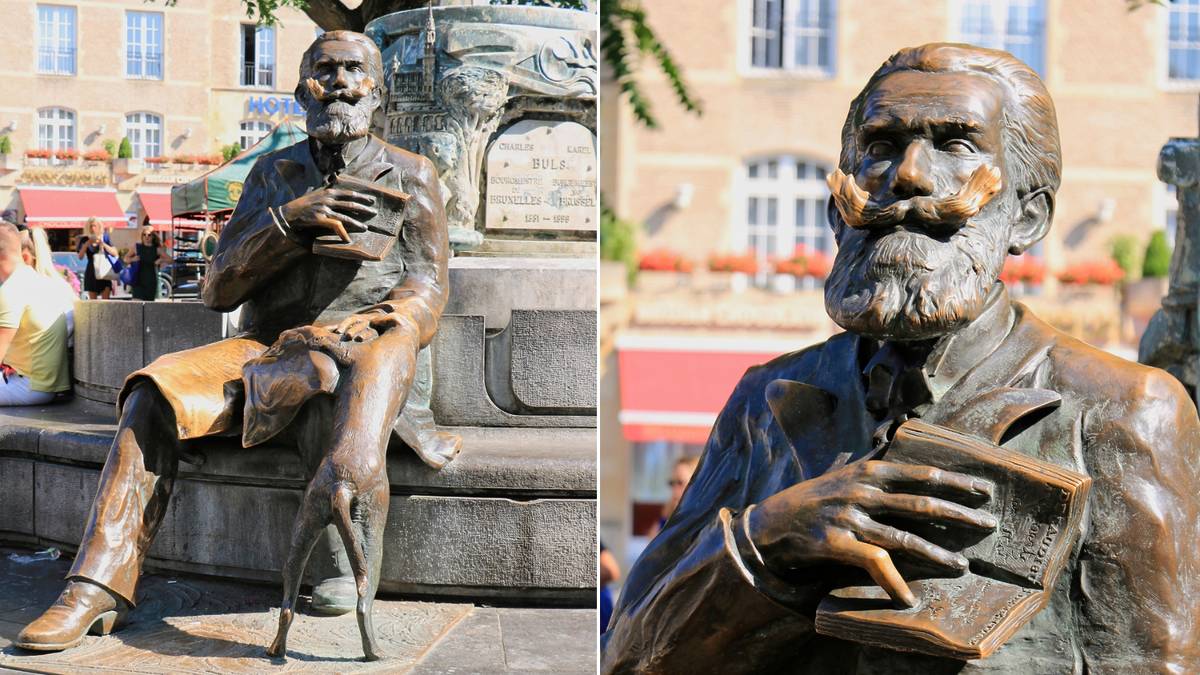
Nestled in the heart of downtown, this fountain honors Charles Buls, a former enlightened mayor who worked to preserve Brussels’ heritage. Seated peacefully, a book in hand and his dog by his side, he symbolically watches over the city. The bronze frieze surrounding the fountain evokes his travels in Italy and Greece, which shaped his vision for urban planning. Thanks to him, gems such as the Grand-Place and the Hal Gate have been preserved.
Saint-Géry Fountain
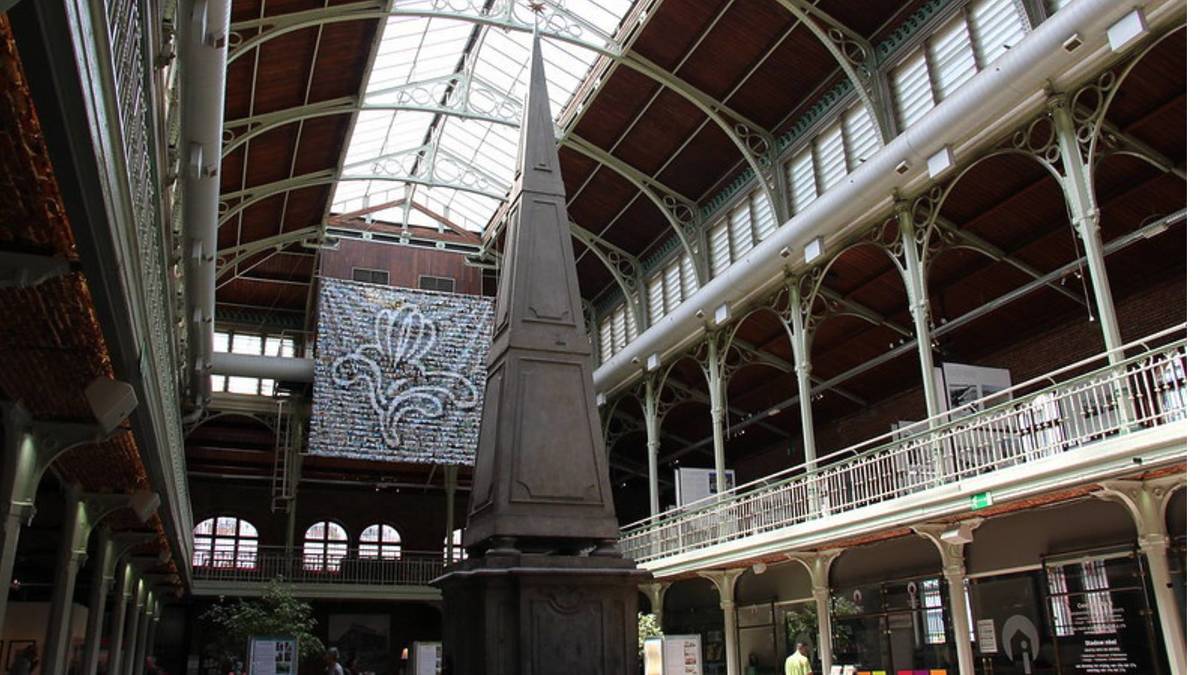
This monumental obelisk-shaped fountain was built in 1767 at the Premonstratensian Abbey in Grimbergen before being moved to Saint-Géry in the 19th century. Standing over 10 meters tall, it is adorned with Louis XV-style rockwork, bronze lions, and a golden star crowning its summit. It once stood in a square nicknamed… Place de la Fontaine, of course! Today, it adds a touch of former grandeur to the lively Halles district.
The Meuse & the Scheldt
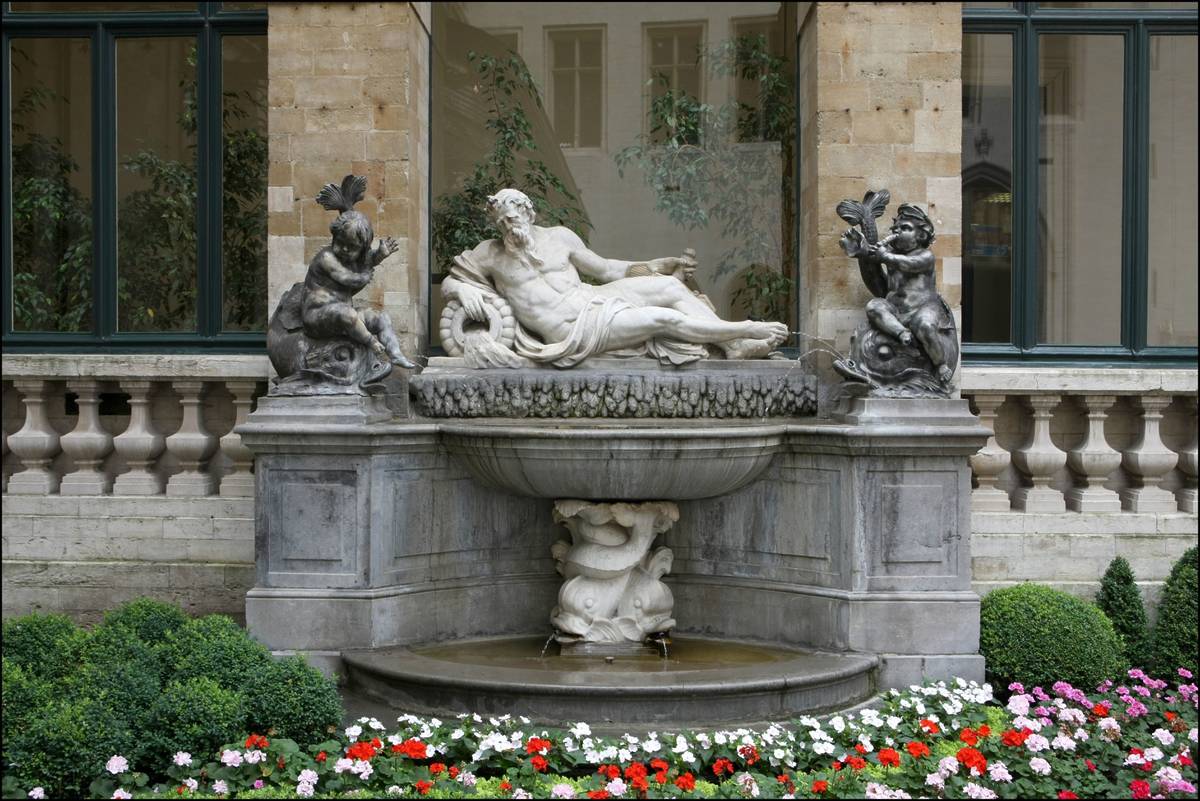
Arranged symmetrically around the city center’s star-shaped plaza, these two imposing fountains pay homage to Belgium’s two great rivers. The Meuse and the Scheldt are depicted there as mythological figures, highlighting their pivotal role in the country’s history. They were designed to enhance the restored façade of City Hall in the 19th century. A subtle way of anchoring Brussels between nature and symbolic power.
Mont des Arts Fountain
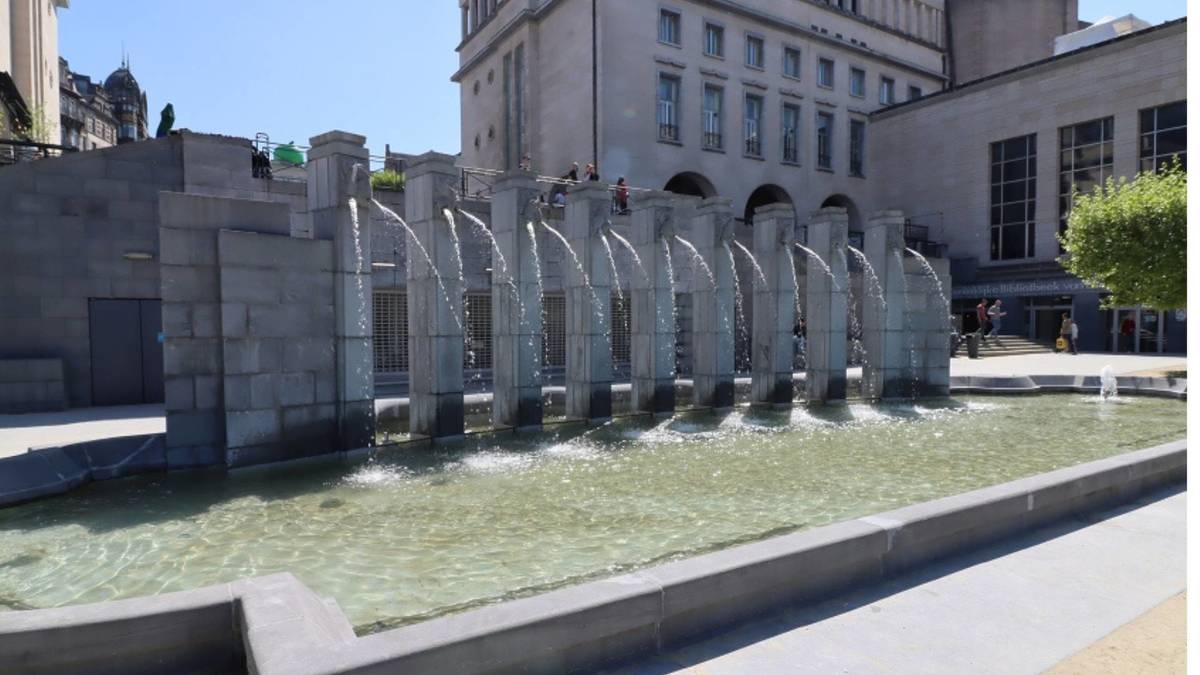
Nestled between the majestic views of the Royal Palace and the Old Town, the Mont des Arts Garden is home to one of Brussels’ most iconic fountains. Crafted from blue stone, this modernist work harmonizes with the geometric precision of the park, designed in the 1950s by landscape architect René Pechère. Recently renovated, it has now regained its original splendor, highlighting the ambition of that era: to create a dialogue between water, art, and landscape within a reimagined urban setting.
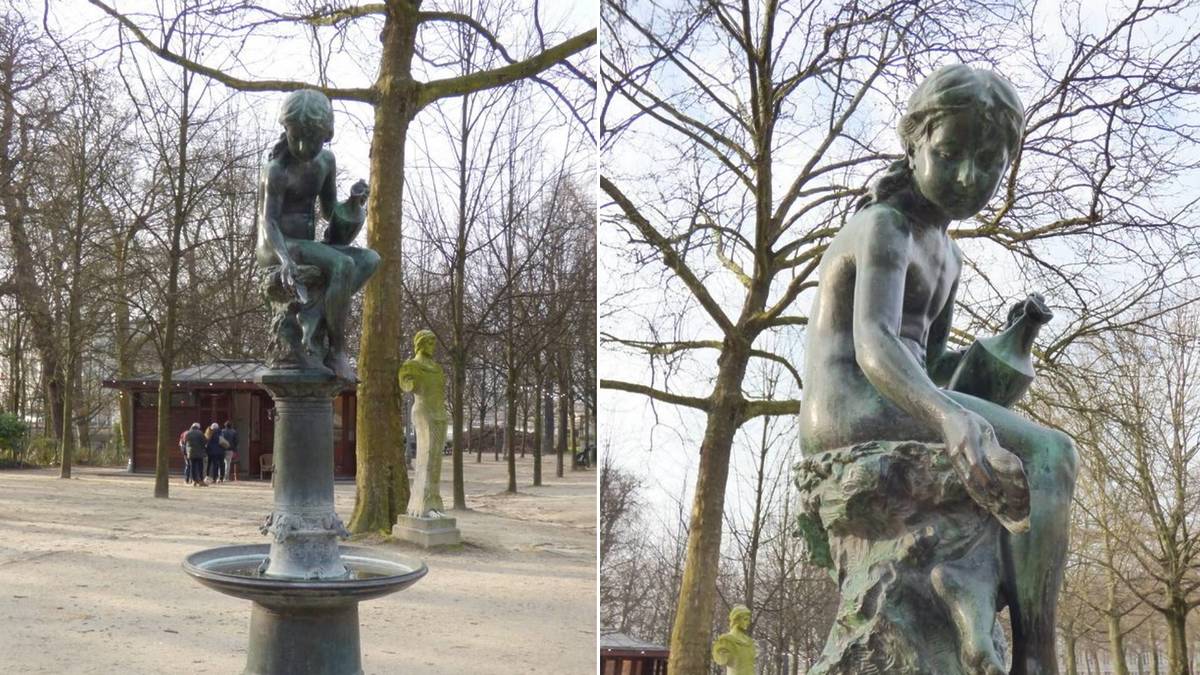
Elegant and discreet, this bronze girl seated atop a small column holds a vase and a shell from which water once gushed. Sculpted in 1901 by Alphonse de Tombay, she bears witness to the golden age of the Royal Park, once dotted with water features. Her former companions have disappeared, but she remains, surrounded by more austere statues. Children used to drink the water flowing from bronze frogs, whose mouths are still polished by curious hands.
The Man from Atlantis
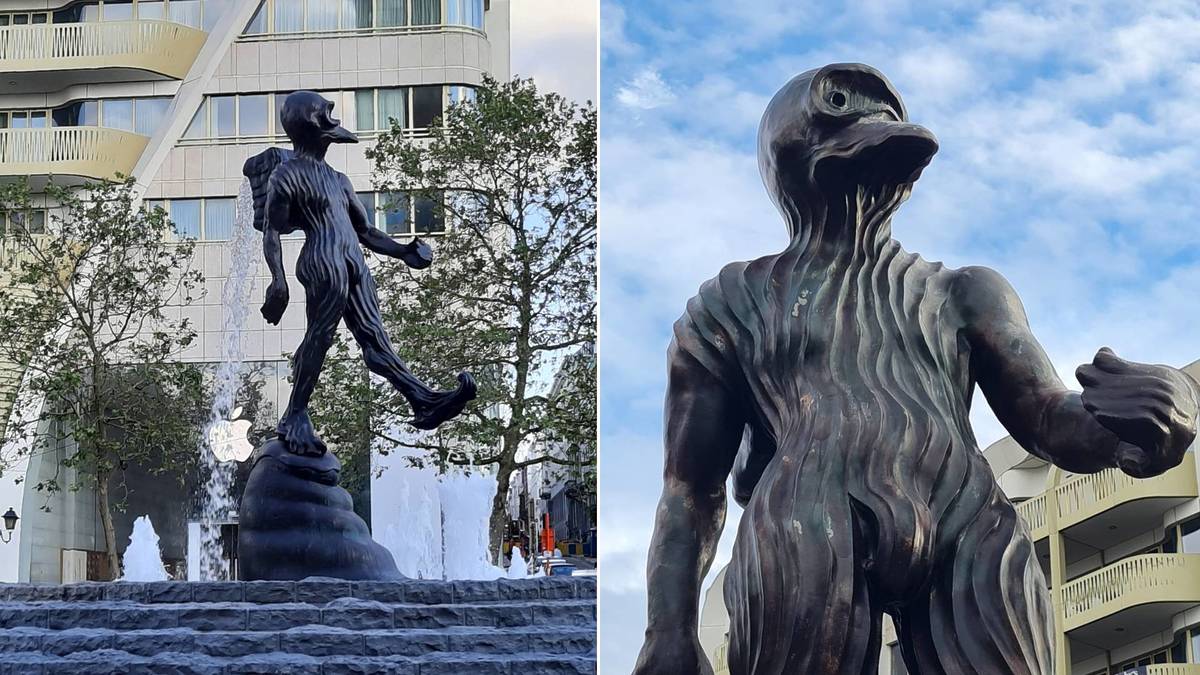
Installed in the center of Avenue de la Toison d’Or in 2003, this fountain-sculpture by Luk Van Soom depicts an enigmatic figure inspired by the mythical Atlantis. With its spout, striations, and unusual proportions, the work has certainly sparked controversy. Some residents and passersby question its aesthetics, which they find disconcerting or out of place in the surroundings, while others see it as an invitation to reflect on the invisible world.
Minerva Fountain
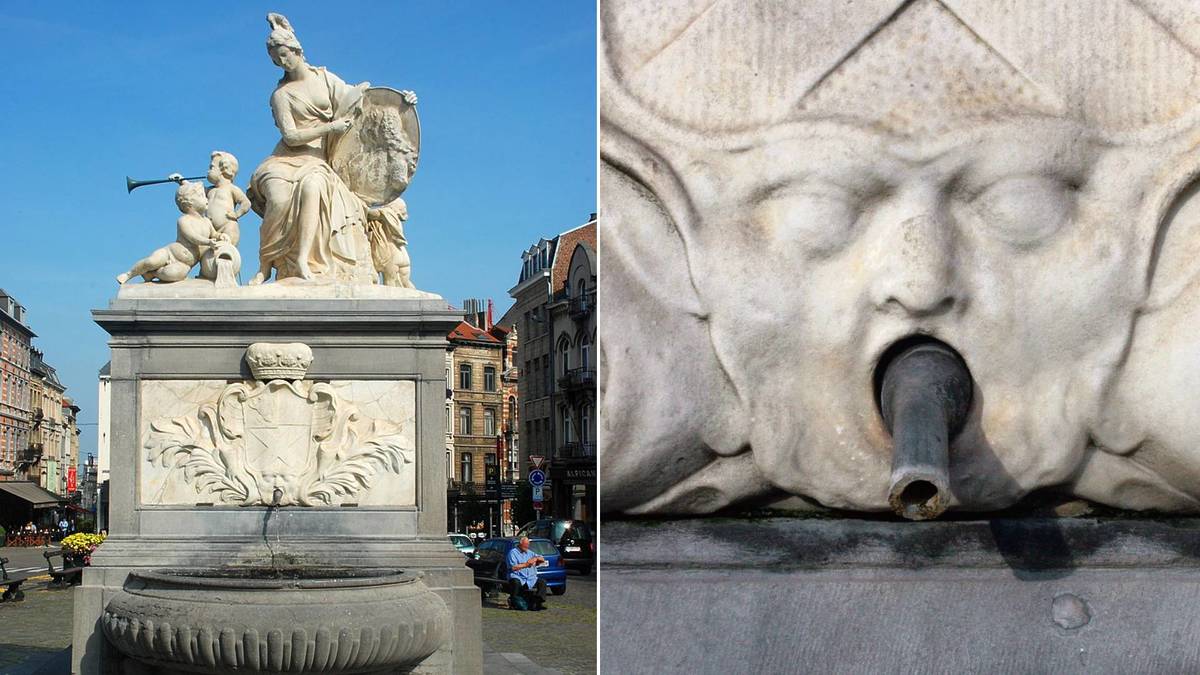
Towering over the Grand Sablon Square since 1661, this fountain was a gift from an English nobleman in exile, Lord Thomas Bruce, in gratitude for the warm welcome he received from the people of Brussels. It depicts Minerva, the Roman goddess of wisdom, draped in refined classical style. At the crossroads of cultures and eras, it reflects the city’s openness to its visiting guests. Its understated elegance blends perfectly with the subdued charm of the Sablon.
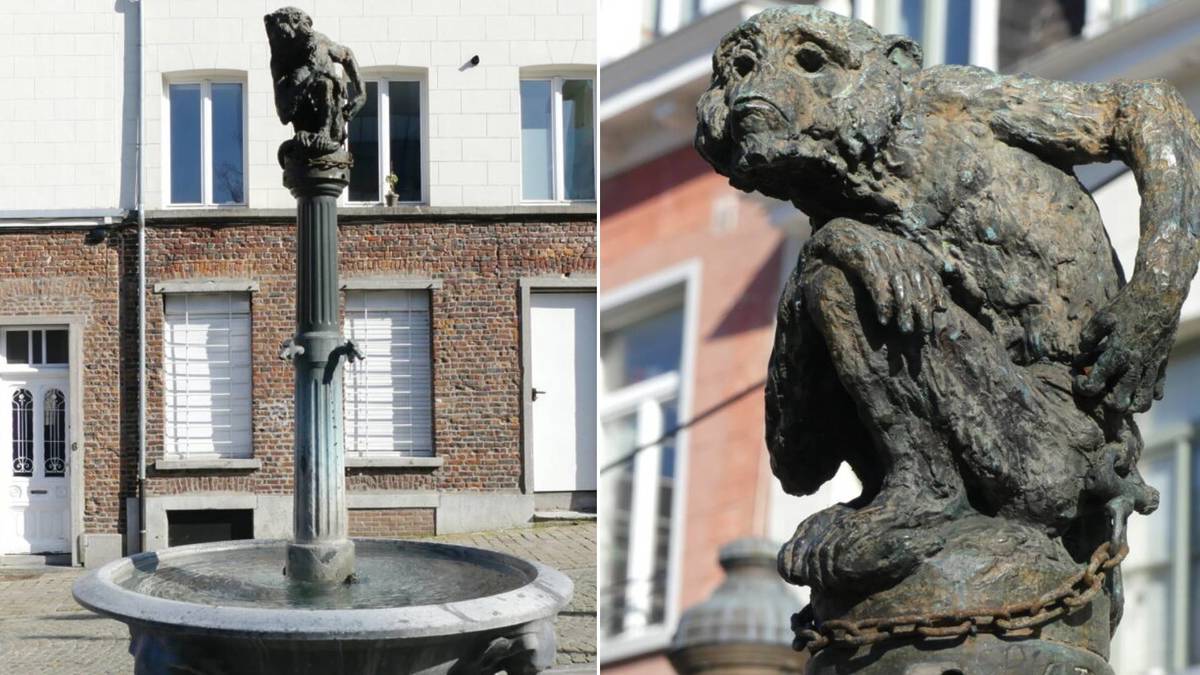
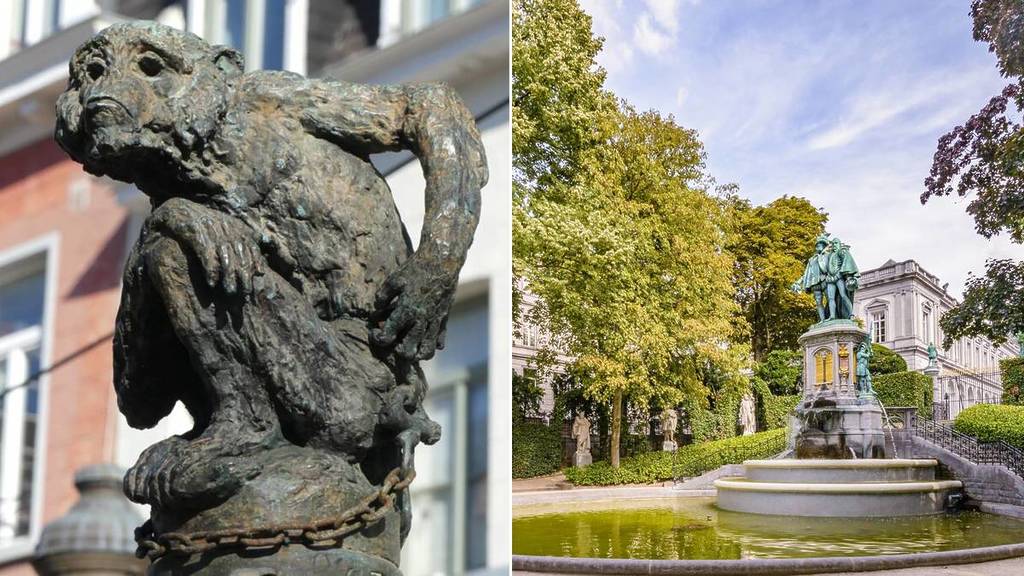
Toppedby a monkey that appears to be meditating, this drinking fountain evokes a time in Brussels when public water was an essential resource. Inspired by Pieter Brueghel the Elder’s painting “Two Monkeys,” it is part of a series of drinking fountains created in the 1980s. The Marolles neighborhood, where it is located, was once a hub for the trade in exotic animals. A nod to a strange era, caught between everyday necessity and artistic bestiary.
Fountain of the Counts of Egmont and Hornes
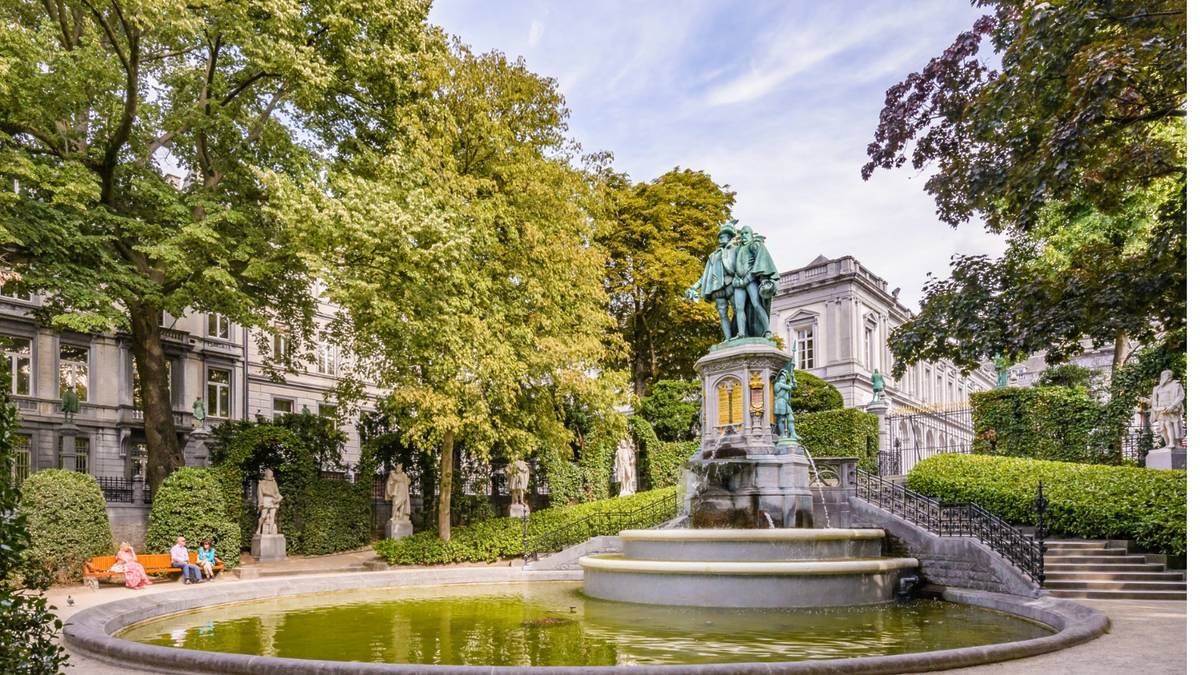
Located on Place du Petit Sablon, this monumental fountain commemorates the tragic execution in 1568 of the Counts of Egmont and Hornes, heroes of the resistance against the abuses of King Philip II. Their bronze statues stand atop a pedestal adorned with coats of arms, friezes of cabbages, and Landsknecht soldiers. The circular basin symbolizes the blood shed and collective memory. It is one of the most powerful works in Brussels’ heritage of remembrance.
Le Cracheur Fountain
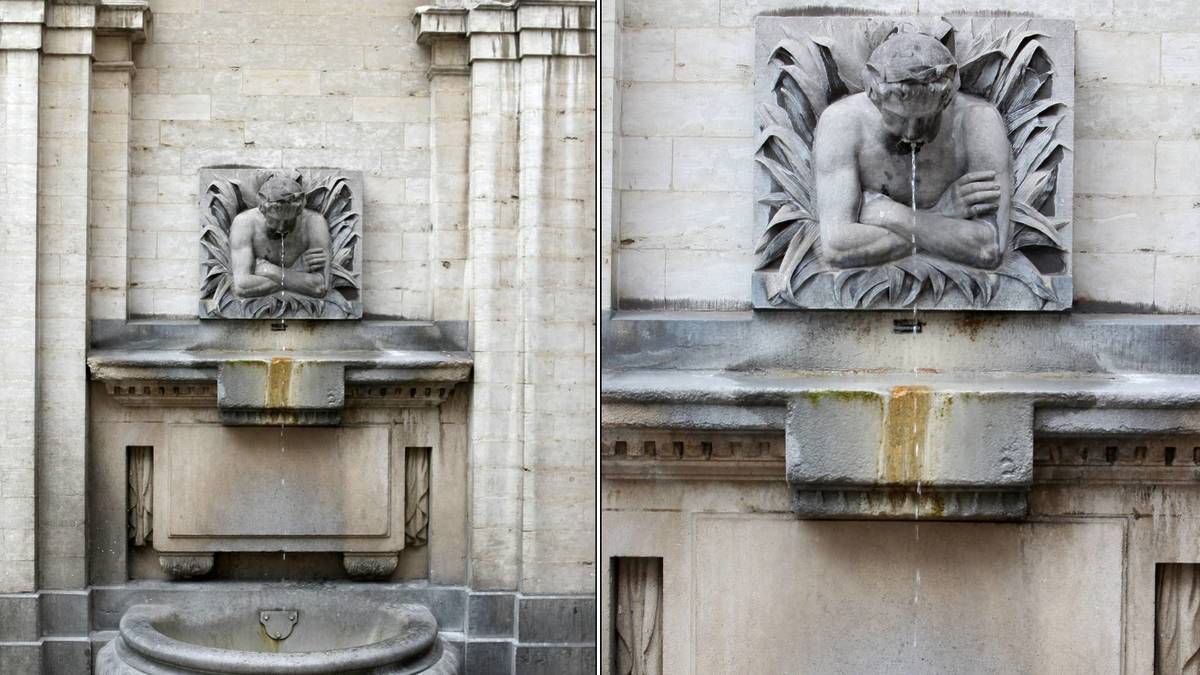
With its straightforward name and simple design, Le Cracheur is one of the oldest fountains still in use in the city center. Dating back to 1704, it stands at the corner of two bustling streets, spouting water steadily. No one knows the identity of its sculptor, but it has stood the test of time without being forgotten. A simple, almost rustic fountain that bridges the past with the very contemporary practice of filling one’s water bottle.
Anspach Fountain
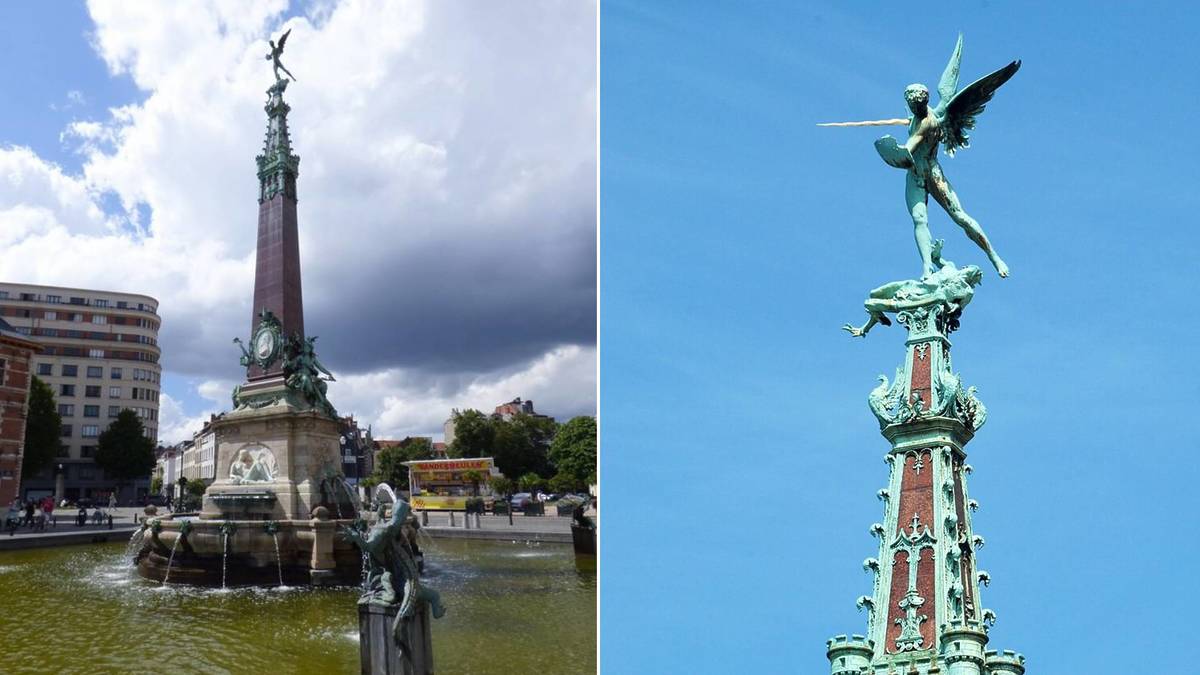
Located on Place de Brouckère, this fountain pays tribute to Jules Anspach, the visionary mayor who transformed Brussels in the 19th century. It was he who covered the Senne River and laid out the grand boulevards inspired by Paris. The fountain commemorates this era of radical modernization and bold urban planning. It is a centerpiece in the Haussmannian puzzle of the Belgian capital.
La Cabosse Fountain
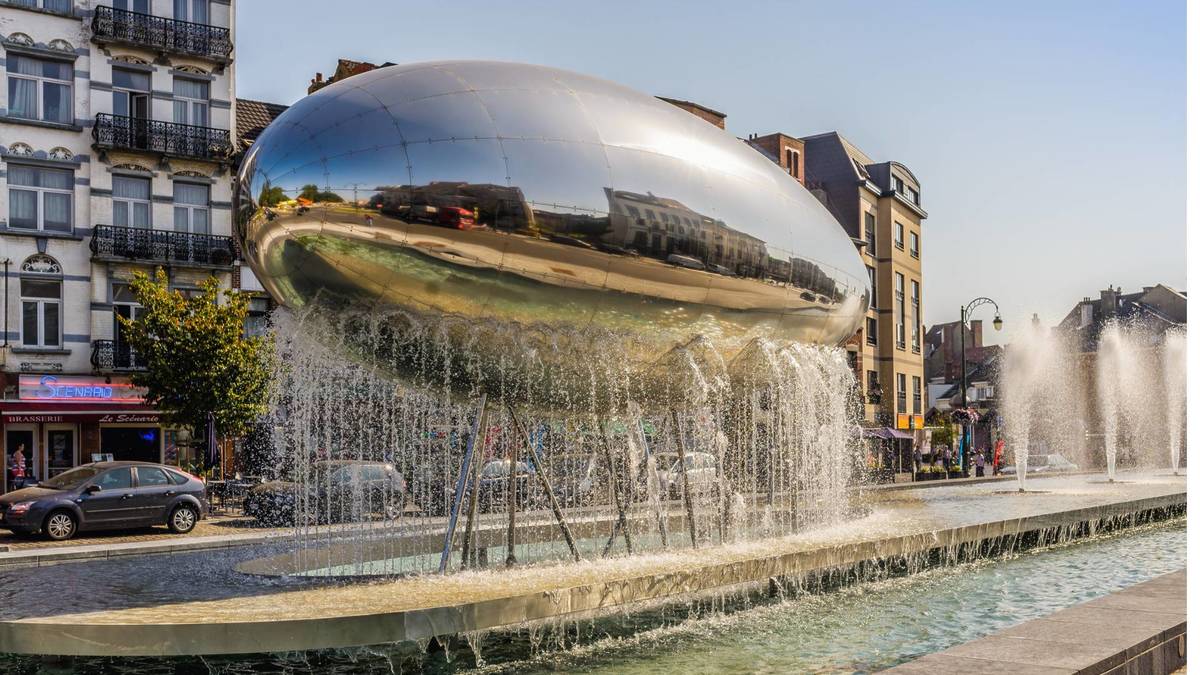
On Place du Samedi, this contemporary bronze fountain takes the stylized form of a cacao pod, the fruit of the cacao tree. Created by artist Jean-François Octave, it explores our relationship with nature and the origins of things. The work subtly echoes the colonial past and the chocolate trade, while lending a poetic touch to the public space. It is a fountain that inspires both reflection and contemplation.
The Harvest – A Breughel-esque Trough
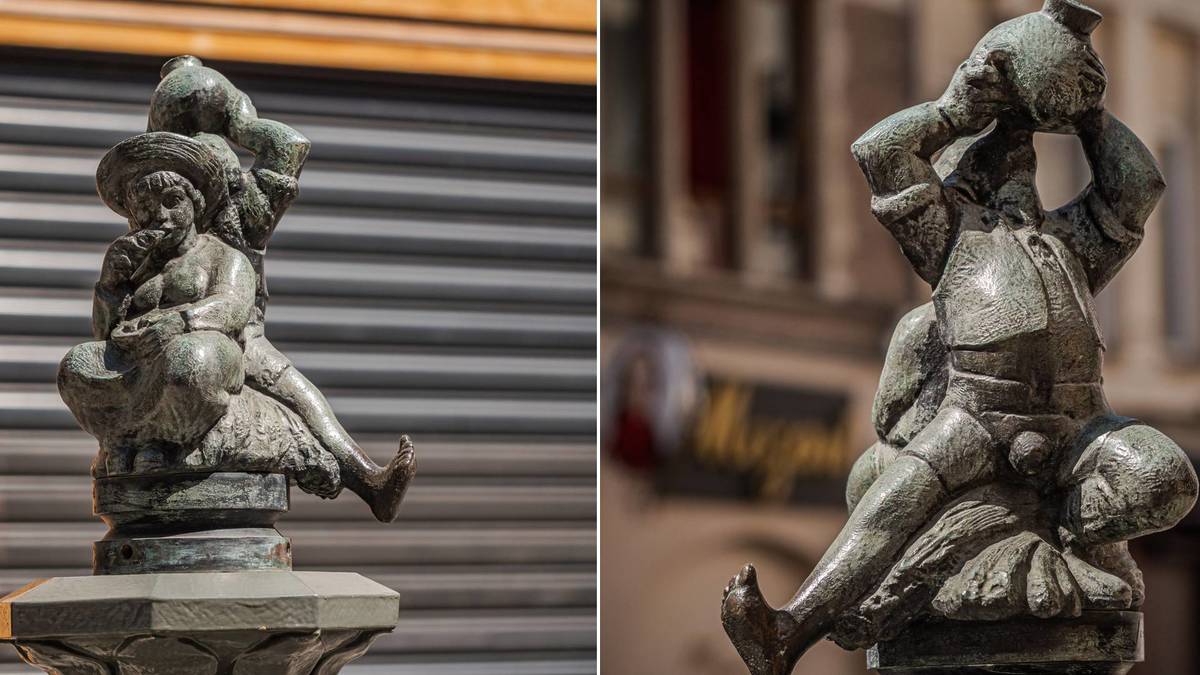
In the Pentagone neighborhood, at the corner of Rue des Éperonniers and Marché aux Fromages, the public drinking fountain “La Moisson” pays homage to a scene by Pieter Brueghel the Elder. Sculpted in bronze by Jos De Decker, it evokes an era when street water was part of everyday life. Discreet yet evocative, it is part of a series of fountains inspired by the Flemish master’s paintings, thus combining artistic heritage with urban functionality.