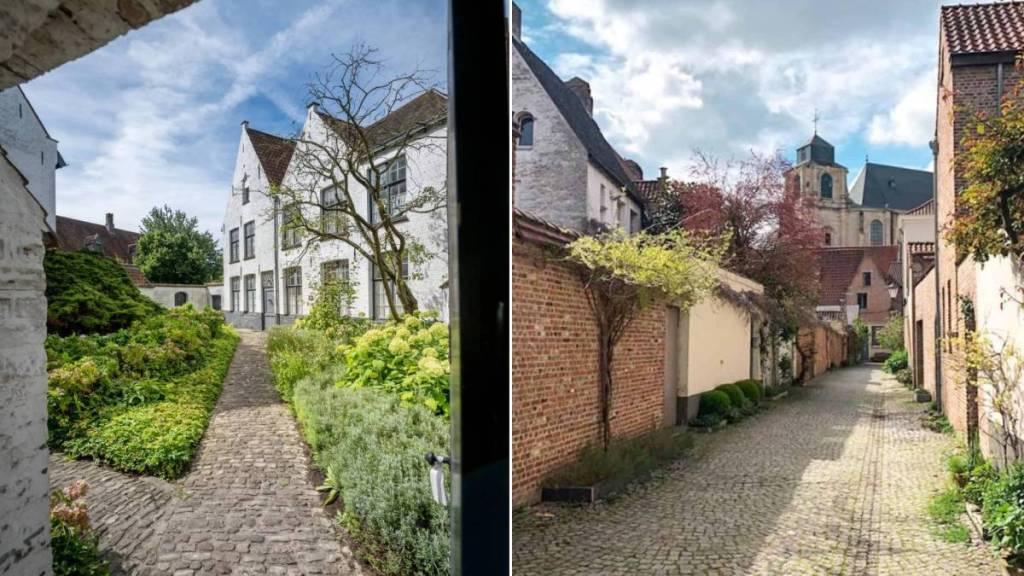

Long before they became popular places for strolls, the beguinages were home to communities of laywomen who lived together without taking religious vows. Today, these small villages nestled in the heart of cities offer a unique blend of history, architecture, and serenity. Most are designated asUNESCO World Heritage Sites and rank among the most beautiful cultural getaways in Belgium.
The Great Beguinage of Leuven
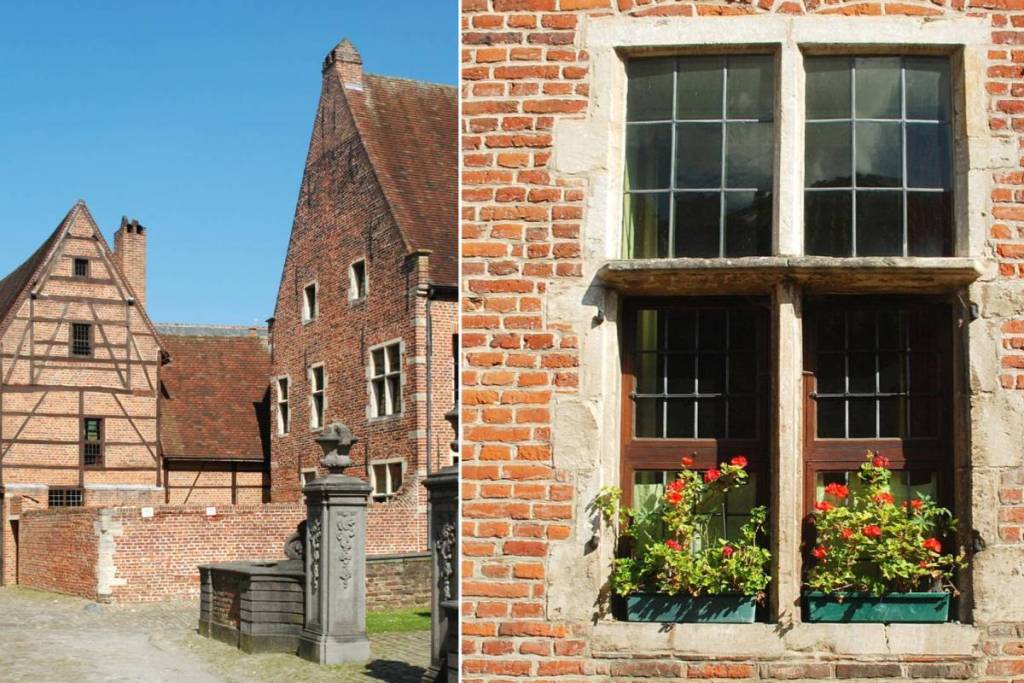
Just a few minutes from the historic center of Leuven, the Great Beguinage resembles a village frozen in time. Founded in the 13th century, this exceptional complex of nearly 100 houses, cobblestone alleys, small bridges, and gardens once housed hundreds of beguines—pious women who lived in community without taking monastic vows. Designated a UNESCO World Heritage Site in 1998, it captivates visitors today with its peaceful atmosphere and remarkable state of preservation. Carefully restored in the 1960s by the University of Leuven (KU Leuven), it is now home to students, researchers, and professors, while retaining the authentic charm that makes it one of the most beautiful beguinages in Belgium.
The Beguinage of Bruges
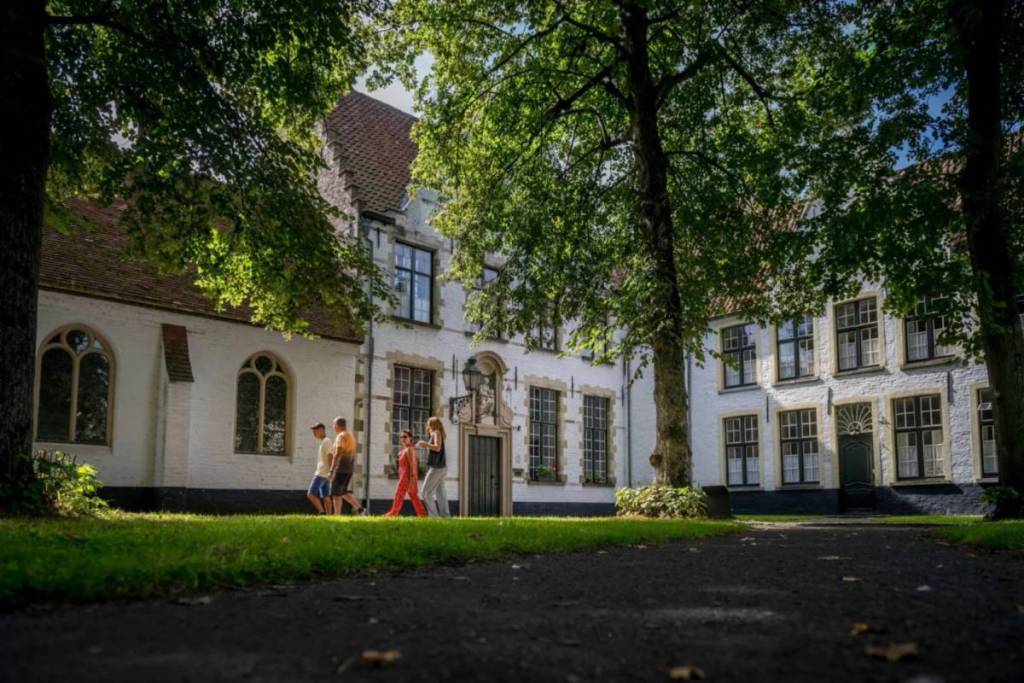
Just a short walk from the famous Lake of Love (Minnewater), the Bruges Beguinage offers a striking contrast to the bustling historic center. Founded in 1245 by Margaret of Constantinople, it consists of rows of whitewashed houses surrounding a vast lawn dotted with century-old poplar trees. Still inhabited today by a community of Benedictine nuns and a few single women, this serene place retains its essence as a haven of peace. Listed as a UNESCO World Heritage Site since 1998 along with the other Flemish beguinages, it captivates visitors with its contemplative atmosphere, particularly in the spring, when daffodils cover the meadow with a brilliant yellow carpet.
The Great Beguinage of Mechelen
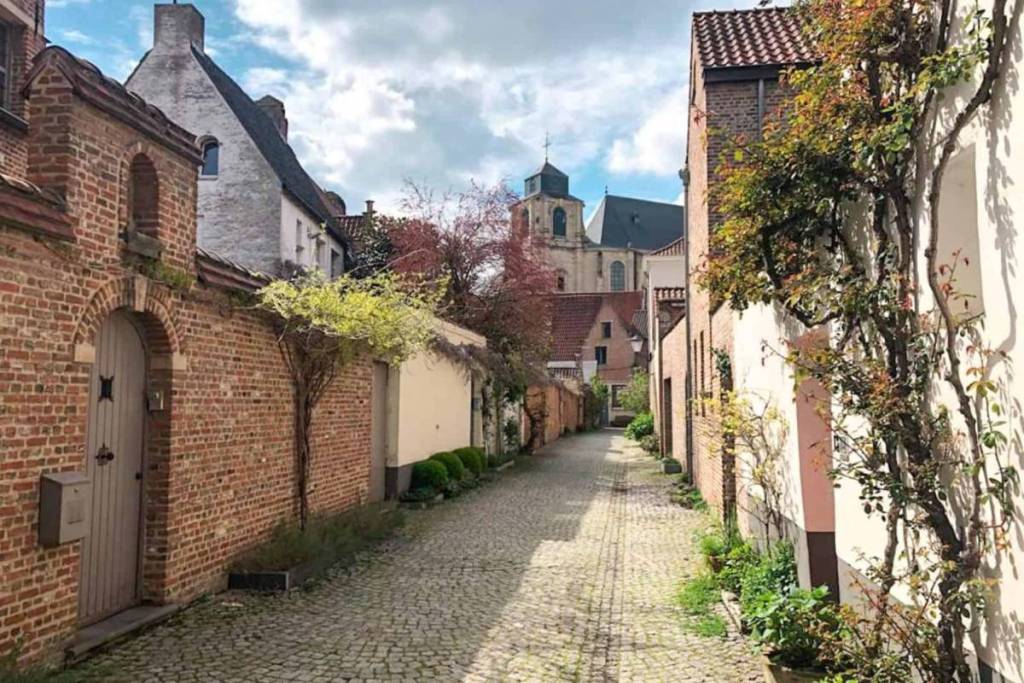
Just a few streets away from Mechelen’s Grand-Place, the Great Beguinage reveals a maze of cobblestone alleys, small squares, and traditional houses where time seems to have stood still. Founded in the 13th century, it was long home to a large community of Beguines before becoming one of the city’s most picturesque neighborhoods. Designated a UNESCO World Heritage Site since 1998, it stands out for its intimate atmosphere, its perfectly preserved brick facades, and its charming hidden gardens. At its heart stands St. Catherine’s Church, whose imposing Baroque silhouette serves as a reminder of the importance the Beguinage held for several centuries.
The Beguinage of Lier
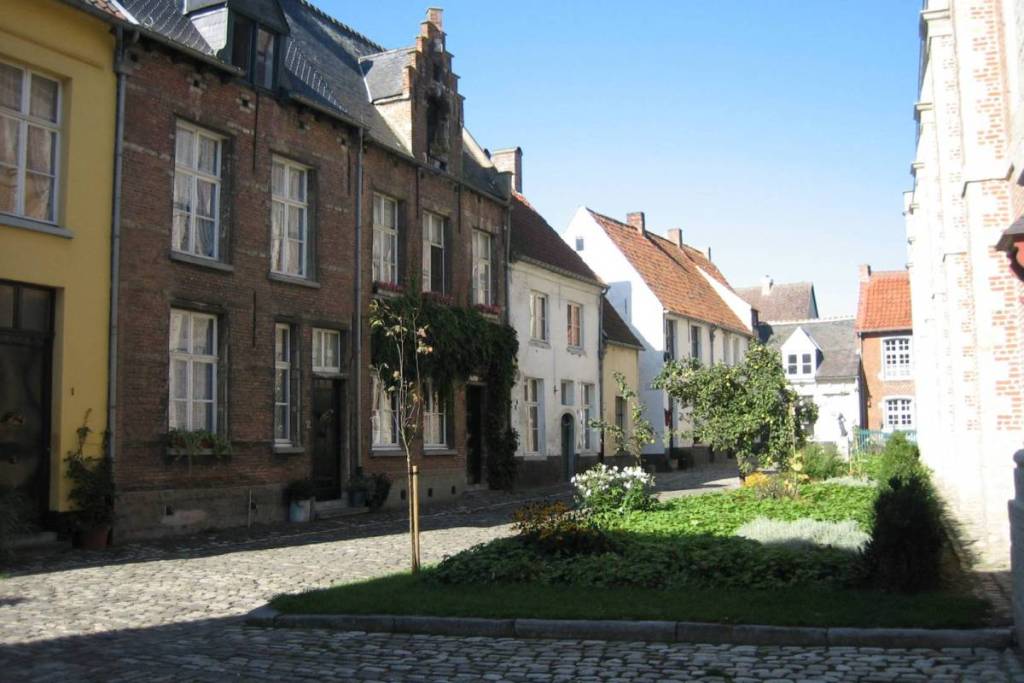
Often considered one of Belgium’s most beautiful beguinages, the Beguinage of Lier immediately charms visitors with its cobblestone streets, white facades, and timeless atmosphere. Founded in 1258, it was home to as many as several hundred beguines and gradually developed into a veritable small village, complete with houses, small squares, and the Church of St. Margaret. Listed as a UNESCO World Heritage Site since 1998, it captivates visitors today as much for its remarkably well-preserved architecture as for its peaceful atmosphere. A stroll through the beguinage is all it takes to understand why it ranks among the country’s most beautiful historic sites.
The Beguinage of Diest
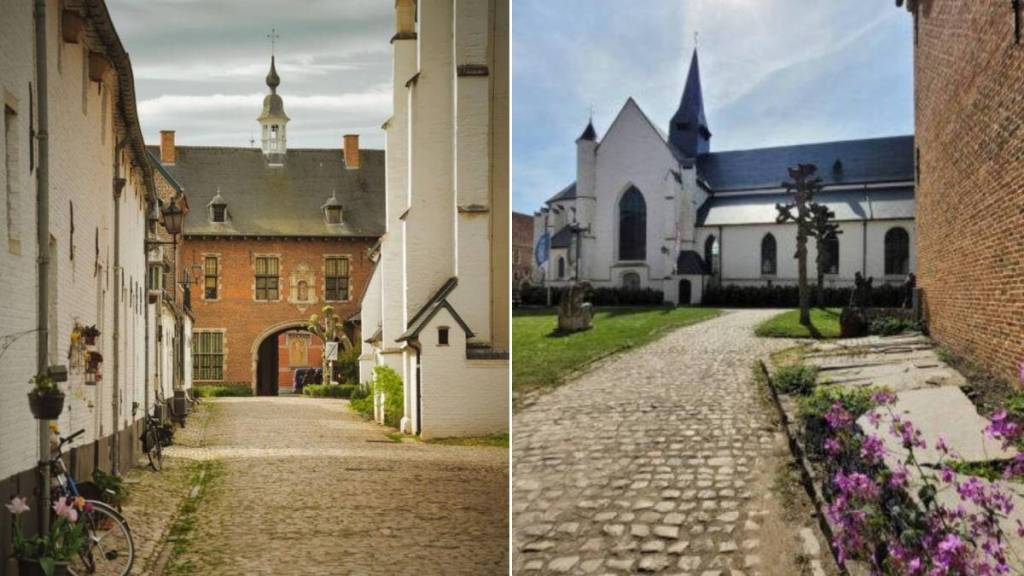
Less well-known than those in Bruges or Leuven, the Beguinage of Diest is nonetheless one of the most authentic complexes in Belgium. Founded in the 13th century, it developed around St. Catherine’s Church and today features an impressive collection of traditional brick houses, cobblestone alleys, and small inner courtyards. Designated a UNESCO World Heritage Site since 1998, it has retained its intimate character and old-world charm, offering visitors a peaceful stroll away from the crowds of tourists. It is undoubtedly one of the beguinages where you can best experience the atmosphere of these ancient communities of beguines.